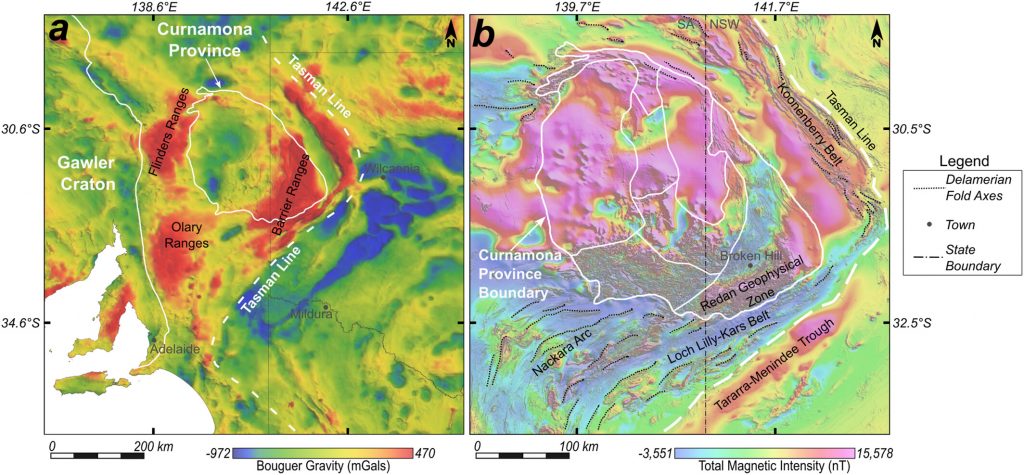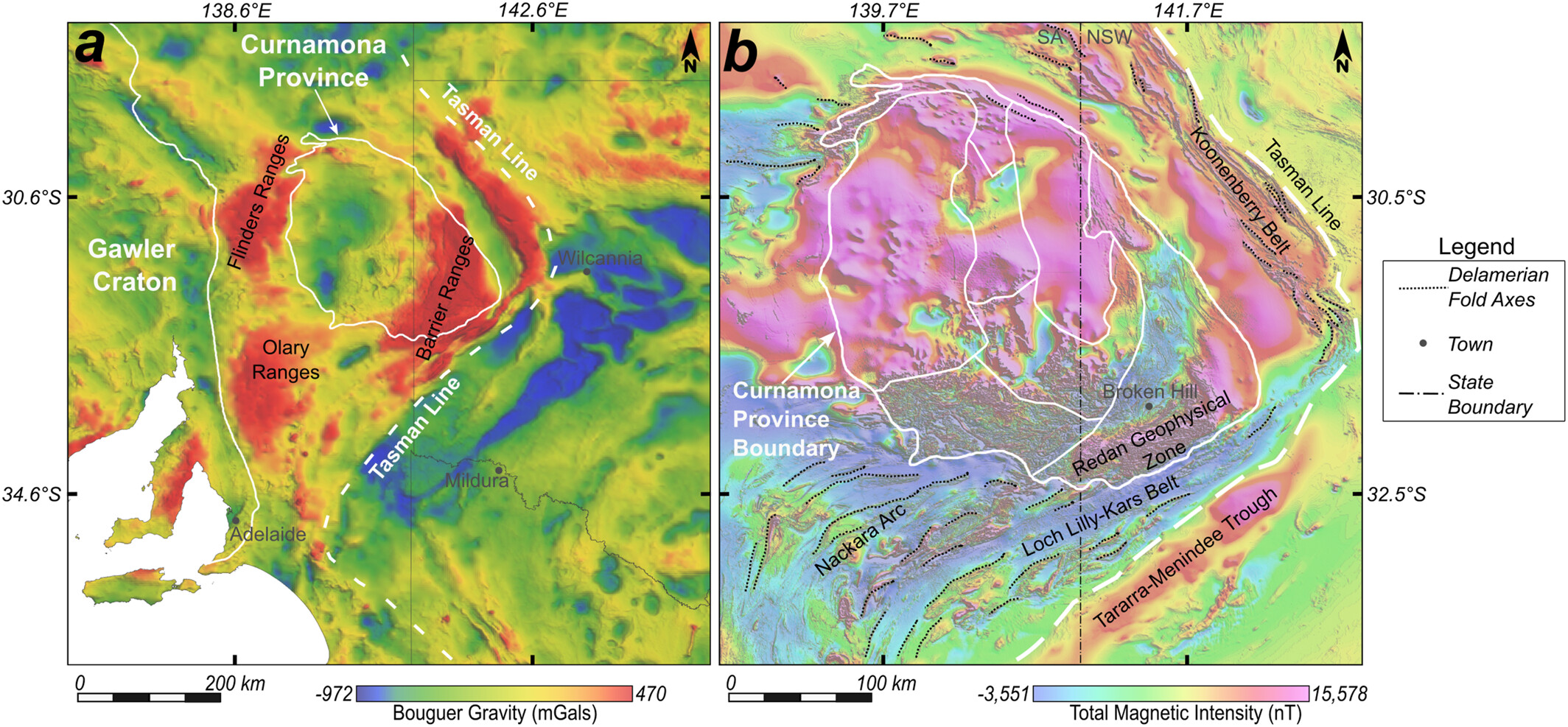
Researchers used magnetotelluric surveys to image the electrical structure of the crust around the world-class Broken Hill Pb-Zn-Ag deposit in NSW, Australia. They found that the upper crust here is mostly resistive, with only small, isolated conductive zones linked to the ore body and its host rocks, which do not connect down to a deeper conductor in the lower crust associated with the original rifting and later metamorphism. The results show that intense metamorphism can disconnect shallow ore signatures from their deeper origins, meaning resistive crust should not automatically be ruled out when exploring for major mineral deposits.
Abstract. The spatial association between electrical conductors and ore deposits underpins the widespread use of magnetotellurics (MT) in mineral exploration, yet not all mineral systems preserve a diagnostic conductive signature. Here, we present a high‐resolution MT study of the region hosting the world‐class Broken Hill Pb‐Zn‐Ag deposit (NSW, Australia). Our MT model reveals a predominantly resistive upper crust containing spatially discrete conductive anomalies that coincide with the Broken Hill lode and the sulphide‐rich Broken Hill Group (specifically the Hores Gneiss). These anomalies show no robust vertical electrical connection to lower‐crustal conductors. Nevertheless, we interpret the Broken Hill mineral system as genetically linked to a deep‐seated anomaly in the lower crust related to the ore‐forming rifting event and subsequent orogenesis. We propose that the shallow conductivity anomalies related to mineralization may have electrically and structurally decoupled from this deep‐seated conductor during high‐grade metamorphism. Consistent with this interpretation, larger‐scale MT models of the region show that the Broken Hill deposits sit within a predominantly resistive domain in the shallow crust. Had its geology been obscured by the sedimentary cover, exploration strategies favoring conductive anomalies at a larger scale would have missed Broken Hill entirely. Our results caution against dismissing resistive crust as unprospective, and show how tectono‐metamorphic overprinting and survey scale can obscure the primary signatures of major ore systems.