
Why Does the Broken Hill Deposit Sit in Resistive Crust? Magnetotelluric Evidence for Metamorphic Decoupling of a World‐Class Mineral System
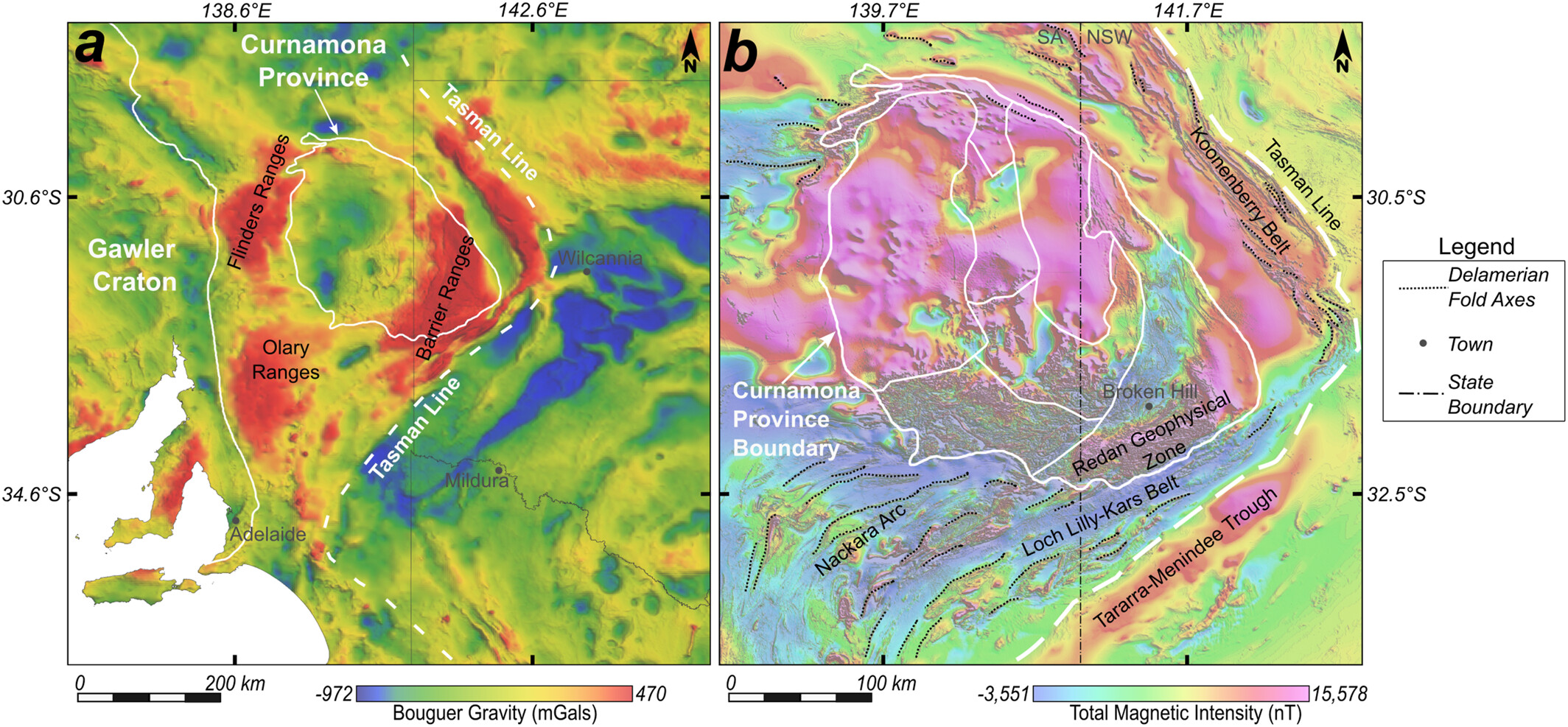
Regional gravity and magnetic anomaly maps showing tectonic boundaries and the location of the Broken Hill deposit, NSW, Australia.

Researchers used magnetotelluric surveys to image the electrical structure of the crust around the world-class Broken Hill Pb-Zn-Ag deposit in NSW, Australia. They found that the upper crust here is mostly resistive, with only small, isolated conductive zones linked to the ore body and its host rocks, which do not connect down to a deeper … Read more…
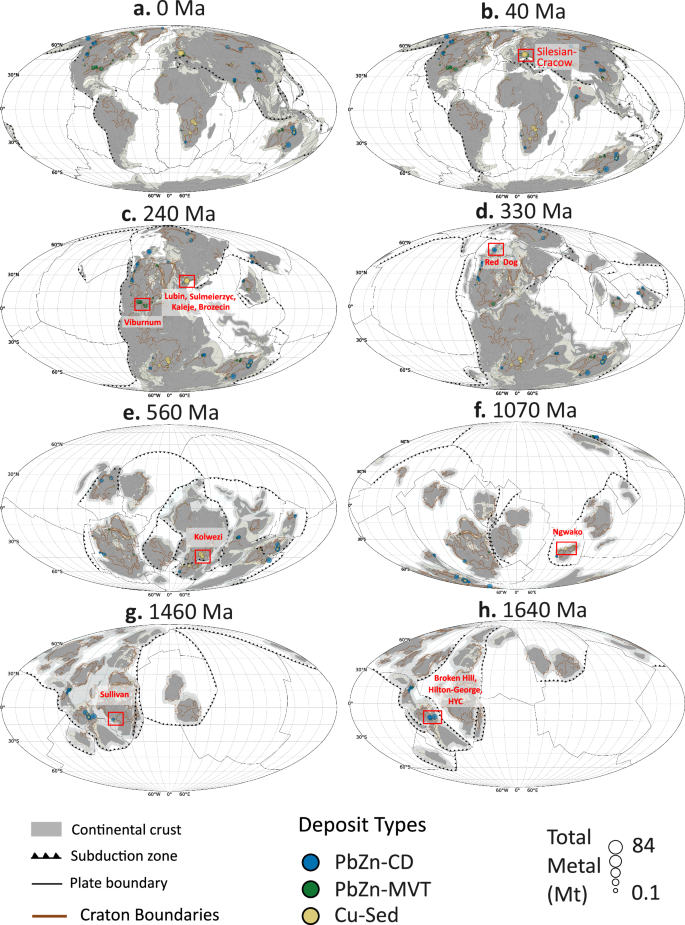
How subduction evolution drives sediment-hosted mineralisation along craton edges

Figure 1 from Shirmard et al. (2026)

This study explores why sediment-hosted mineral deposits tend to form near the edges of ancient continental cores, or cratons. By combining a 1.8-billion-year plate motion model with seismic imaging of craton edges, geodynamic modelling and a global mineral deposit database, the authors show that mineralised craton edges typically formed 800-1800 km from active subduction zones, … Read more…

Lamprophyres, gold and orogenies: a mineral systems perspective

The common spatial and temporal association of calk alkaline lamprophyres with orogenic gold deposits has been recognized for more than a century, although interpretations regarding the significance of this association have varied greatly. A persistent lack of consensus on Archean geodynamics and the deposits themselves presented a challenge to the use of a Mineral Systems … Read more…