
Congratulations to Associate Professor Maria Seton from the School of Geosciences. Her research on the origins of two underwater volcano chains in the Tasman Sea is featured in The Conversation.
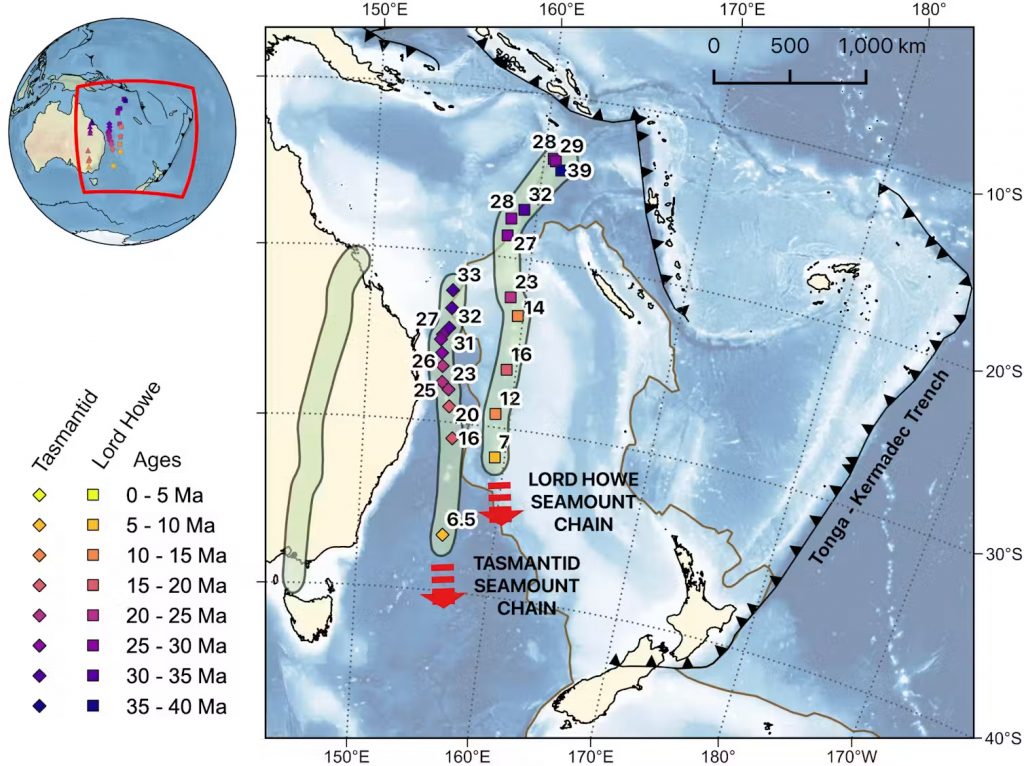
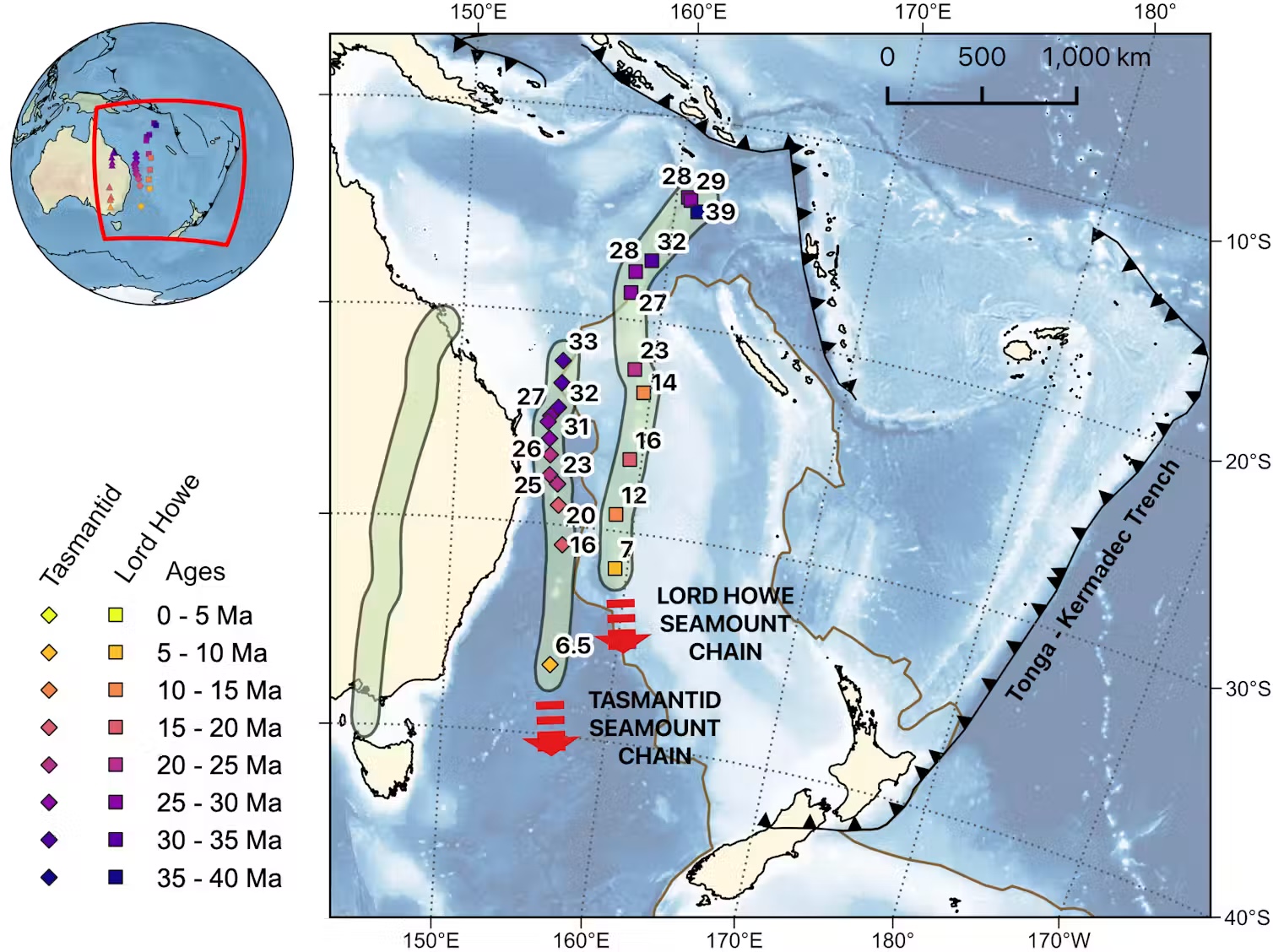
In the article, published on 18 September 2026, Associate Professor Seton and co-author Dr Ben Mather (ARC Early Career Industry Fellow, University of Melbourne) explain a long-standing geological puzzle. Two parallel chains of seamounts, the Lord Howe and Tasmantid chains, run side by side about 650 kilometres apart off Australia’s east coast.
The team found that both chains come from a single mantle plume, a column of hot rock rising from deep inside the Earth. On its way up, the plume meets a sinking slab of ancient seafloor. The slab deflects the plume and splits it into two branches, which rise on either side of the obstacle and feed the two volcano chains.
The researchers used three kinds of evidence:
- Computer simulations of how the mantle moves
- Reconstructions of plate movements going back 200 million years
- Chemical analysis of lava samples from the seamounts
The model also predicts what happens next. Over millions of years, the Tasmantid chain is expected to take over, while the Lord Howe chain gradually dies out.
The findings change how scientists think about mantle plumes. Rather than straight pipes from the deep Earth, plumes can bend and split when they hit obstacles. This could change how volcanic hotspots are used to reconstruct past plate movements. It also suggests that other closely spaced volcano chains around the world may have a similar shared origin.
The full study is published in the journal Gondwana Research.
Read the article in The Conversation: We found the hidden force that created two chains of underwater volcanoes running side by side
Congratulations to Maria and her collaborators on having this work recognised by one of Australia’s leading outlets for research-based journalism.

