Sydney geoscientist explains the hidden force behind the Tasman Sea’s twin volcano chains in The Conversation

Congratulations to Associate Professor Maria Seton from the School of Geosciences. Her research on the origins of two underwater volcano chains in the Tasman Sea is featured in The Conversation. In the article, published on 18 September 2026, Associate Professor Seton and co-author Dr Ben Mather (ARC Early Career Industry Fellow, University of Melbourne) explain … Read more…
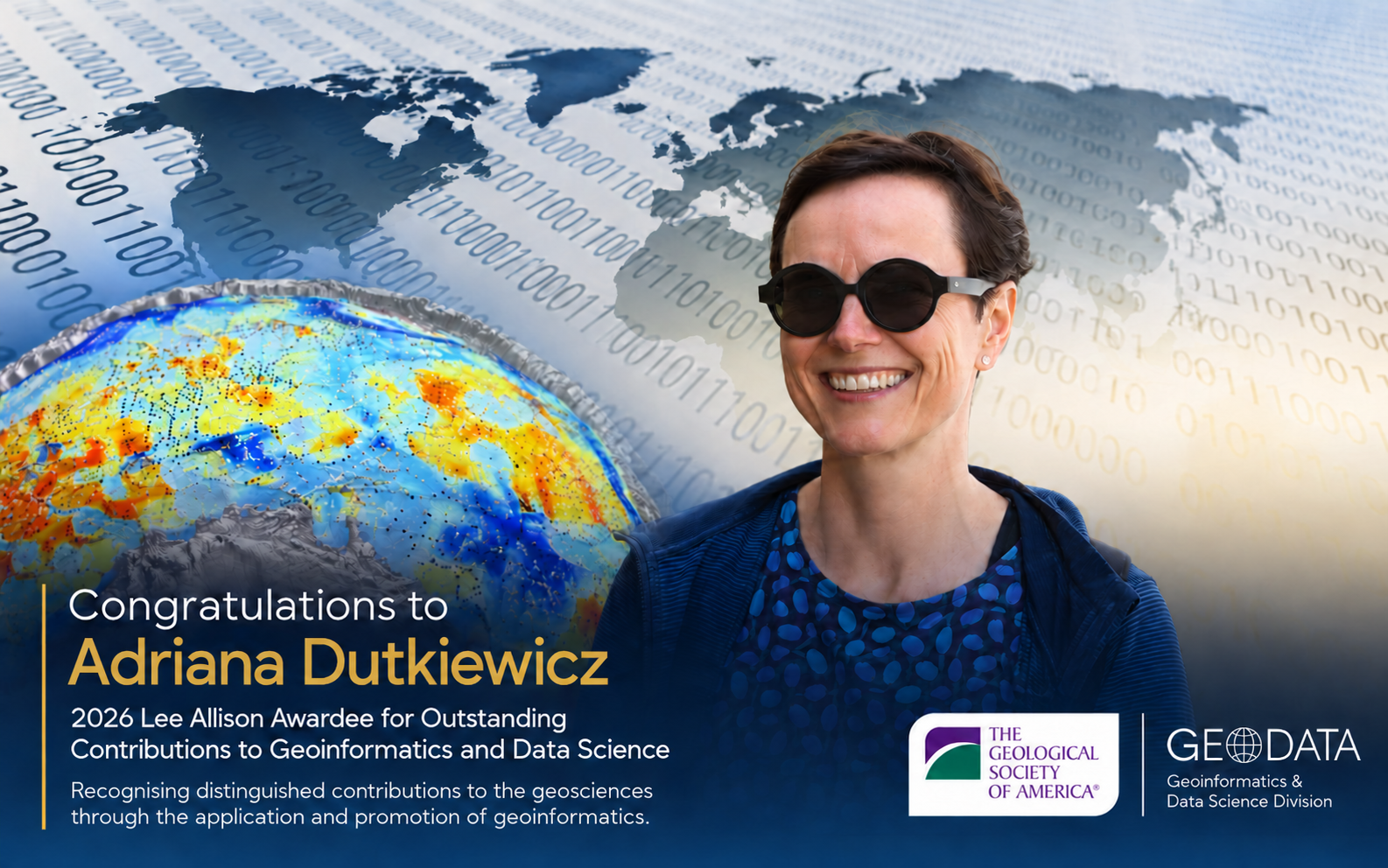
Adriana Dutkiewicz elected Fellow of the Geological Society of America

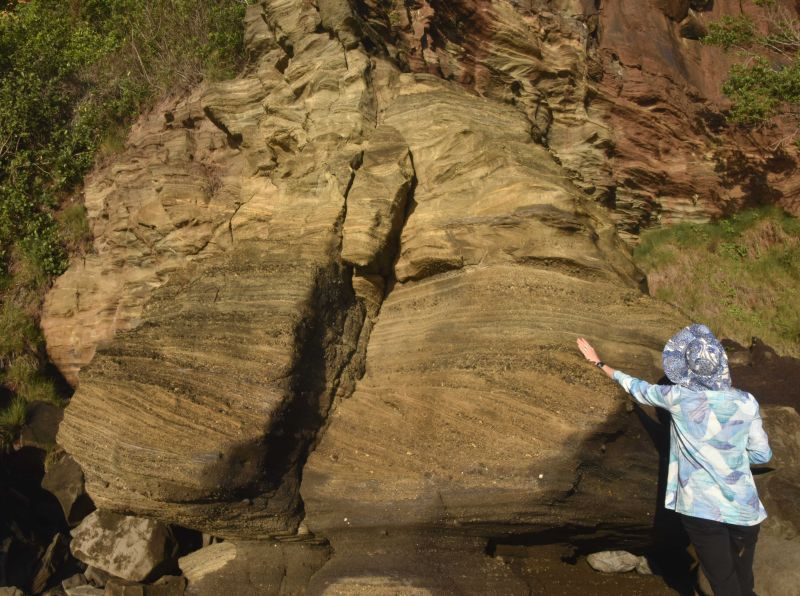
A researcher in a sun hat points at layered sedimentary rock strata in a coastal outcrop.

Congratulations to Associate Professor Adriana Dutkiewicz, who has been elected a Fellow of the Geological Society of America (GSA). This prestigious honour recognises her sustained record of contributions to the geosciences and to the Geological Society of America. She has authored/co-authored 14 research articles in Geology, a level of sustained contribution to the journal that … Read more…
Maria Seton awarded S.W. Carey Medal for tectonics research

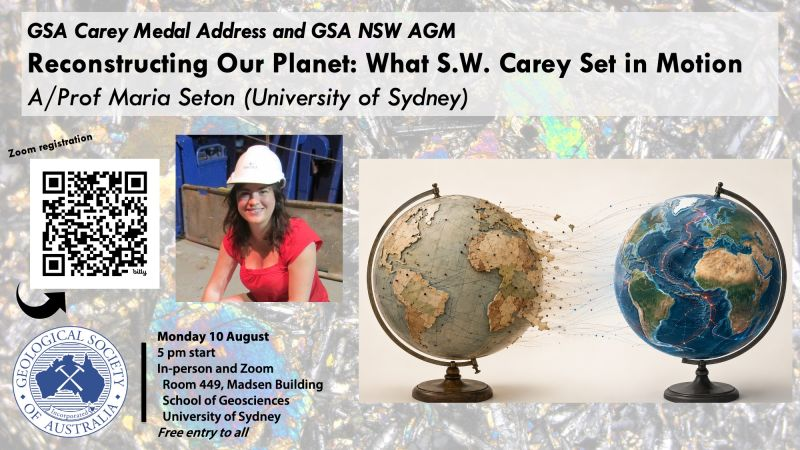
Event flyer showing a photo of A/Prof Maria Seton beside two globes linked by tectonic plate lines, with event and QR code details.

Congratulations to A/Prof Maria Seton, who has been awarded the S.W. Carey Medal from the Geological Society of Australia for her outstanding contribution and impact in the field of tectonics. The award was announced at the Australian Earth Sciences Convention in Melbourne, as part of the Geological Society of Australia’s 2026 national awards. A/Prof Seton … Read more…

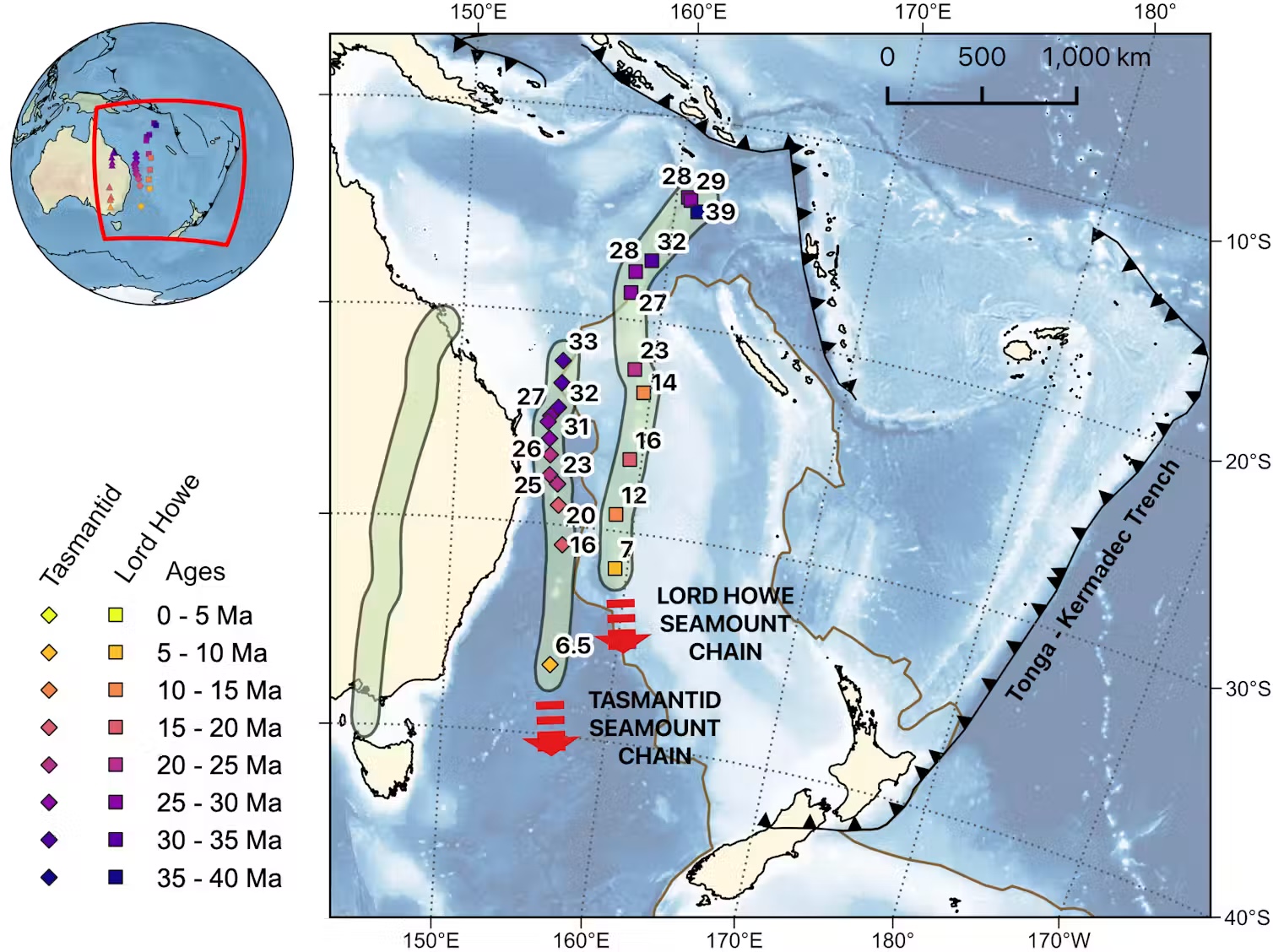
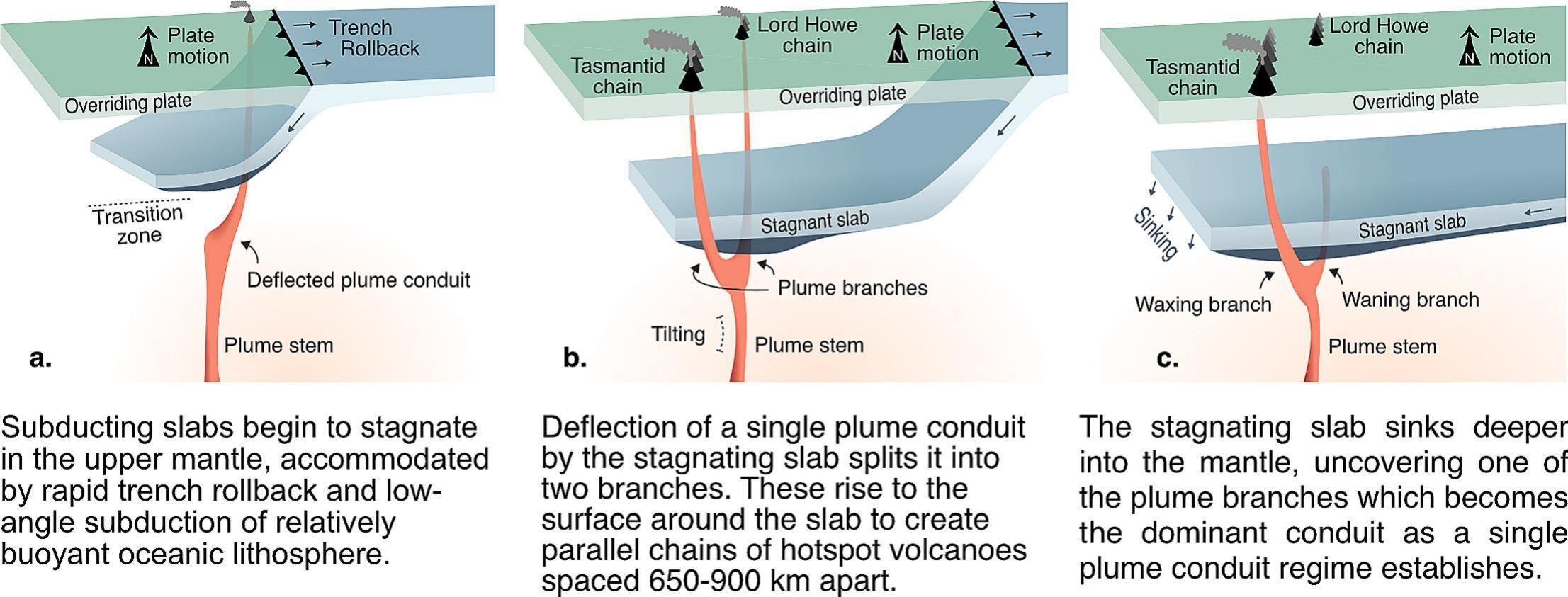
Parallel volcanic chains generated by plume-slab interaction

Figure from Mather et al. (2026)

Using a 3D numerical model of mantle convection, the authors show how a single deep mantle plume can be split into two long-lived branches by a stagnating slab in the upper mantle, producing parallel volcanic chains. This explains why the Lord Howe and Tasmantid seamount chains in the SW Pacific have stayed 650–900 km apart … Read more…

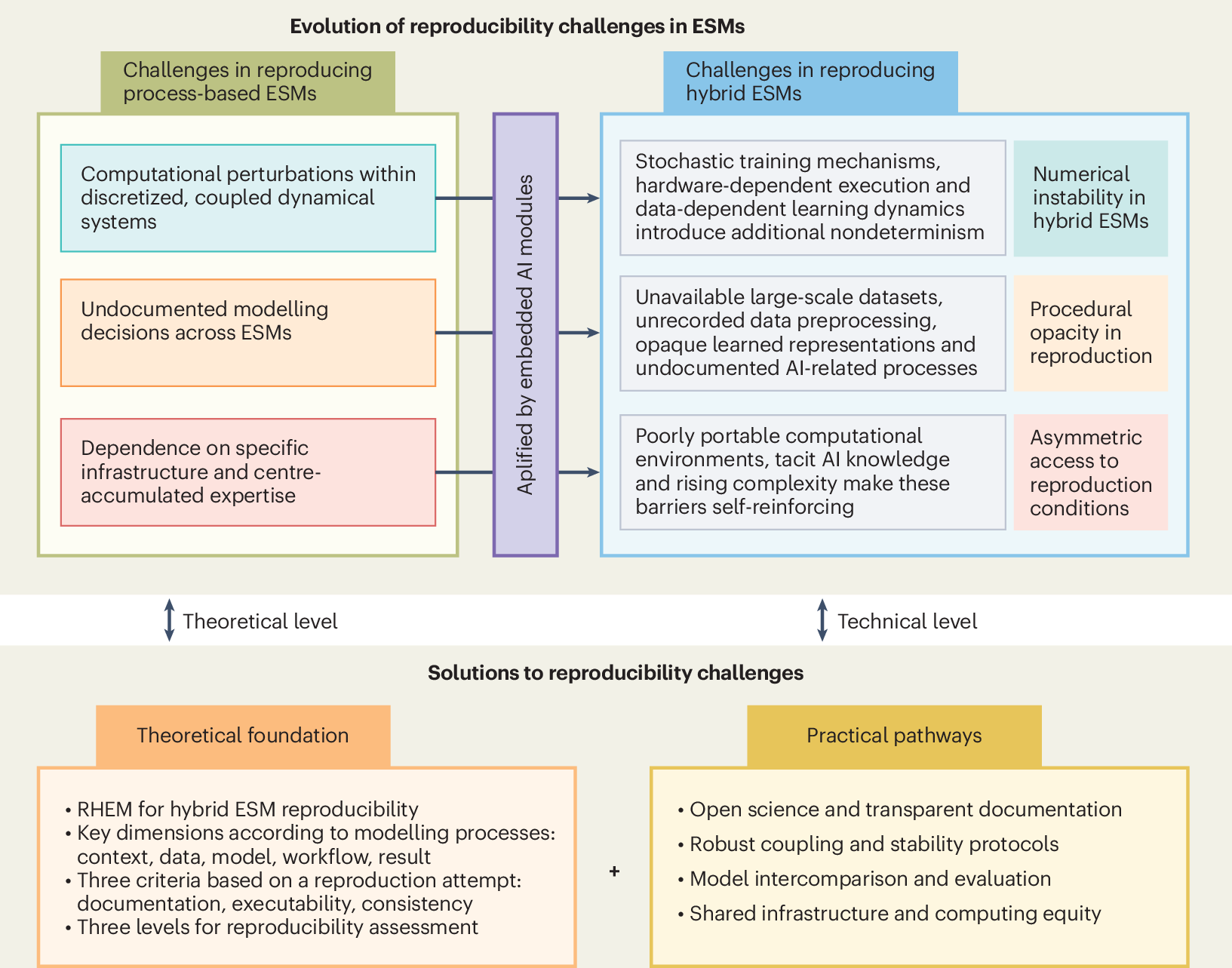
Enhancing reproducibility in hybrid Earth system models

Diagram showing how reproducibility challenges in Earth system models have evolved from process-based frameworks to AI-integrated hybrid systems.

This Perspective argues that as artificial intelligence is increasingly built into Earth system models, reproducibility needs to be rethought to match how these hybrid models actually work. The authors highlight risks such as numerical instability, opaque procedures and unequal access to computing power, which can undermine trust and traceability in climate research. They propose a … Read more…