
Lower-mantle iron heterogeneity constrained by the electrical conductivity of Al-bearing bridgmanite
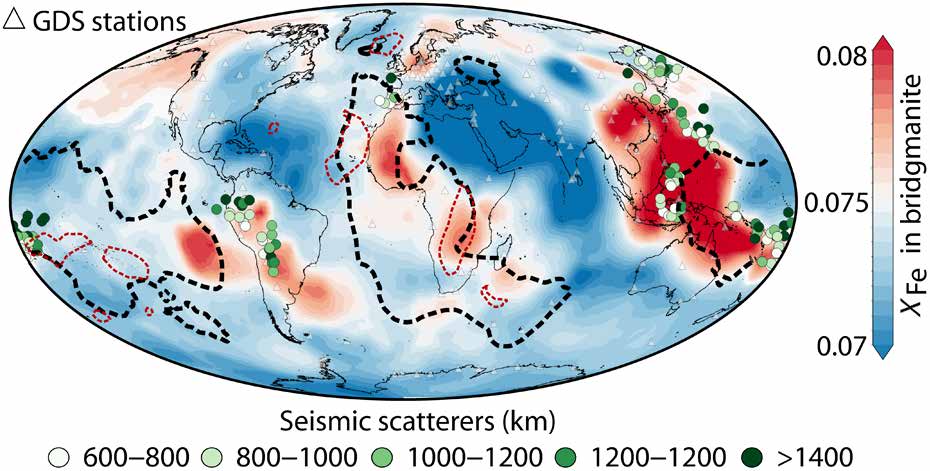
Map showing global iron content distribution in the lower mantle at 1225 kilometres depth with LLSVP boundaries outlined.

Scientists measured how well iron-bearing bridgmanite, the main mineral in Earth’s lower mantle, conducts electricity under high pressure and temperature conditions. They found conductivity rises sharply with iron content but barely changes with temperature, allowing iron variations to be mapped directly from global conductivity models derived from geomagnetic data. The results suggest iron-rich material within … Read more…
Why Does the Broken Hill Deposit Sit in Resistive Crust? Magnetotelluric Evidence for Metamorphic Decoupling of a World‐Class Mineral System

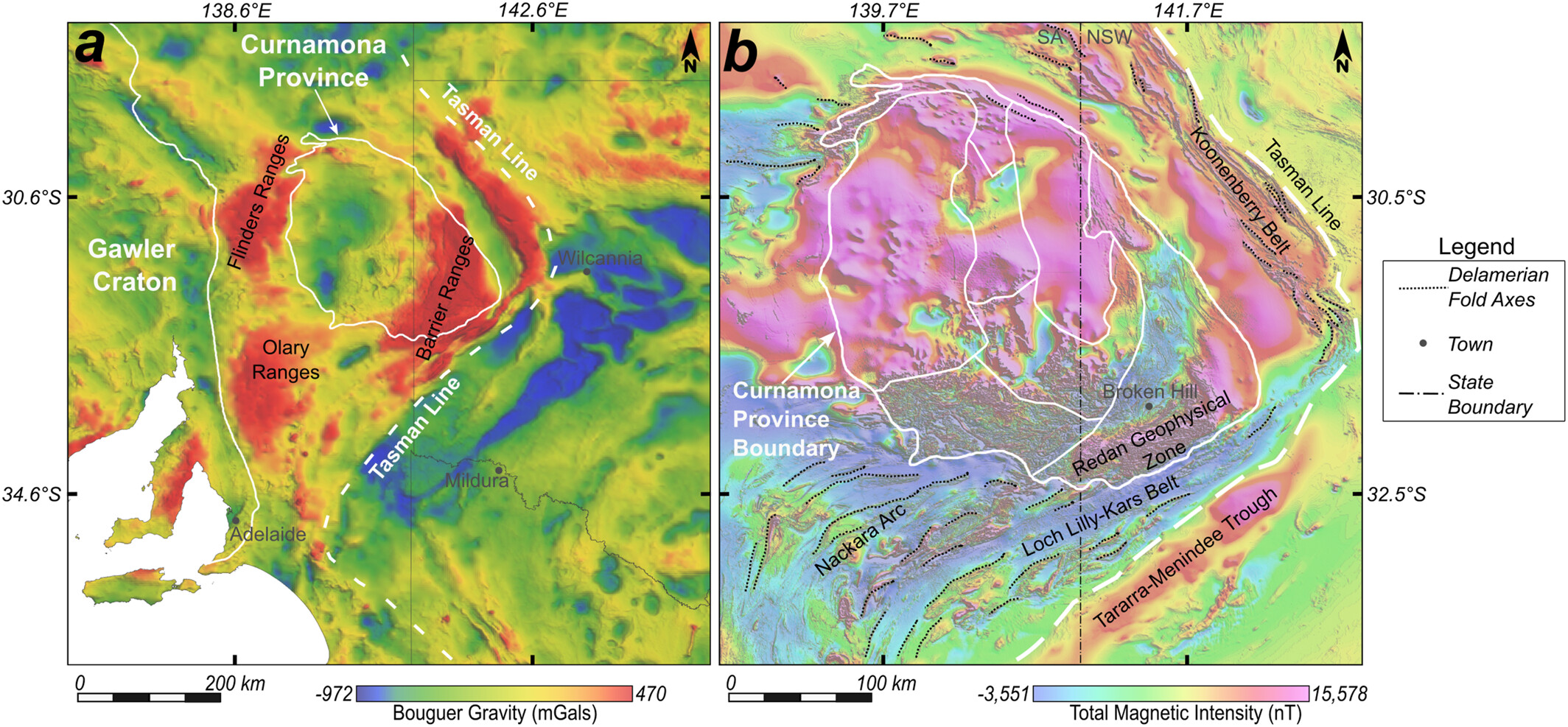
Regional gravity and magnetic anomaly maps showing tectonic boundaries and the location of the Broken Hill deposit, NSW, Australia.

Researchers used magnetotelluric surveys to image the electrical structure of the crust around the world-class Broken Hill Pb-Zn-Ag deposit in NSW, Australia. They found that the upper crust here is mostly resistive, with only small, isolated conductive zones linked to the ore body and its host rocks, which do not connect down to a deeper … Read more…

Strain controls the electrical conductivity distribution in the lithosphere

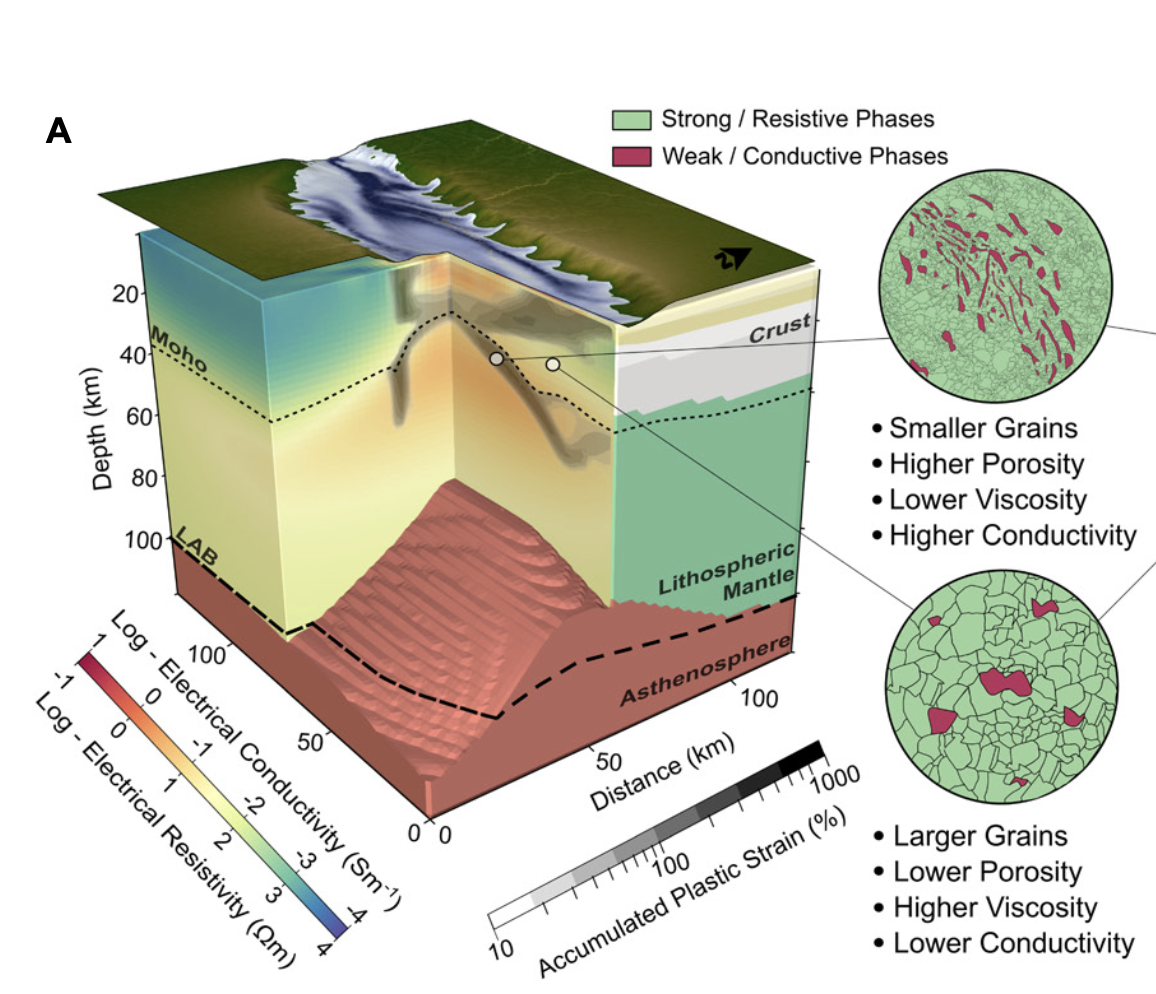
Magnetotellurics (MT) utilize measurements of electromagnetic fields at Earth’s surface to image the electrical conductivity distribution at depths from a few meters to ∼200 km. MT is especially powerful for mapping mineralized fluid pathways, as it is sensitive to inter- connected minor conductive phases such as fluids, melts, or sulfides. However, conductivity anomalies documented by … Read more…