Recurrent super highlands since 2.1 Ga reveal rhythmic coupling between deep Earth and surface evolution
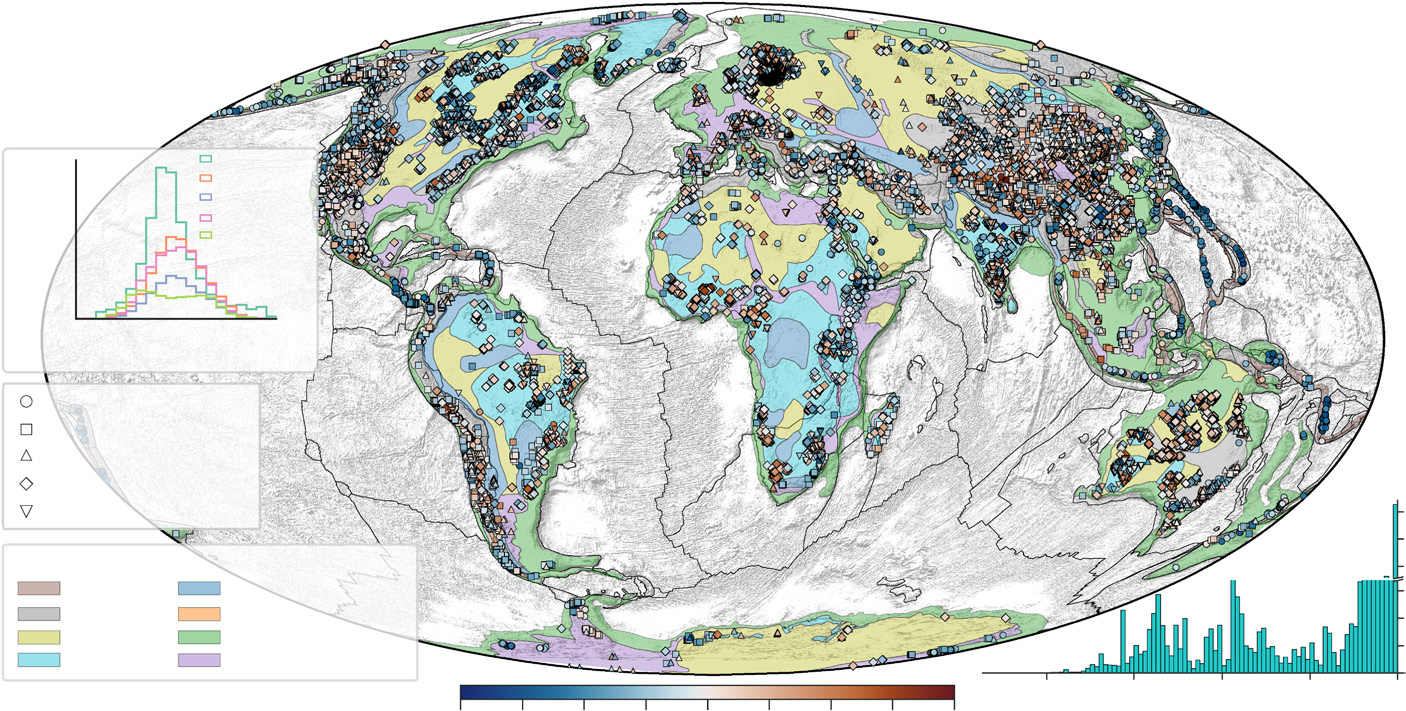
Figure from Zhou et al. (2026)

Researchers reconstructed global continental elevation over the past 4 billion years by combining a huge dataset of igneous rock chemistry with machine-learning estimates of crustal thickness and isostatic modelling. They found that continents stayed mostly submerged through much of the Archean, then began repeatedly building Tibetan-scale “super highlands” from about 2.1 billion years ago onward, … Read more…
Eastward Growth of the Tibetan Plateau Linked to Cenozoic Orogenic Wedge Deformation and Fluctuating Melt Sources

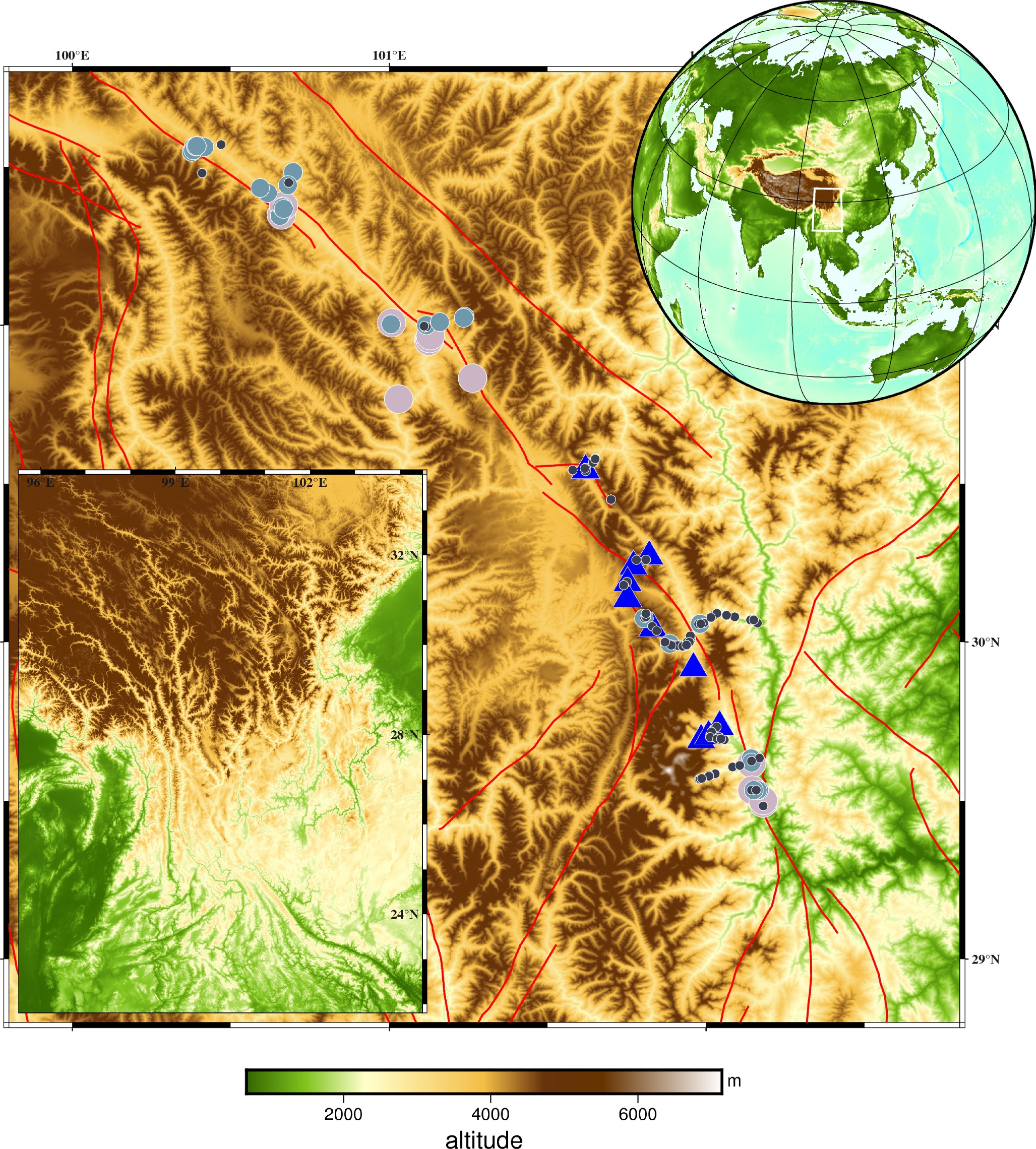
Digital elevation map of the southeastern Tibetan Plateau showing sample locations and major faults.

Scientists studied granitoids from the Kangding area in the southeastern Tibetan Plateau, using new elemental and isotopic data, including the first silicon isotope measurements for these rocks, to trace how the plateau’s crust grew eastward over the last 35 million years. The granites fall into two groups, and one of them shows a temporary shift … Read more…

Why Does the Broken Hill Deposit Sit in Resistive Crust? Magnetotelluric Evidence for Metamorphic Decoupling of a World‐Class Mineral System

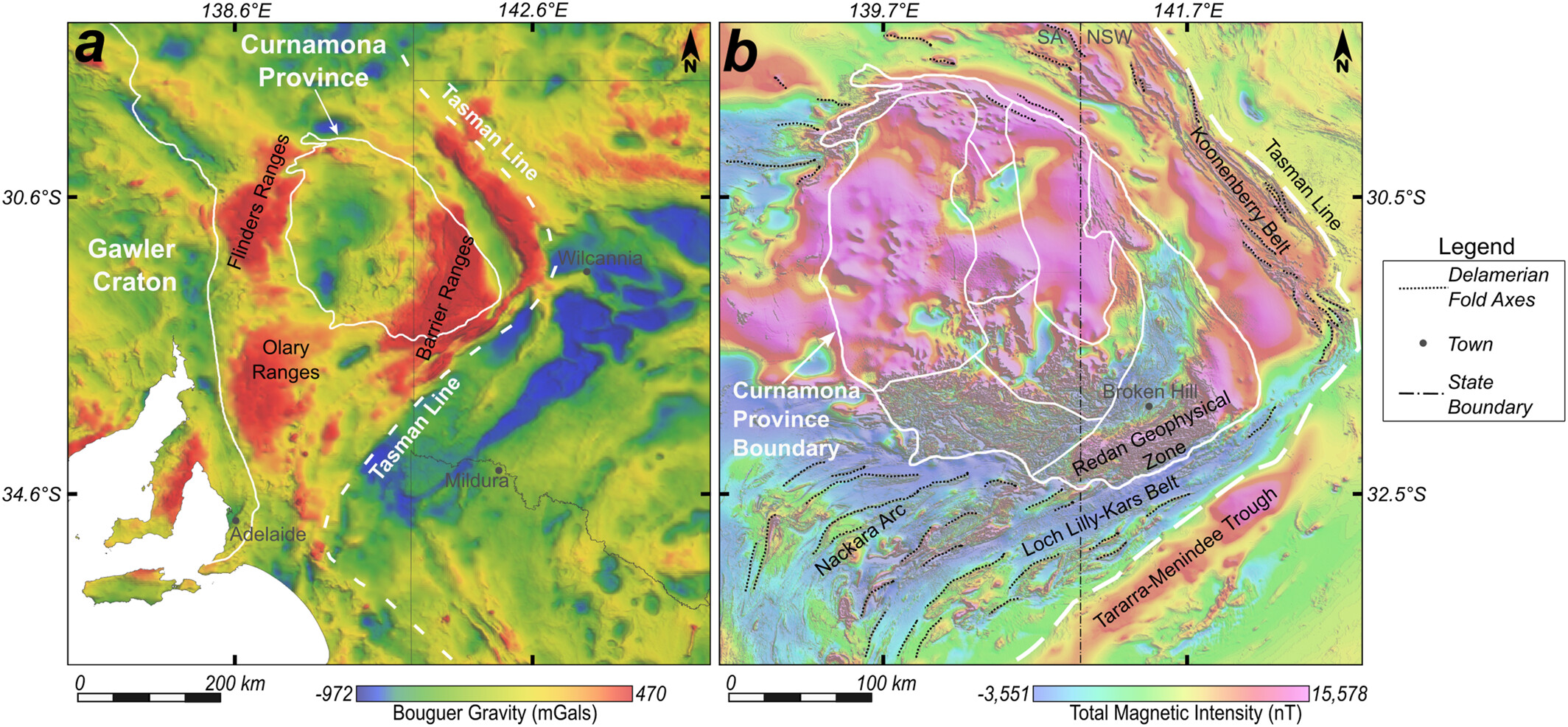
Regional gravity and magnetic anomaly maps showing tectonic boundaries and the location of the Broken Hill deposit, NSW, Australia.

Researchers used magnetotelluric surveys to image the electrical structure of the crust around the world-class Broken Hill Pb-Zn-Ag deposit in NSW, Australia. They found that the upper crust here is mostly resistive, with only small, isolated conductive zones linked to the ore body and its host rocks, which do not connect down to a deeper … Read more…

Lamprophyres, gold and orogenies: a mineral systems perspective

The common spatial and temporal association of calk alkaline lamprophyres with orogenic gold deposits has been recognized for more than a century, although interpretations regarding the significance of this association have varied greatly. A persistent lack of consensus on Archean geodynamics and the deposits themselves presented a challenge to the use of a Mineral Systems … Read more…

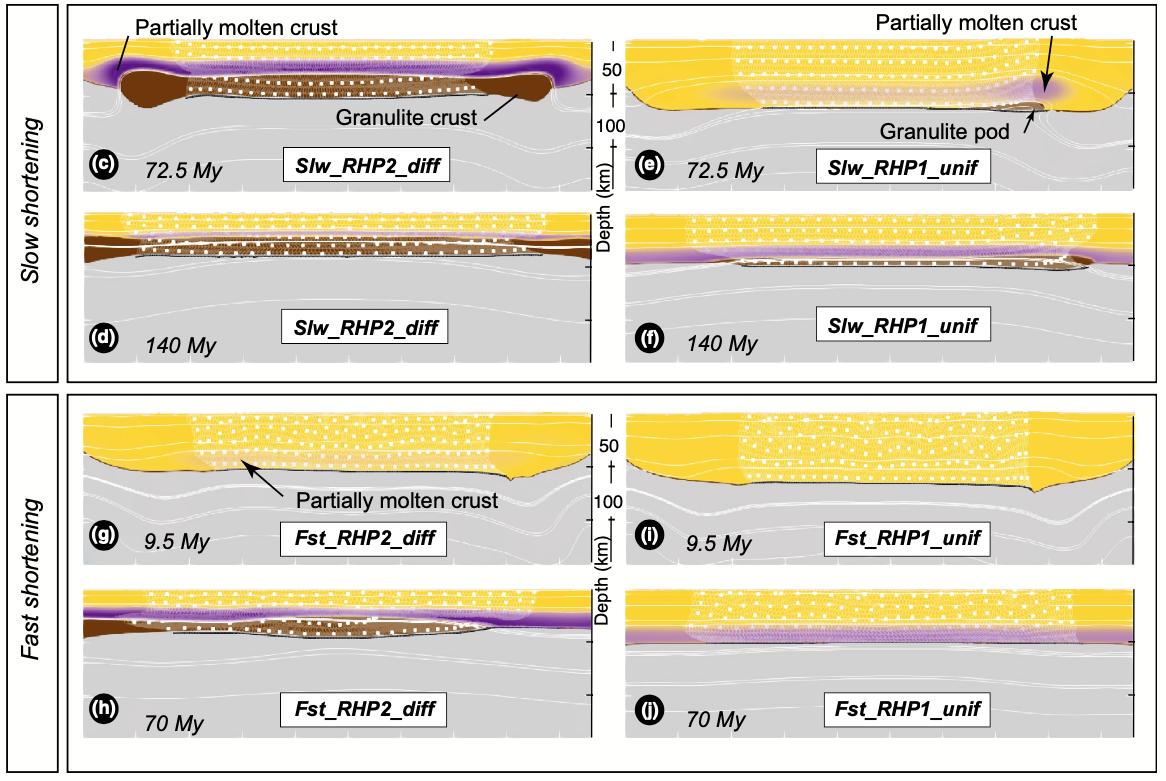
Terra Nova: Timing of partial melting and granulite formation during the genesis of high to ultra-high temperature terranes: Insight from numerical experiments

Long-lived high to ultra-high temperature (HT-UHT) granulitic terranes formed throughout Earth’s history. Yet, the detailed processes involved in their formation re- main unresolved and notably the sequence of appearance and duration of migmatisa- tion and granulites conditions in the orogenic cycle. These processes can be evaluated by analytical and numerical models. First, solving the steady-state … Read more…