Lower-mantle iron heterogeneity constrained by the electrical conductivity of Al-bearing bridgmanite
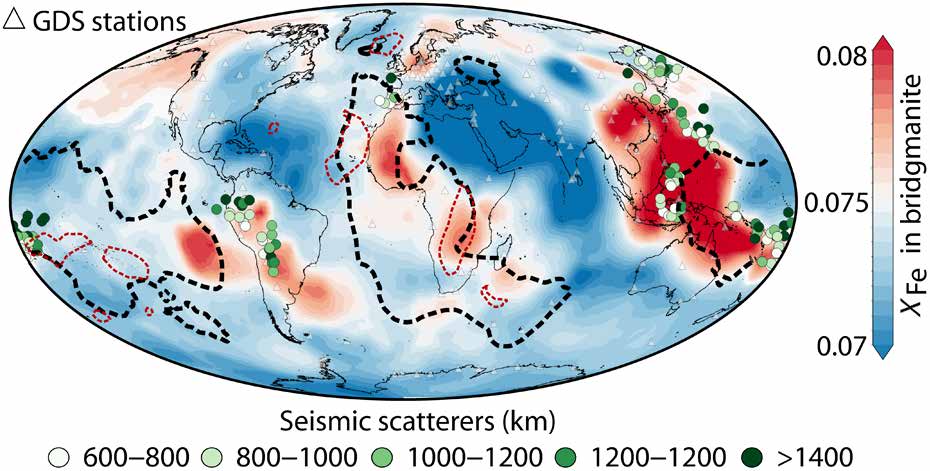
Map showing global iron content distribution in the lower mantle at 1225 kilometres depth with LLSVP boundaries outlined.

Scientists measured how well iron-bearing bridgmanite, the main mineral in Earth’s lower mantle, conducts electricity under high pressure and temperature conditions. They found conductivity rises sharply with iron content but barely changes with temperature, allowing iron variations to be mapped directly from global conductivity models derived from geomagnetic data. The results suggest iron-rich material within … Read more…
Influence of secular cooling on core-mantle boundary heat flux and mantle plume temperature over 1.8 billion years

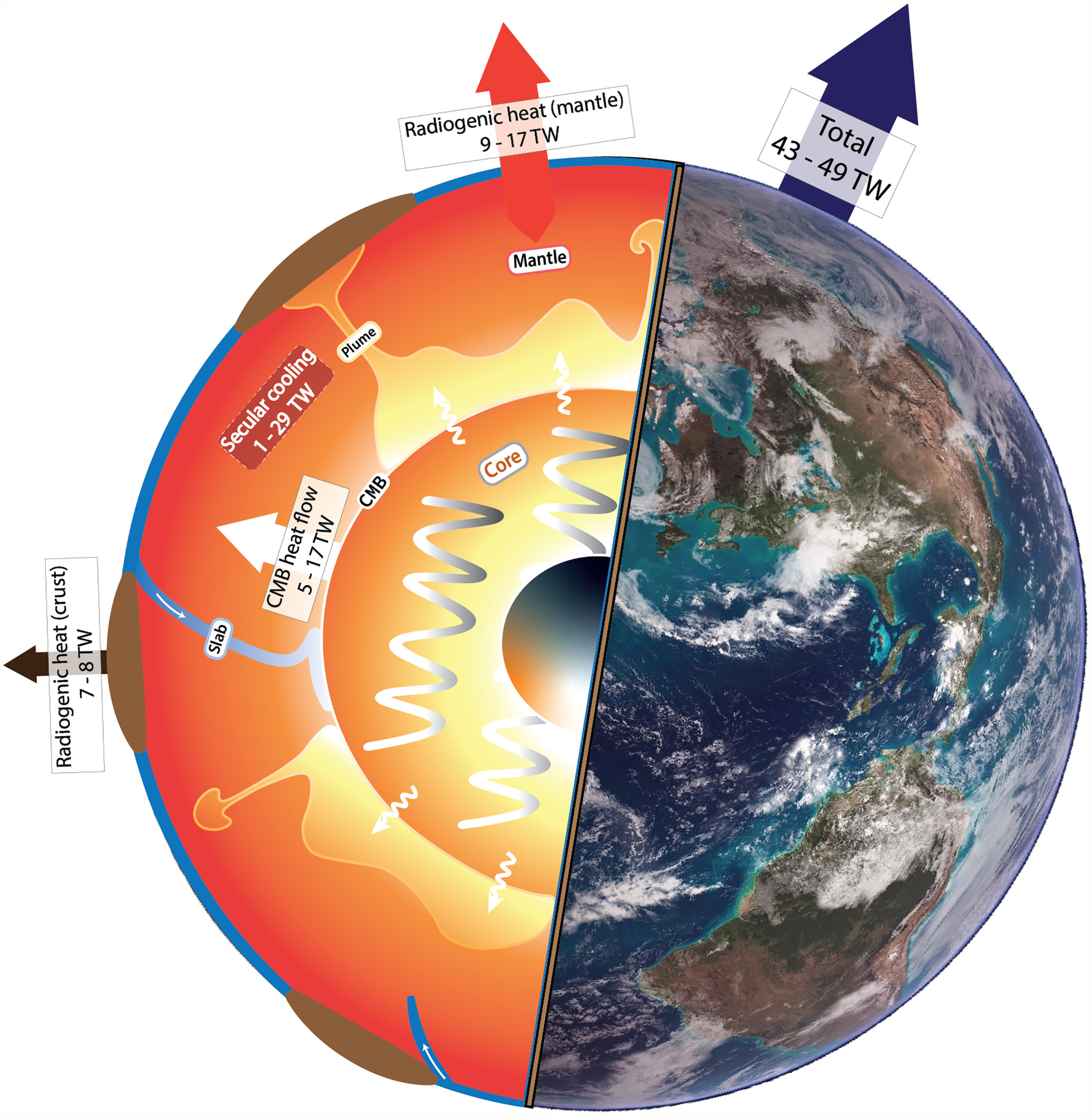
Figure 1 from Zhang et al. (2026)

Researchers modelled global mantle flow over the past 1.8 billion years, incorporating the gradual cooling of Earth’s core and the decay of radiogenic heat sources through time. They found that this long-term cooling reduces both the heat flowing out of the core and the temperature of mantle plumes, at rates consistent with independent geological evidence. … Read more…

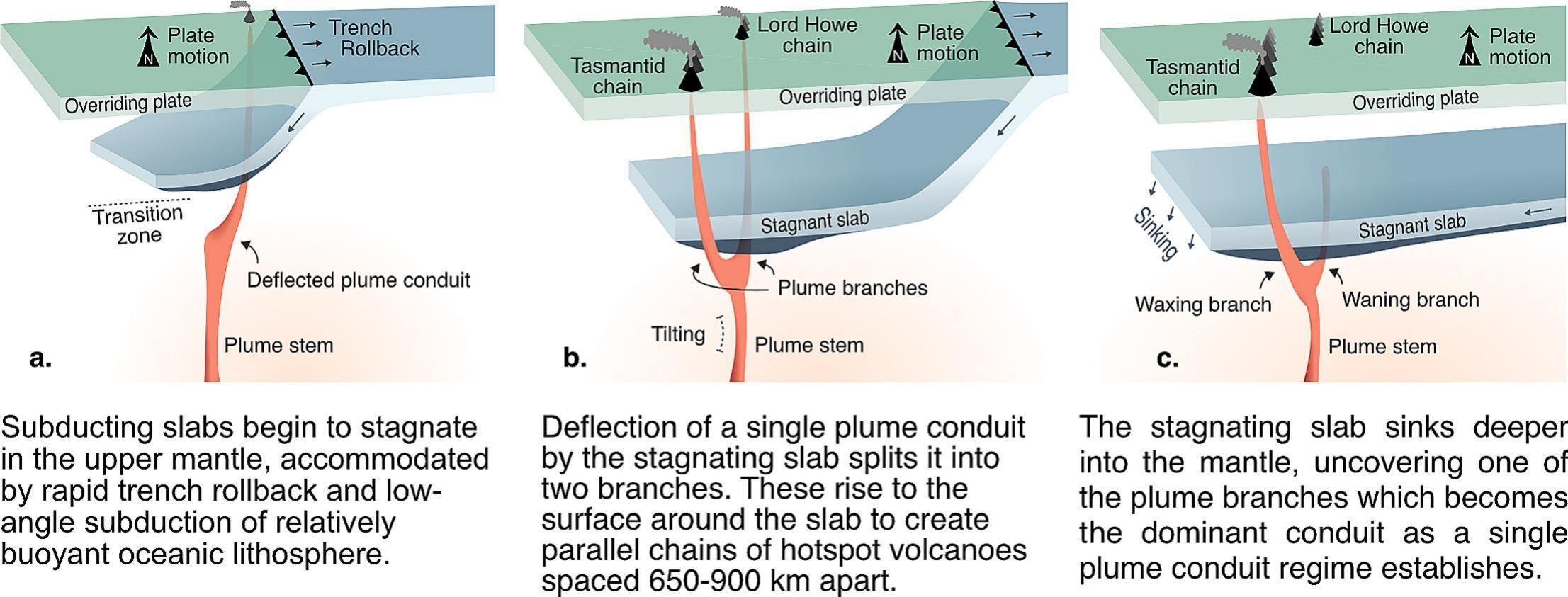
Parallel volcanic chains generated by plume-slab interaction

Figure from Mather et al. (2026)

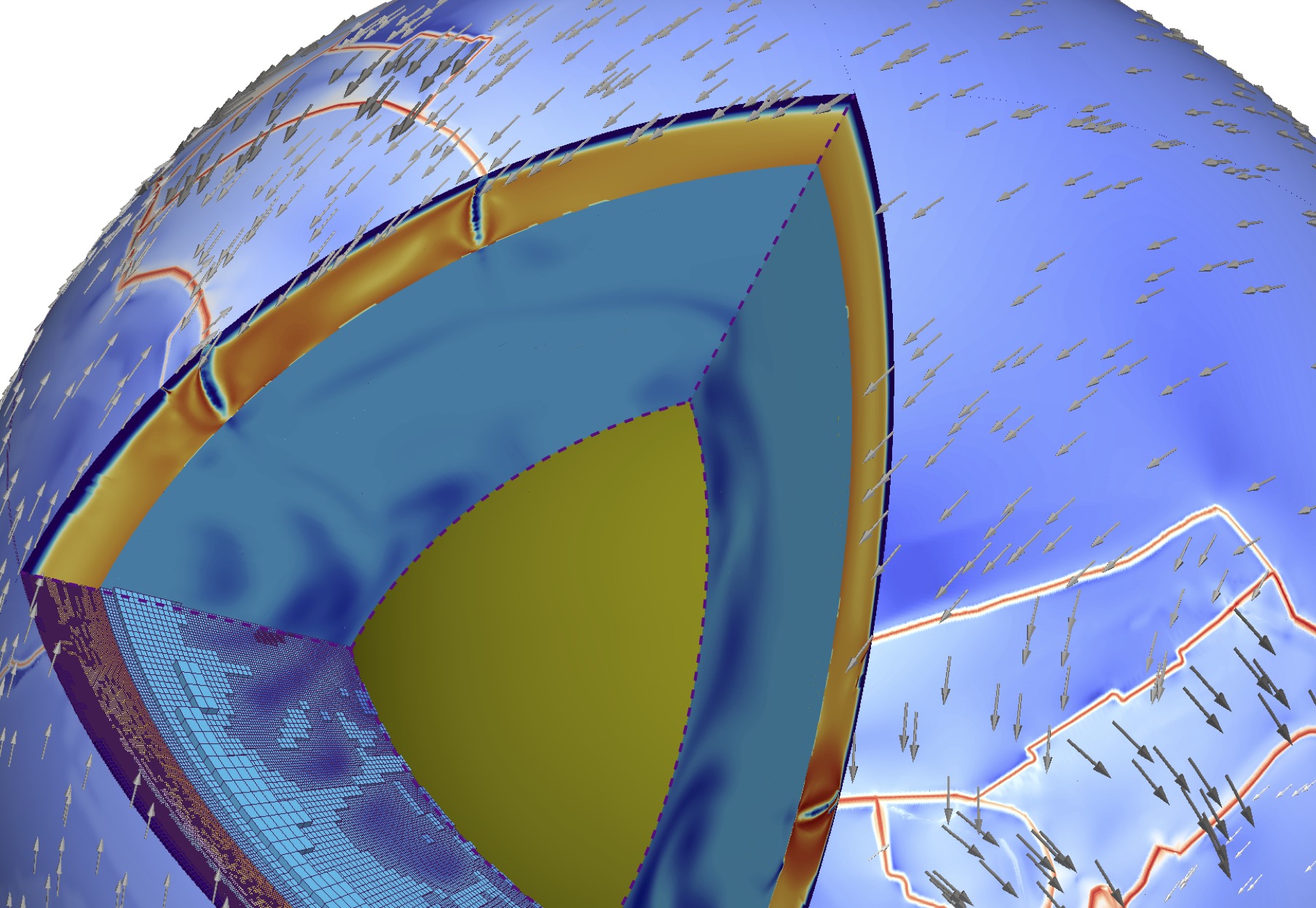
Using a 3D numerical model of mantle convection, the authors show how a single deep mantle plume can be split into two long-lived branches by a stagnating slab in the upper mantle, producing parallel volcanic chains. This explains why the Lord Howe and Tasmantid seamount chains in the SW Pacific have stayed 650–900 km apart … Read more…

Evolution of Mantle Plumes and Lower Mantle Structure in Numerical Models Using Tectonic Reconstructions as Boundary Conditions

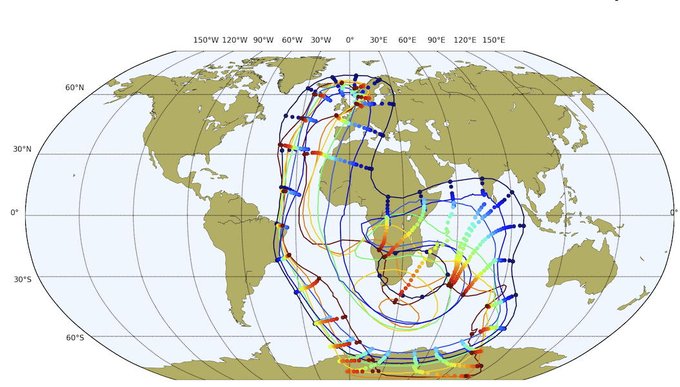
We evaluate four mantle convection models that use tectonic reconstructions to specify kinematic boundary conditions to explore the development of the lower mantle large low shear velocity provinces (LLSVP) structures and their relationship with mantle plumes. Evolution of mantle plumes in our spherical models is broadly consistent with observations including the number of plumes generated … Read more…

Nature Geoscience: Dynamics of the abrupt change in Pacific Plate motion around 50 million years ago

A drastic change in plate tectonics and mantle convection occurred around 50 Ma as exemplified by the prominent Hawaiian– Emperor Bend. Both an abrupt Pacific Plate motion change and a change in mantle plume dynamics have been proposed to account for the Hawaiian–Emperor Bend, but debates surround the relative contribution of the two mechanisms. Here … Read more…