Rainfall and tectonic forcing lead to contrasting headwater slope evolutions
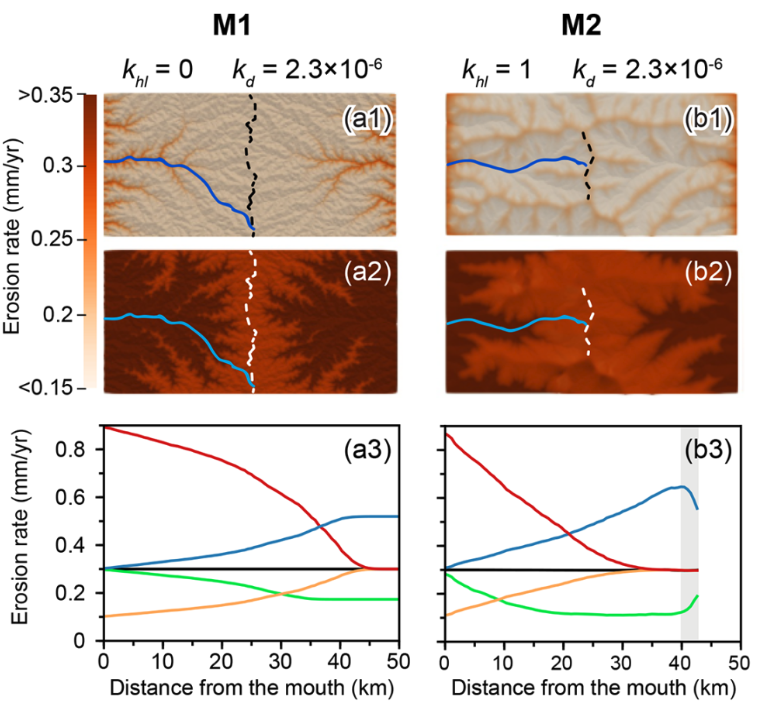
Landscapes evolve through the coupled effects of tectonics and surface processes. Previous studies have shown that uplift rate changes generate upstream-migrating erosion waves, altering downstream slopes while upstream slopes remain constant until the wave arrives. However, the distinctive differences between landscape responses to uplift versus climatic changes, particularly rainfall rate changes, remain incompletely described. This … Read more…

Predicting the preservation of buried ore deposits using deep-­ time landscape evolution modeling

    Porphyry copper discoveries are declining despite rising demand to meet net-zero targets, highlighting the need for innovative exploration strategies. While many advances have focused on ore formation at depth, a major challenge remains in understanding how erosion and uplift over millions of years affect deposit preservation. These post-mineralisation processes determine whether porphyry systems … Read more…

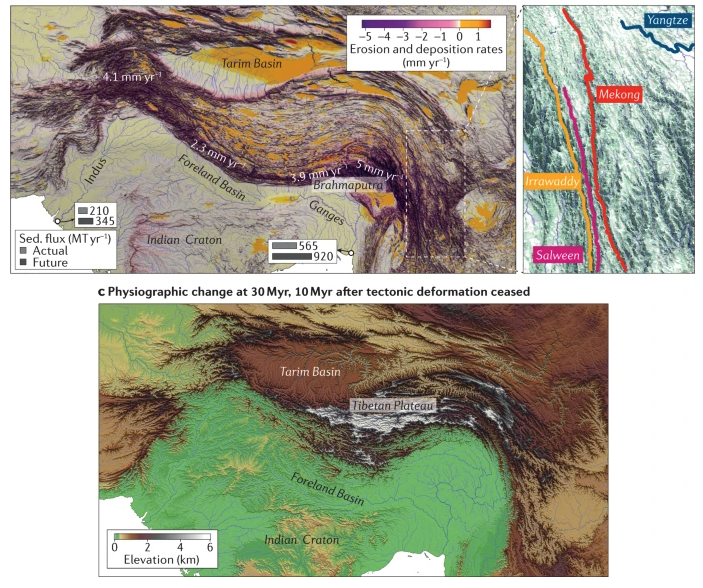
Nature Reviews Earth and Environment: A glimpse into a possible geomorphic future of Tibet

The Tibetan Plateau plays a central role in global atmospheric circulation, acts as a key biodiversity hotspot, and delivers fresh water for more than 20% of the global population. Projecting its future uplift and erosion trajectory over geological time can offer potential testable hypotheses into interactions between tectonic and surface processes. Rey, P., Salles, T., … Read more…

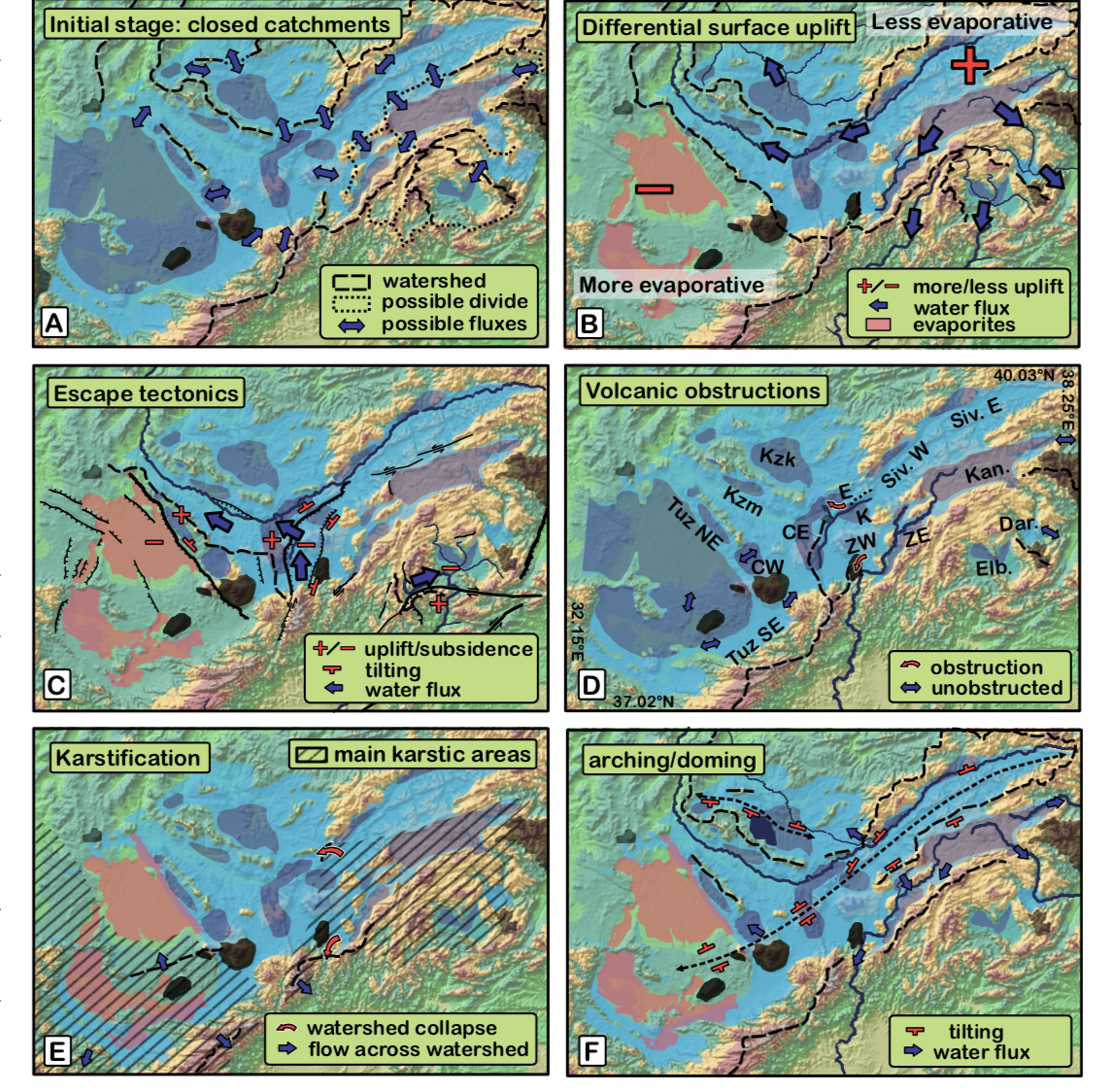
Geosphere: Fast Pliocene integration of the Central Anatolian Plateau drainage: Evidence, processes, and driving forces

Continental sedimentation was widespread across the Central Anatolian Plateau in Miocene– Pliocene time, during the early stages of plateau uplift. Today, however, most sediment produced on the plateau is dispersed by a well-integrated drainage and released into surrounding marine depocenters. Residual long-term (106–107 yr) sediment storage on the plateau is now restricted to a few … Read more…