Permo-Triassic rift nucleation in East Antarctica revealed by low-temperature thermochronology
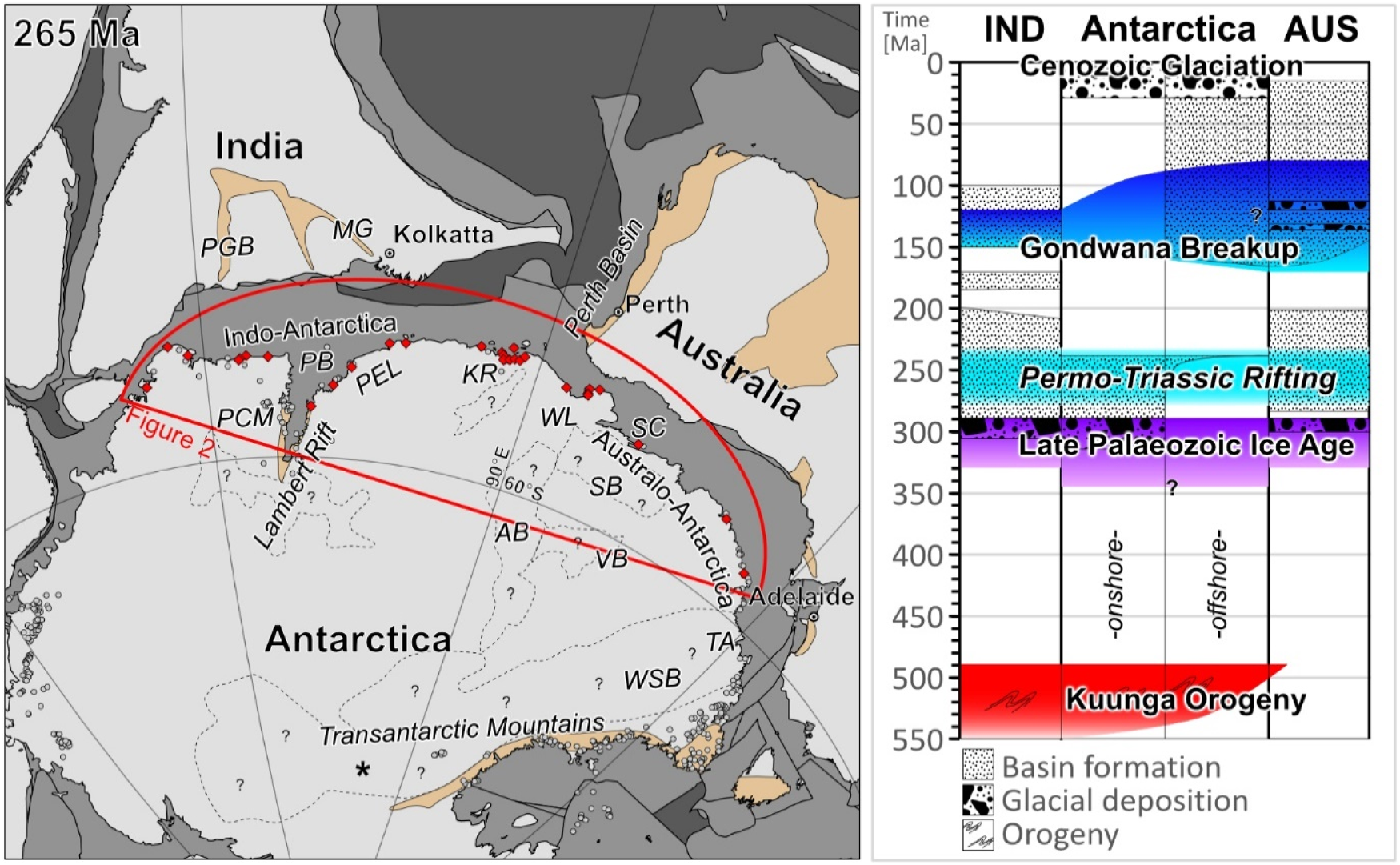
Palaeoreconstruction map of East Gondwana at 265 Ma showing the East Antarctic margin, study area and sample locations.

Researchers collected new apatite fission-track and (U-Th)/He data across more than 5000 km of the East Antarctic margin to reconstruct its rifting history. The results show that an earlier, failed rifting episode in the Permo-Triassic period cooled and shaped the crust more strongly than the later Jurassic-Cretaceous breakup of Gondwana itself. This multi-phase rifting appears … Read more…
OK computer: AI reaches human-level accuracy in fission track counting in apatite and mica

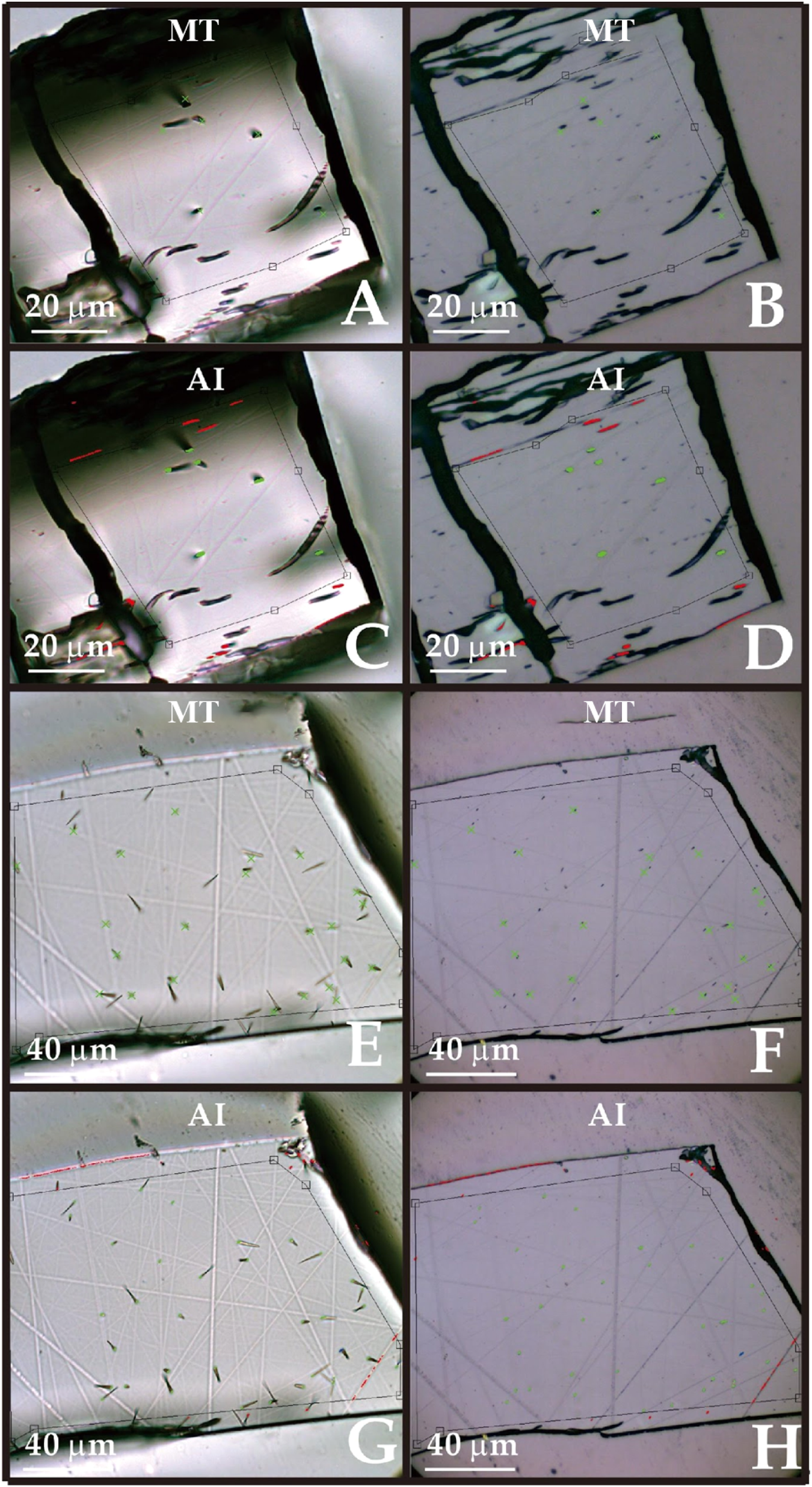
Microscope images comparing human- and AI-identified fission tracks in two apatite grains with differing counting accuracy.

Researchers compared fission track counts made by a trained AI system (HALtracks 2D) with those of an expert human analyst using identical microscope images of apatite and mica samples. The AI matched human counts closely on clean, simple grains and performed comparably to the average expert even on more complex samples, though both struggled with … Read more…


Predicting the preservation of buried ore deposits using deep-­ time landscape evolution modeling

    Porphyry copper discoveries are declining despite rising demand to meet net-zero targets, highlighting the need for innovative exploration strategies. While many advances have focused on ore formation at depth, a major challenge remains in understanding how erosion and uplift over millions of years affect deposit preservation. These post-mineralisation processes determine whether porphyry systems … Read more…

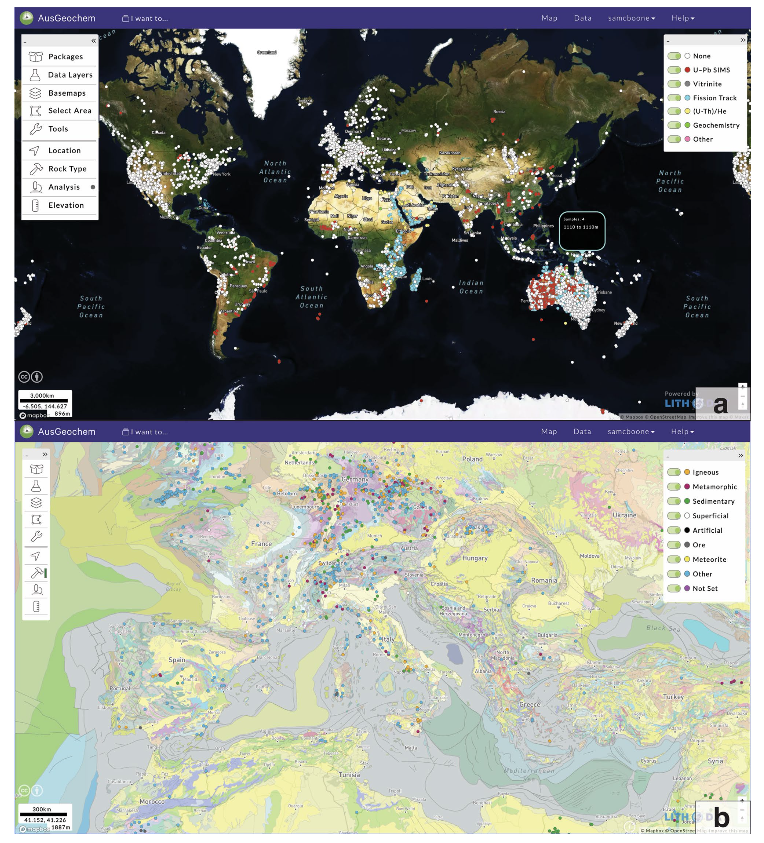
Scientific Reports: A geospatial platform for the tectonic interpretation of low‐temperature thermochronology Big Data

Low‐temperature thermochronology is a powerful tool for constraining the thermal evolution of rocks and minerals in relation to a breadth of tectonic, geodynamic, landscape evolution, and natural resource formation processes through deep time. However, complexities inherent to these analytical techniques can make interpreting the significance of results challenging, requiring them to be placed in their … Read more…