
Machine learning framework for prospectivity mapping of Cu–Au porphyry mineralisation in the Lachlan Fold Belt, eastern Australia
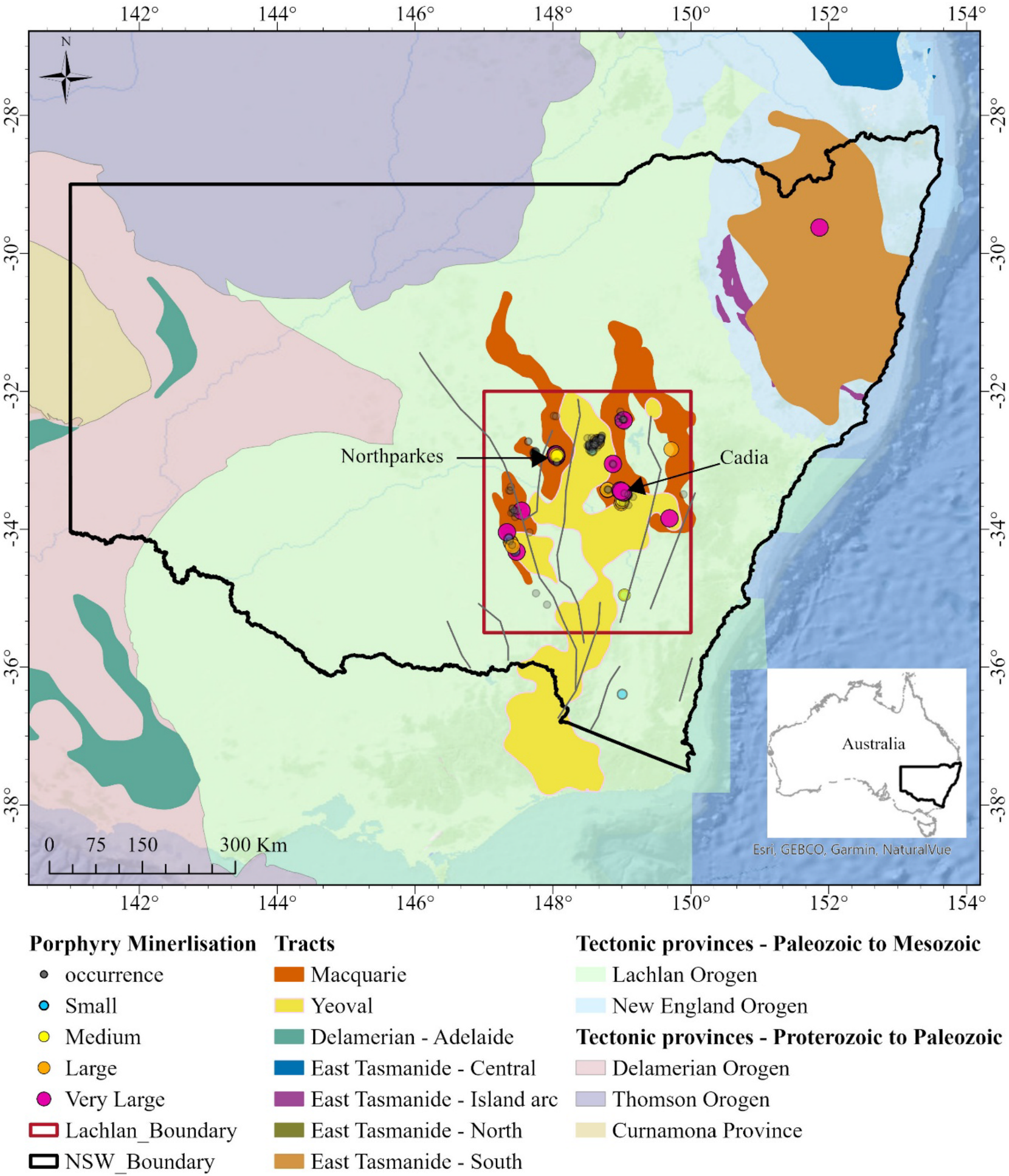
Map of NSW showing tectonic provinces, porphyry tracts, and major porphyry deposits including Northparkes and Cadia.

Researchers developed a machine learning framework to predict where copper–gold porphyry deposits are likely to occur in the Lachlan Fold Belt of New South Wales, Australia. By combining geological, geophysical and remote sensing data with a positive-unlabelled bagging and random forest approach, the model successfully captures 95% of known mineral occurrences within just 5% of … Read more…
Predicting the preservation of buried ore deposits using deep-­ time landscape evolution modeling


    Porphyry copper discoveries are declining despite rising demand to meet net-zero targets, highlighting the need for innovative exploration strategies. While many advances have focused on ore formation at depth, a major challenge remains in understanding how erosion and uplift over millions of years affect deposit preservation. These post-mineralisation processes determine whether porphyry systems … Read more…

Subducting seafloor anomalies promote porphyry copper formation

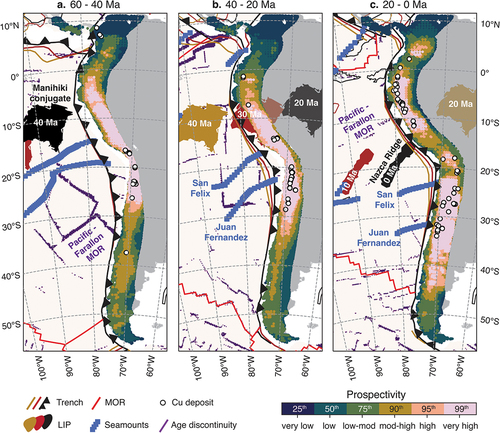
Oceanic seafloor is scarred by age discontinuities, seamounts, and large igneous provinces (LIPs) over normal bathymetry. The recycling of these seafloor anomalies has been speculated to alter subduction regimes which may locally prime some regions for porphyry copper deposit formation. Using a tectonic plate reconstruction encompassing the last 100 Ma paired with a machine learning classifier … Read more…