
Coral thermal tolerances constrain extreme Mesozoic–Cenozoic hothouse reconstructions
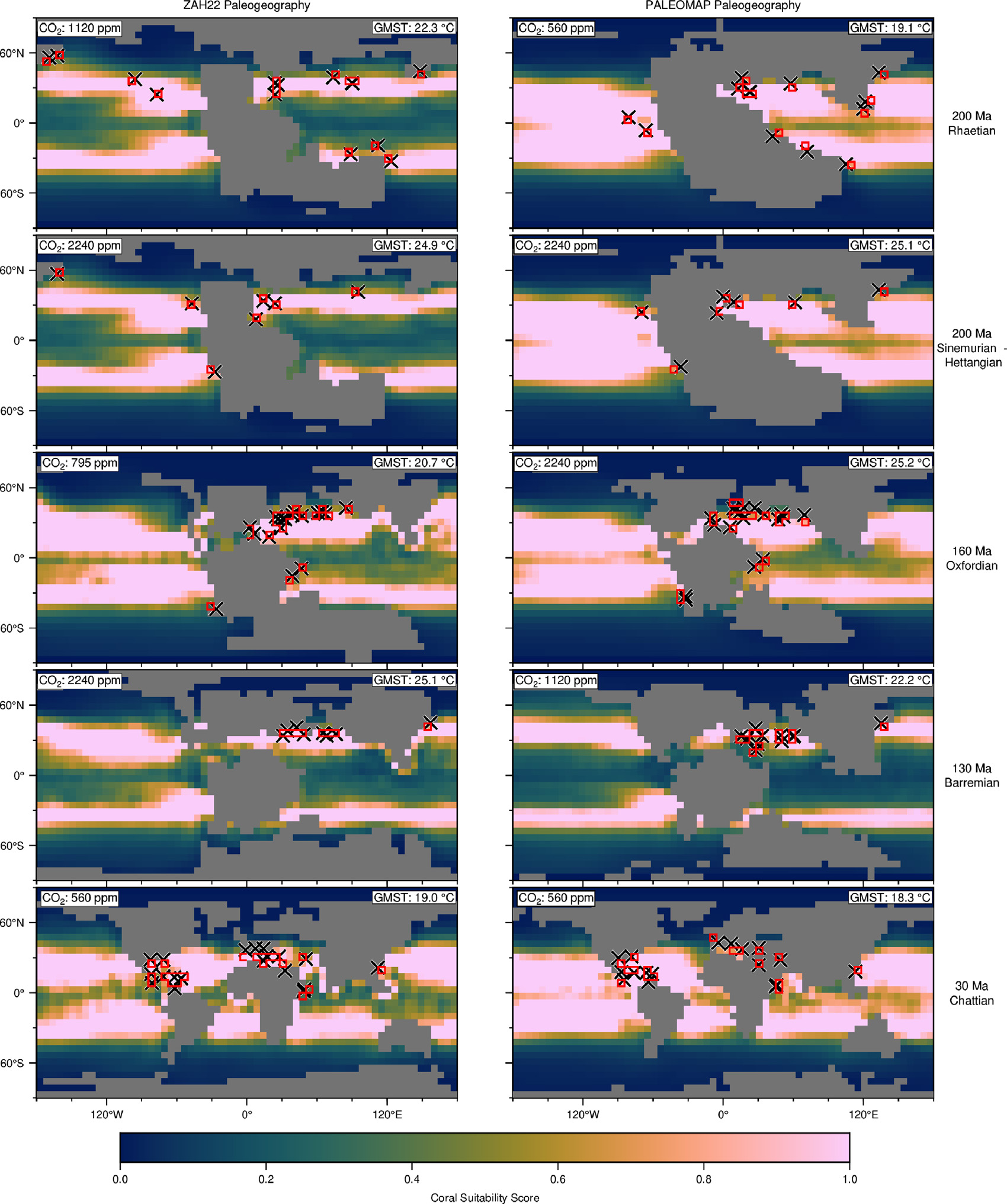
Maps comparing coral habitat suitability under two paleogeographic reconstructions, with fossil coral sites marked as crosses.

Modern reef-building corals only thrive within a narrow sea surface temperature range of about 22–30°C. The authors use this preference as an independent check on past climate models, running an ensemble of simulations from 250 million years ago to today across a range of CO2 levels and paleogeographies. Their coral-constrained temperature curve closely matches earlier … Read more…
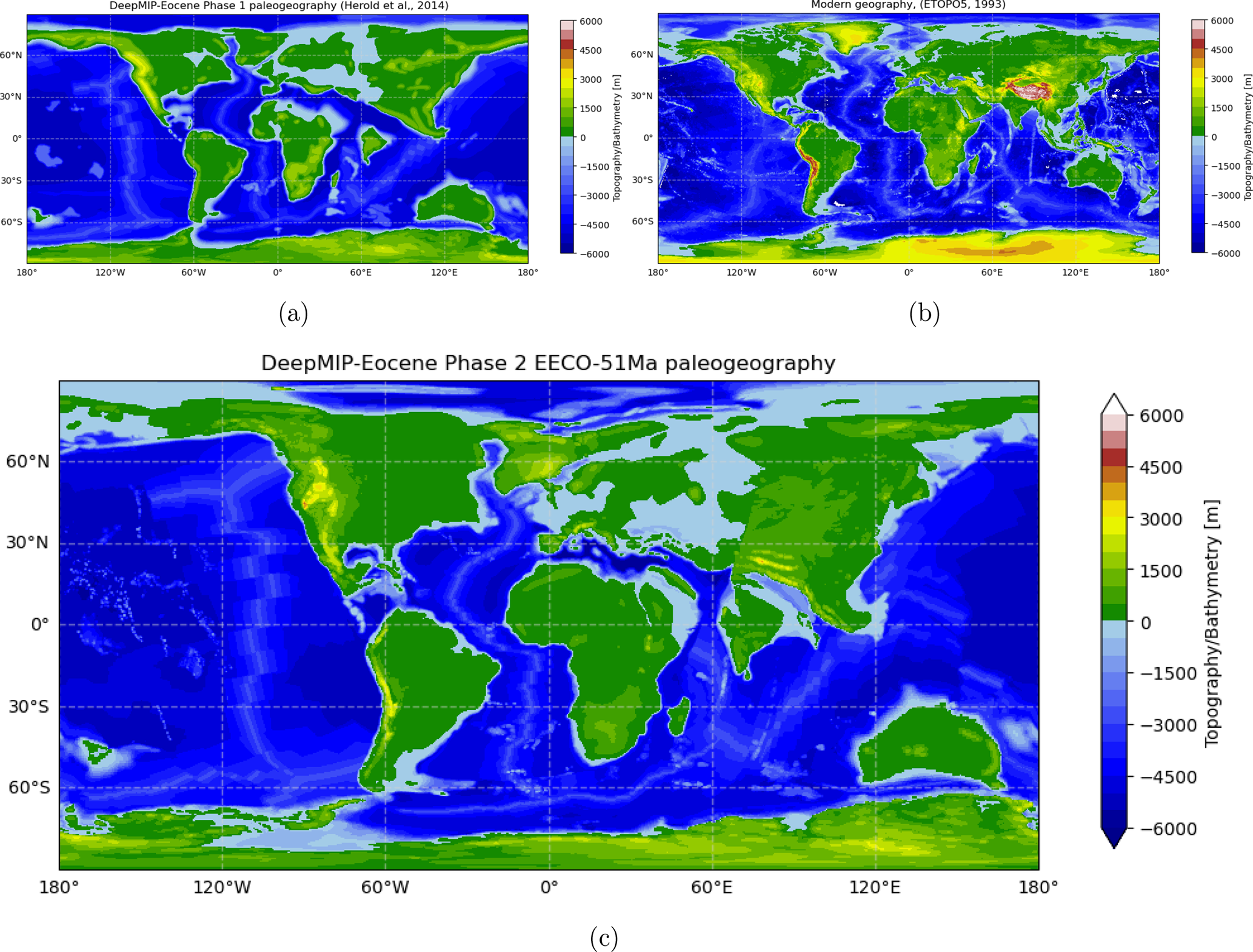
DeepMIP-Eocene-p2: Experimental design for Phase 2 of the early Eocene component of the CMIP7/PMIP7 Deep-time Model Intercomparison Project (DeepMIP-Eocene)

Maps comparing the Phase 1 (55 Ma), modern, and new Phase 2 (51 Ma) paleogeography reconstructions used in the DeepMIP-Eocene model experiments.

This paper outlines the experimental design for Phase 2 of DeepMIP-Eocene, a project that coordinates climate model simulations of the early Eocene, a period around 56–41 million years ago when global temperatures were far higher than today and carbon dioxide levels were much greater. The design updates the paleogeography, vegetation and carbon dioxide inputs used … Read more…

When the Earth warms, the ocean speeds up

Sixty-six million years of geological data suggests that heating makes ocean currents stronger. By Ellen McPhiddian, Cosmos Ocean currents play a big role in floods, droughts, and other large-scale weather patterns. We know that ocean circulation will be affected by global warming – but figuring out exactly how it will be affected is much more difficult. Will there be … Read more…