Influence of secular cooling on core-mantle boundary heat flux and mantle plume temperature over 1.8 billion years

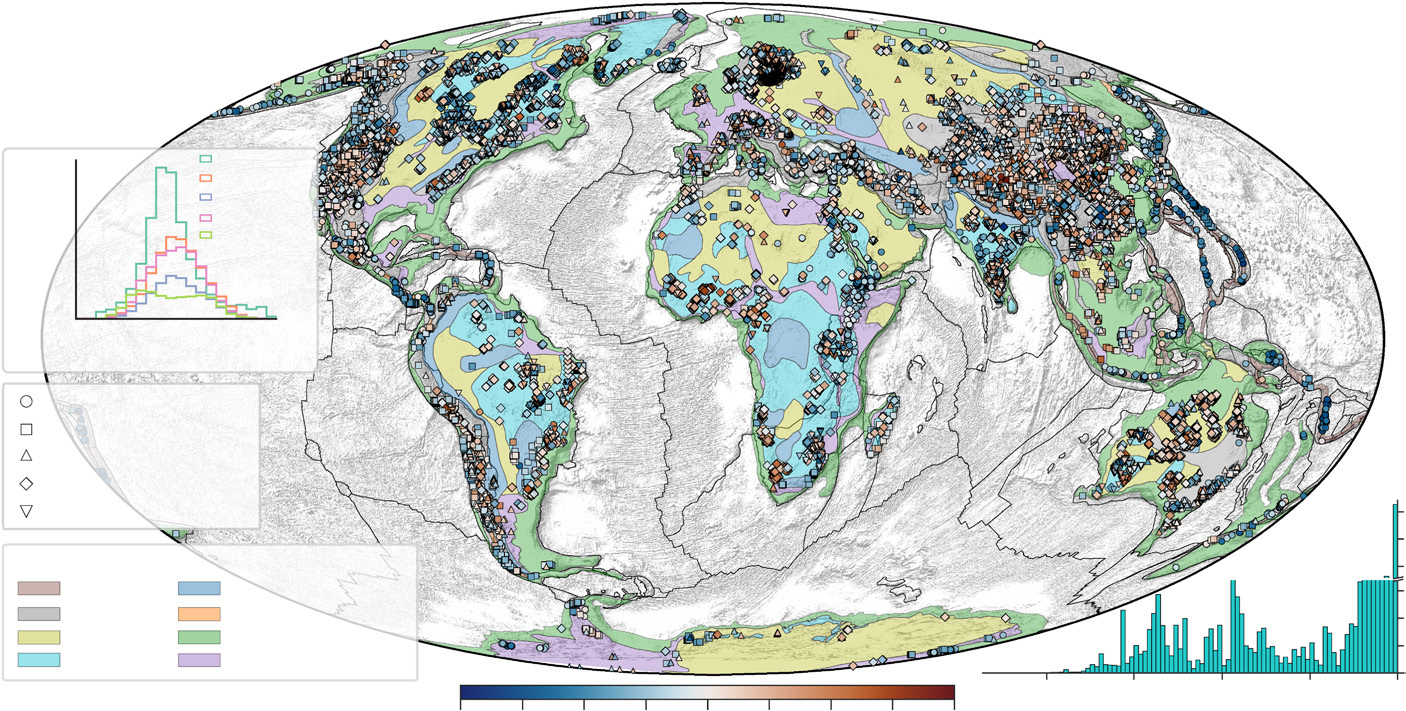
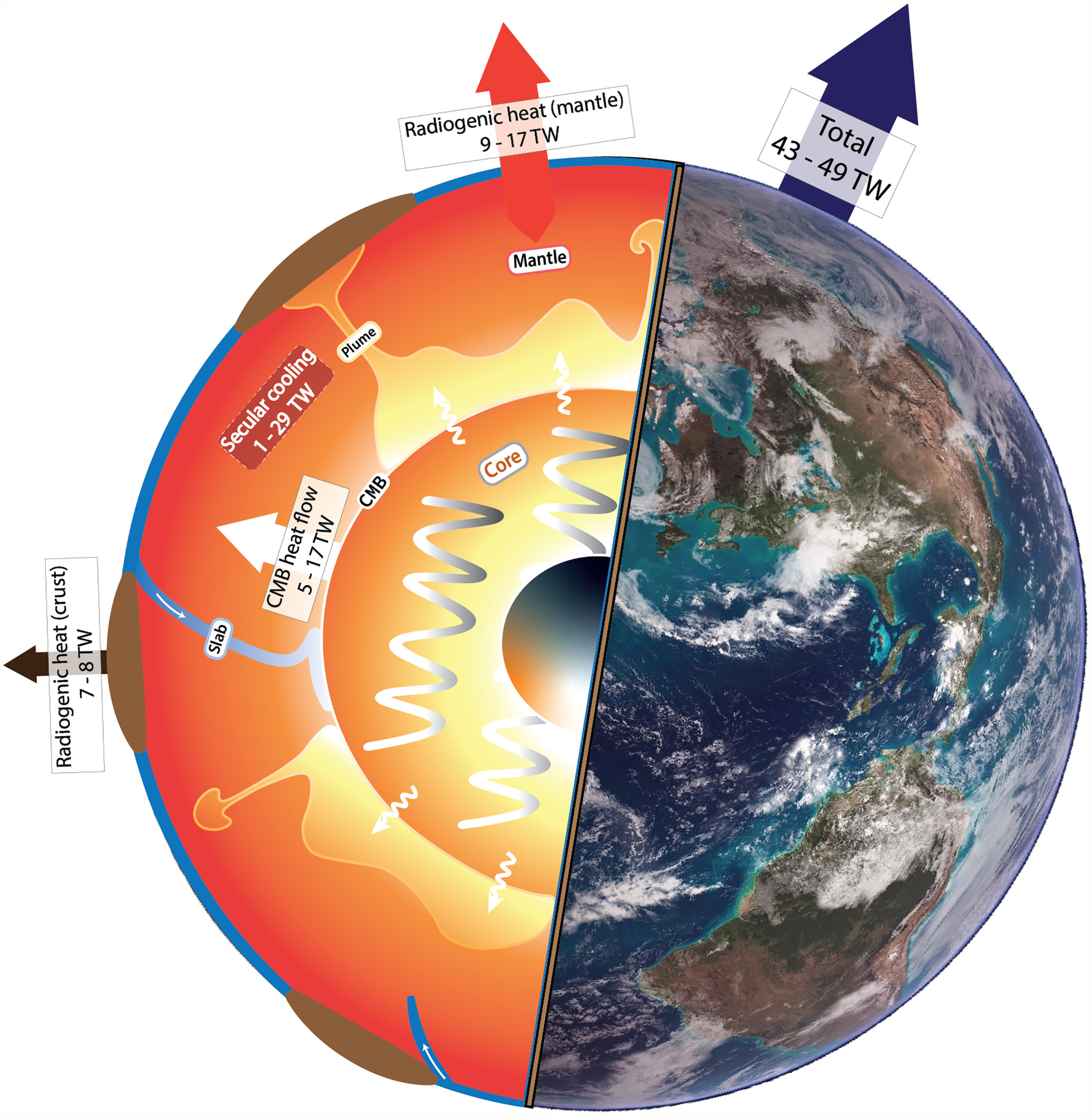
Figure 1 from Zhang et al. (2026)

Researchers modelled global mantle flow over the past 1.8 billion years, incorporating the gradual cooling of Earth’s core and the decay of radiogenic heat sources through time. They found that this long-term cooling reduces both the heat flowing out of the core and the temperature of mantle plumes, at rates consistent with independent geological evidence. … Read more…

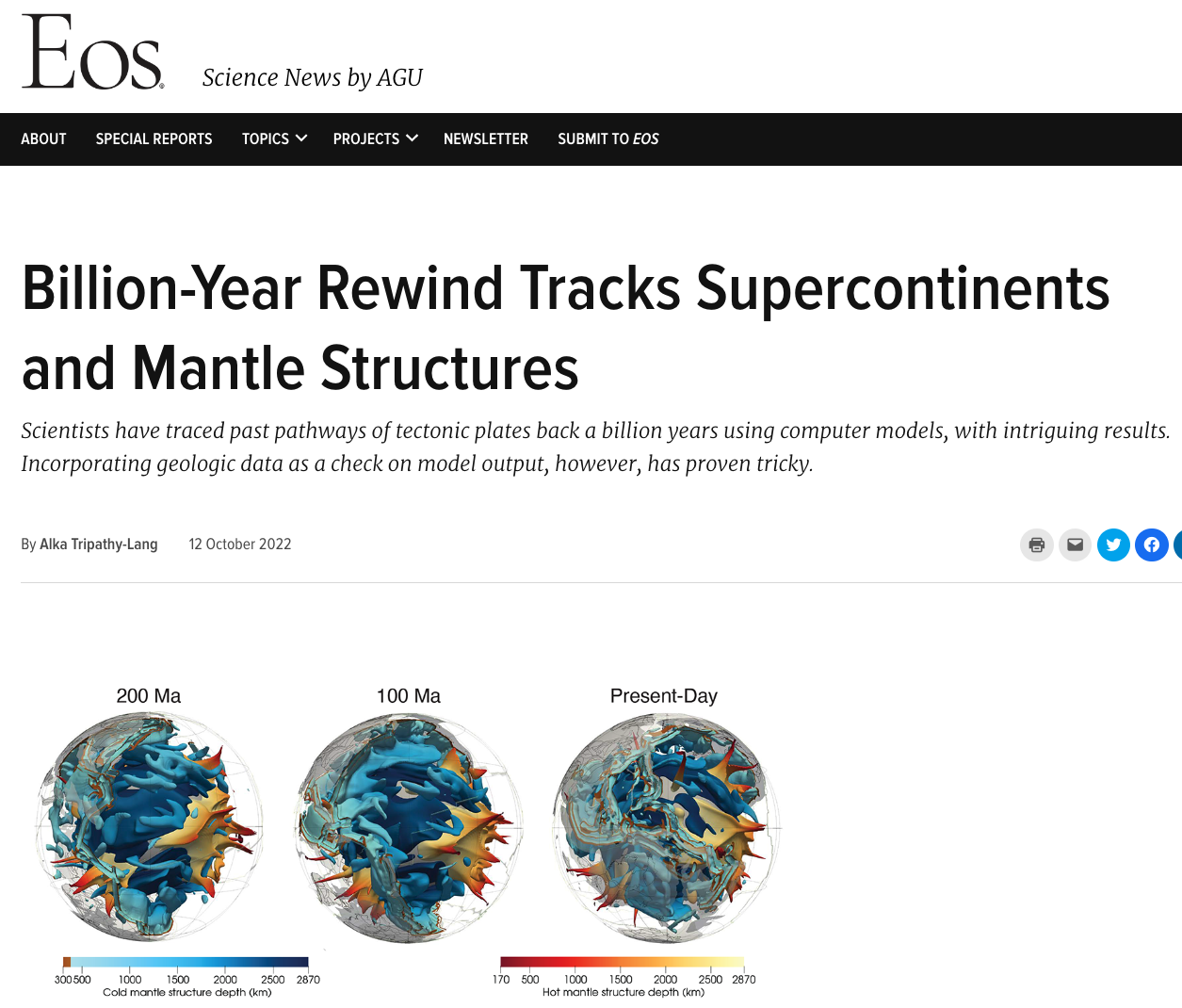
EOS: Billion-year rewind tracks supercontinents and mantle structures

AGU Science News: Billion-Year Rewind Tracks Supercontinents and Mantle Structures – EOS has featured our recent paper on tracing past pathways of tectonic plates and their boundaries back a billion years. The article highlights how our work on solid Earth system evolution is driving “a second plate tectonic revolution”., inspiring future work to test and … Read more…

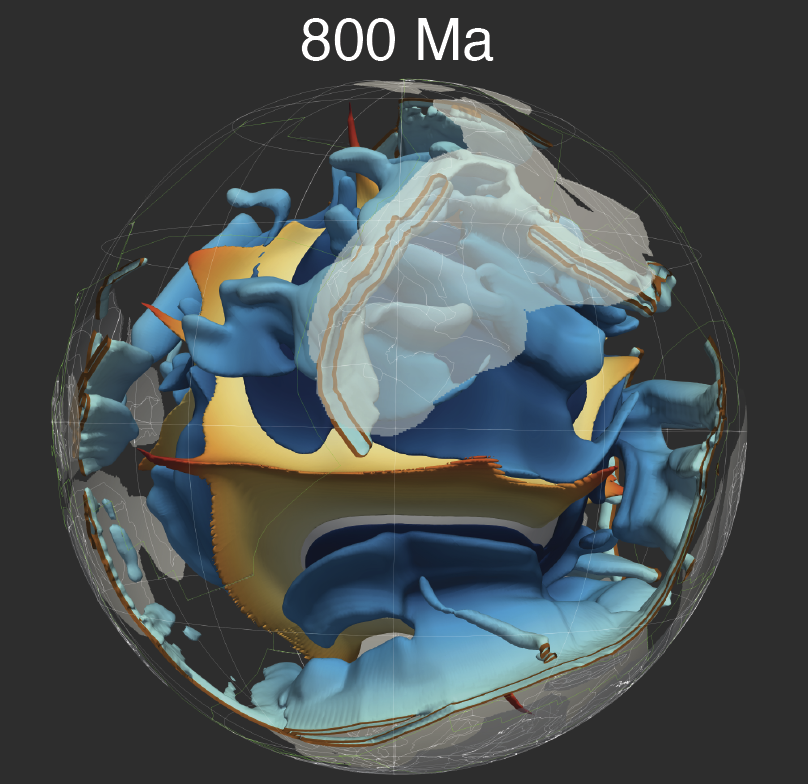
Solid Earth: A tectonic-rules-based mantle reference frame since 1 billion years ago – implications for supercontinent cycles and plate–mantle system evolution

Understanding the long-term evolution of Earth’s plate-mantle system is reliant on absolute plate motion models in a mantle reference frame, but such models are both difficult to construct and controversial. We present a tectonic rules-based optimisation approach to construct a plate motion model in a mantle reference frame covering the last billion years and use … Read more…

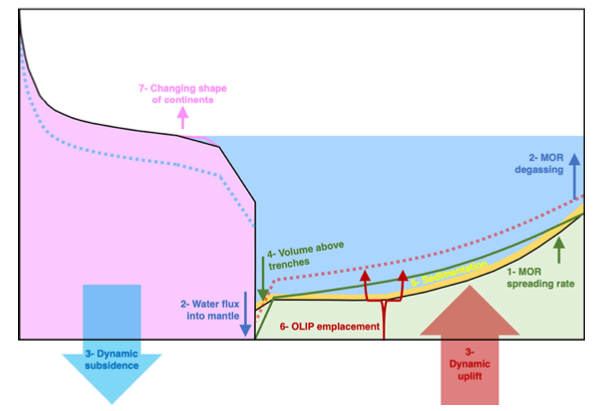
EPSL: Long-term Phanerozoic sea level change from solid Earth processes

The sedimentary rock record suggests that global sea levels may have fluctuated by hundreds of meters throughout Phanerozoic times. Long-term (10–80 Myr) sea level change can be inferred from paleogeographic reconstructions and stratigraphic methods can be used to estimate sea level change over 1–10 Myr in tectonically quiescent regions assumed to be stable. Plate tectonic … Read more…