Carbon emissions along divergent plate boundaries modulate icehouse-greenhouse climates
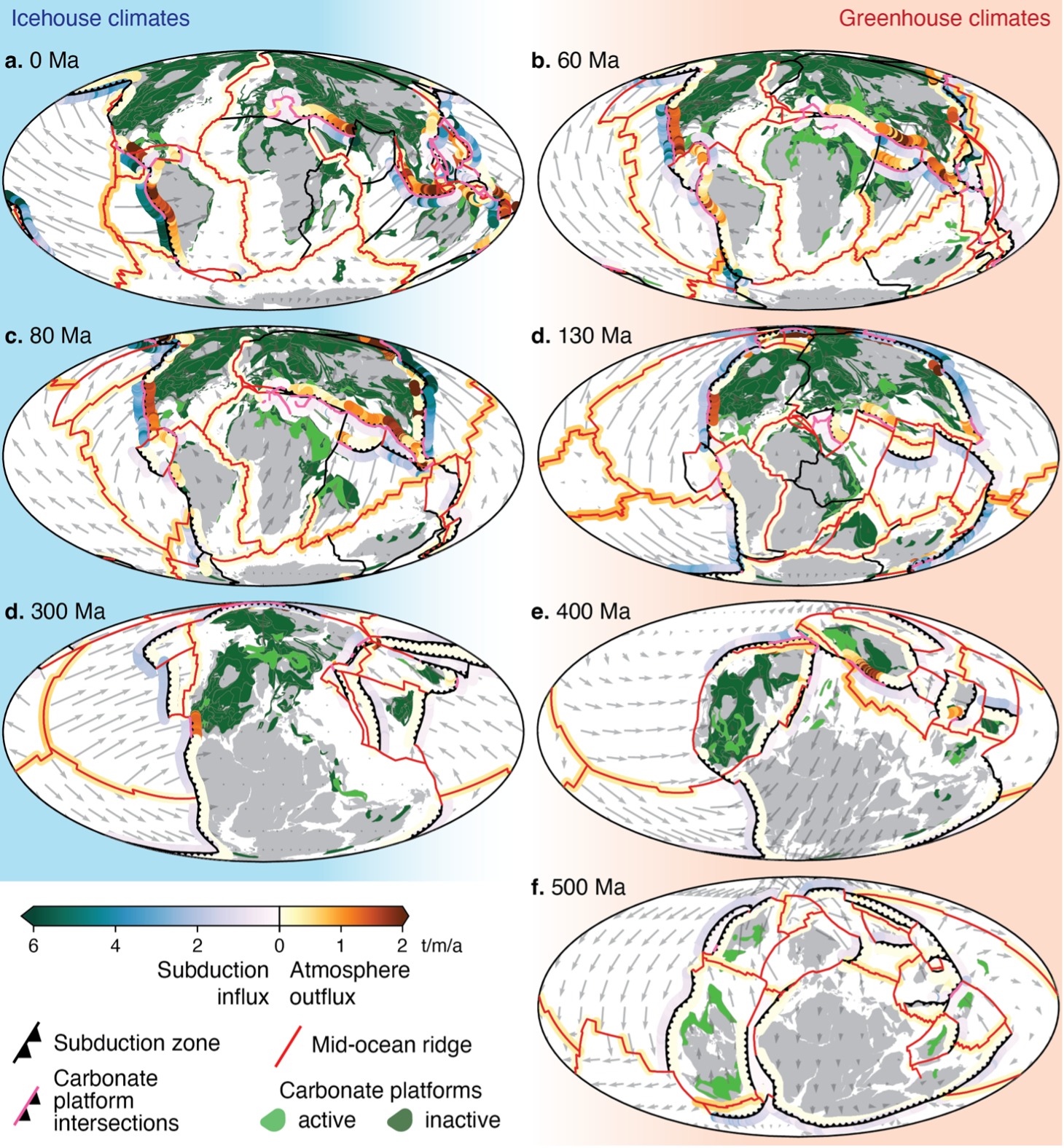
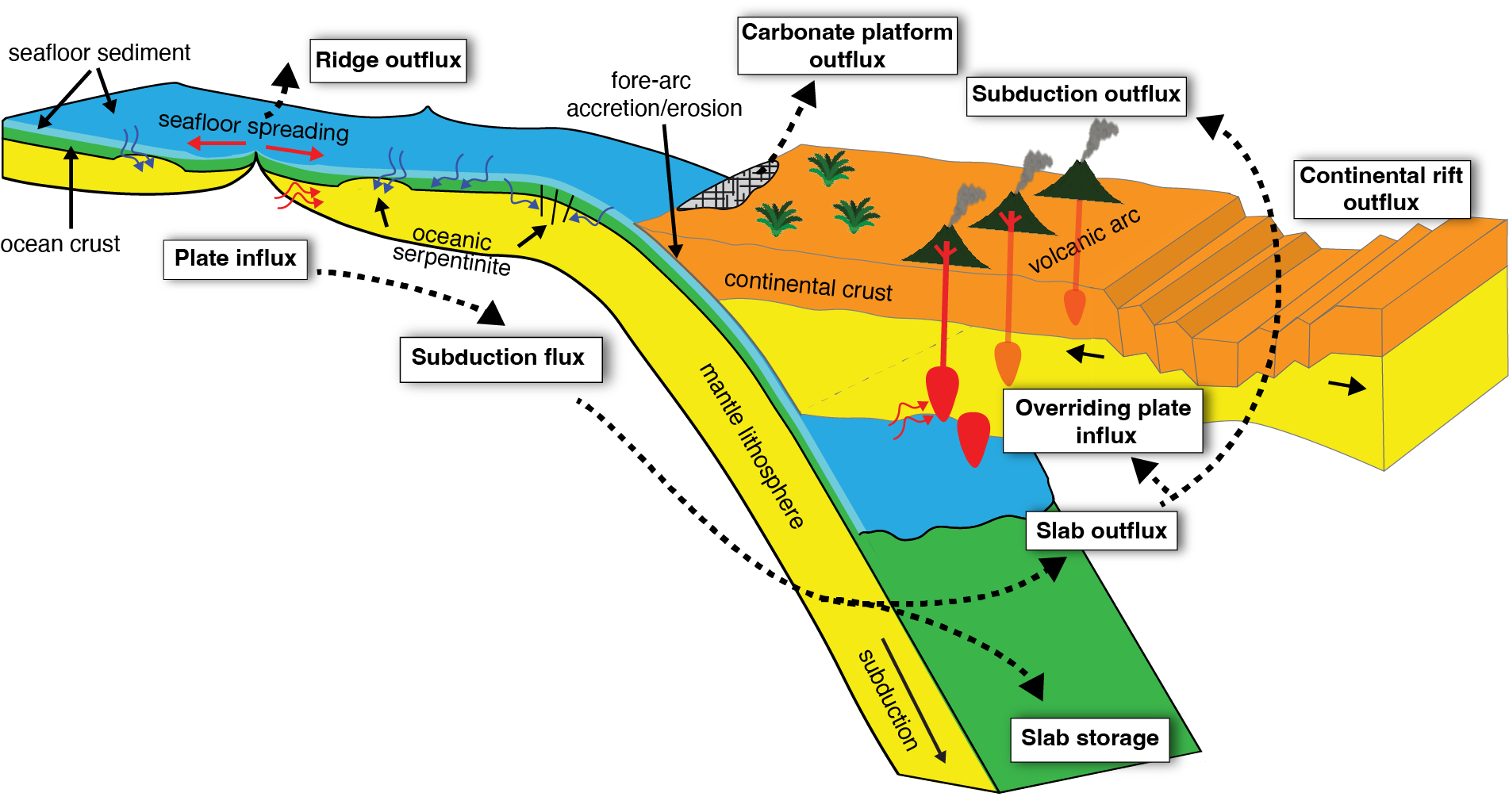
The exchange of carbon between oceanic plates, the deep Earth, and the atmosphere plays a significant role in modulating global climate1,2. Icehouse-greenhouse climate fluctuations have been attributed to changes in palaeogeography and solid Earth degassing3, particularly along continental arcs2,4,5, to arc weathering5 and to the sequestration of carbon into oceanic carbonate-rich sediments6. However, the proportions … Read more…
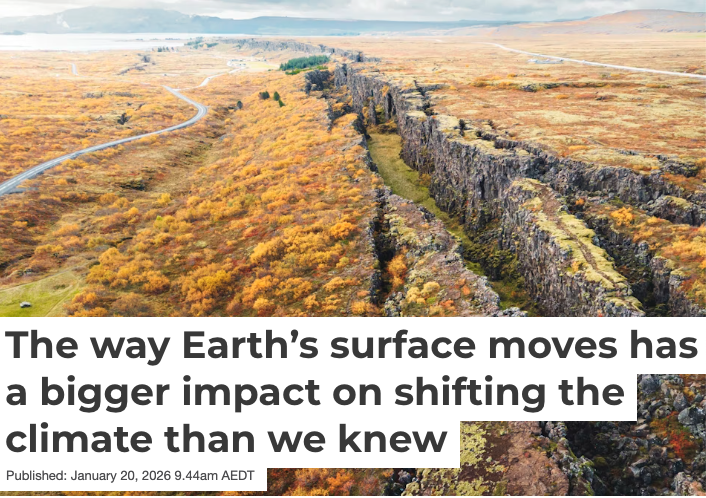
The way Earth’s surface moves has a bigger impact on shifting the climate than we knew

Our planet has experienced dramatic climate shifts throughout its history, oscillating between freezing “icehouse” periods and warm “greenhouse” states. Scientists have long linked these climate changes to fluctuations in atmospheric carbon dioxide. However, new research reveals the source of this carbon – and the driving forces behind it – are far more complex than previously … Read more…

Volcanoes had lower greenhouse gas emissions in Earth’s past

The power of volcanoes to change Earth’s climate may not be as ancient as previously thought. Throughout our planet’s history, the climate has fluctuated between “icehouse” and “greenhouse” conditions, largely determined by the levels of greenhouse gases, such as carbon dioxide, in the atmosphere. Volcanic arcs, the giant chains of erupting peaks in places like … Read more…

Predicting the preservation of buried ore deposits using deep-­ time landscape evolution modeling

    Porphyry copper discoveries are declining despite rising demand to meet net-zero targets, highlighting the need for innovative exploration strategies. While many advances have focused on ore formation at depth, a major challenge remains in understanding how erosion and uplift over millions of years affect deposit preservation. These post-mineralisation processes determine whether porphyry systems … Read more…

Polar wander leads to large differences in past climate reconstructions

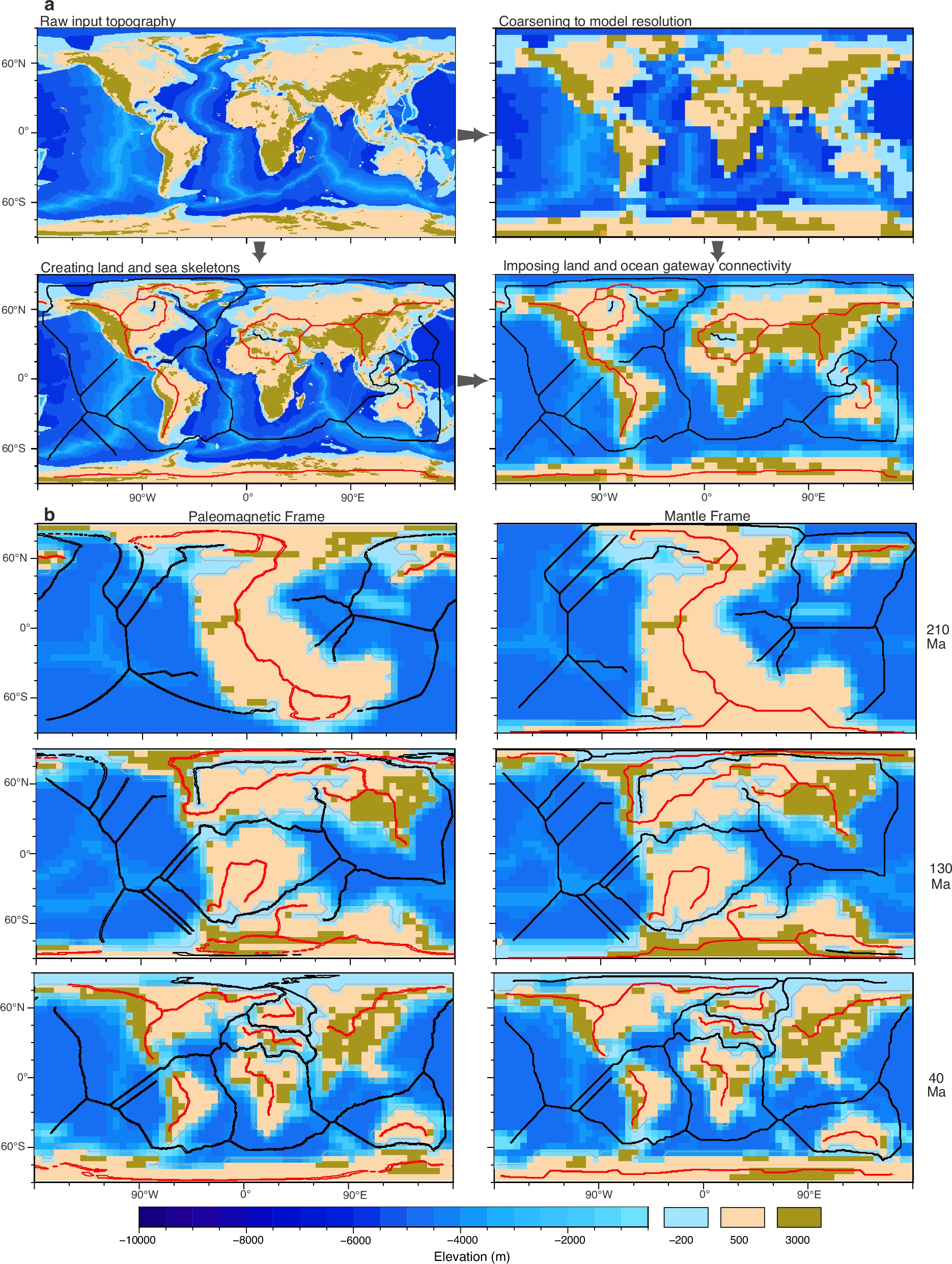
The position of continents and oceans in geological time dictates the biogeographic dispersal of life, influences the preservation of mineral resources, and informs our understanding of Earth’s climate trajectory. Reconstructing past crustal locations requires a plate tectonic model that differs depending on whether the model uses a mantle reference frame, or a paleomagnetic reference frame, … Read more…

New Kinematic Model of the Early Opening of the Equatorial Atlantic Realm

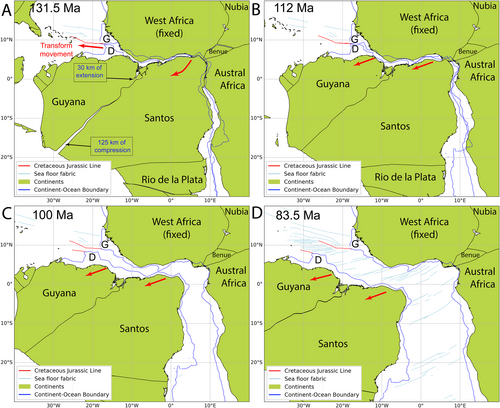
The opening of the Equatorial Atlantic Ocean constitutes the final stage of Gondwana’s breakup, leading to the separation of the African and South American continents. The early spreading has been debated due to the absence of magnetic anomalies related to the Early Cretaceous opening at low latitude, and an incomplete fracture zone record, hidden by … Read more…

Machine Learning-Based Spatio-Temporal Prospectivity Modeling of Porphyry Systems in the New Guinea and Solomon Islands Region


Abstract. The discovery of new economic copper deposits is critical for the development of renewable energy infrastructure and zero-emissions transport. The majority of existing copper mines are located within current or extinct continental arc systems, but our understanding of the tectonic and geodynamic conditions favoring the formation of porphyry systems is still incomplete. Traditionally, exploration … Read more…

Solid Earth carbon degassing and sequestration since 1 billion years ago

Solid Earth CO2 outgassing, driven by plate tectonic processes, is a key driver of carbon cycle models. However, the magnitudes and variations in outgassing are poorly constrained in deep-time. We assess plate tectonic carbon emissions and sequestration by coupling a plate tectonic model with reconstructions of oceanic plate carbon reservoirs and with a thermodynamic model … Read more…

Geoscience Data Journal: Subduction and carbonate platform interactions

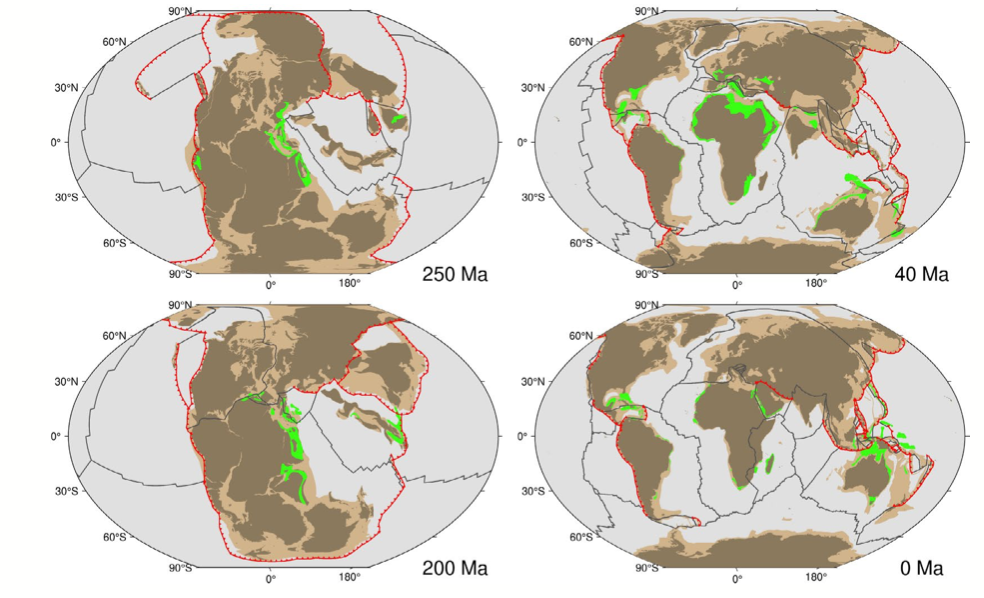
Plate tectonics, as the unifying theory in Earth sciences, controls the functioning of important planetary processes on geological timescales. Here, we present an open-source workflow that interrogates community digital plate tectonic reconstructions, primarily in the context of the planetary deep carbon cycle. We present an updated plate tectonic reconstruction covering the last 400 million years … Read more…