Evolution and Provenance of the Polish Rotliegend in the Southern Permian Basin
3D reconstruction of the Polish Trough at 256 million years ago showing sediment provenance areas, thickness and drainage systems.

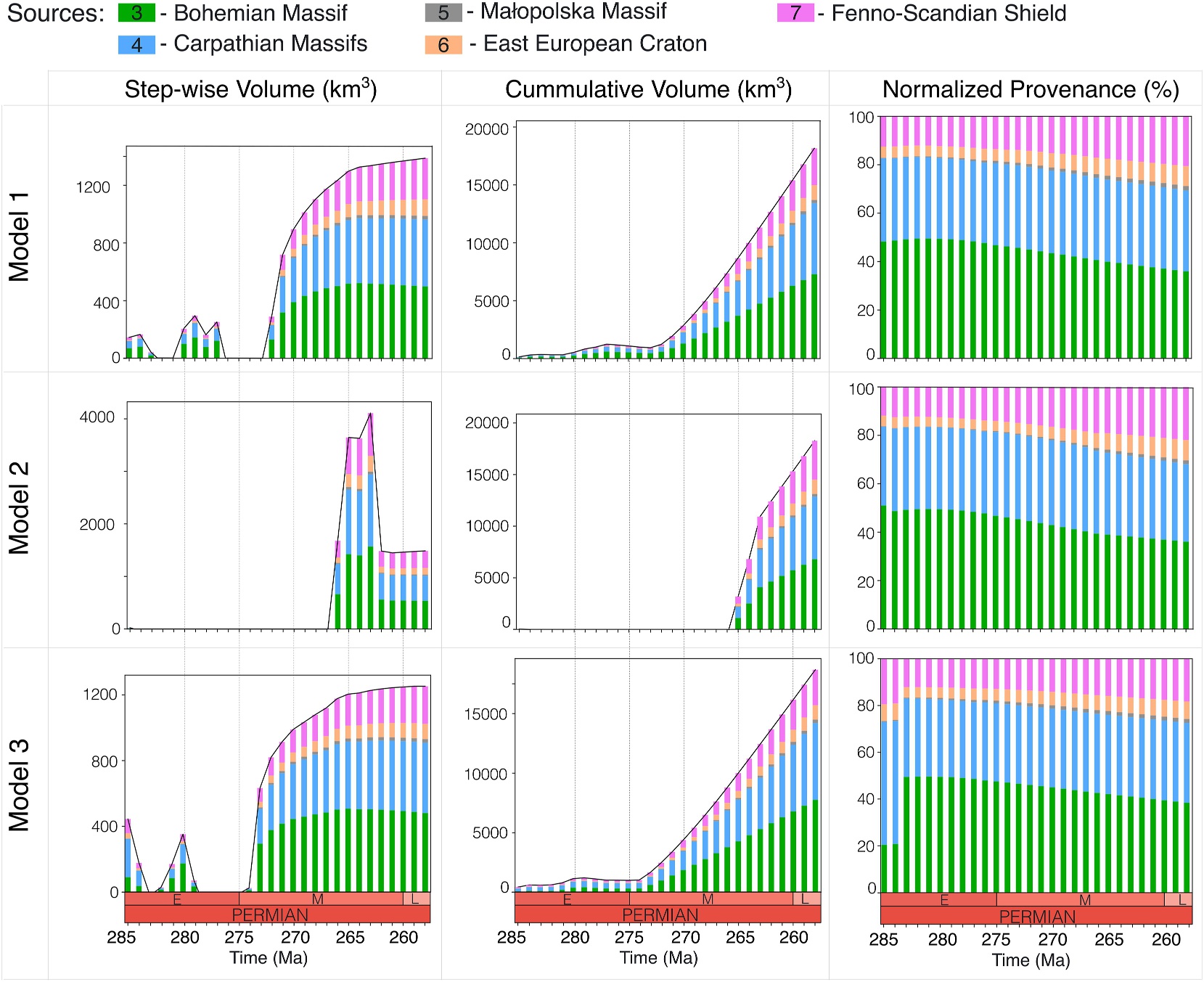
Researchers used an open-source landscape and stratigraphic evolution model (goSPL) to simulate how sediment filled the Polish Trough, part of the Southern Permian Basin, between 285 and 256 million years ago. By testing six different tectonic and climate scenarios, they identified two models that best match known sediment volumes, hiatus timing and depositional depth, and … Read more…
Permo-Triassic rift nucleation in East Antarctica revealed by low-temperature thermochronology

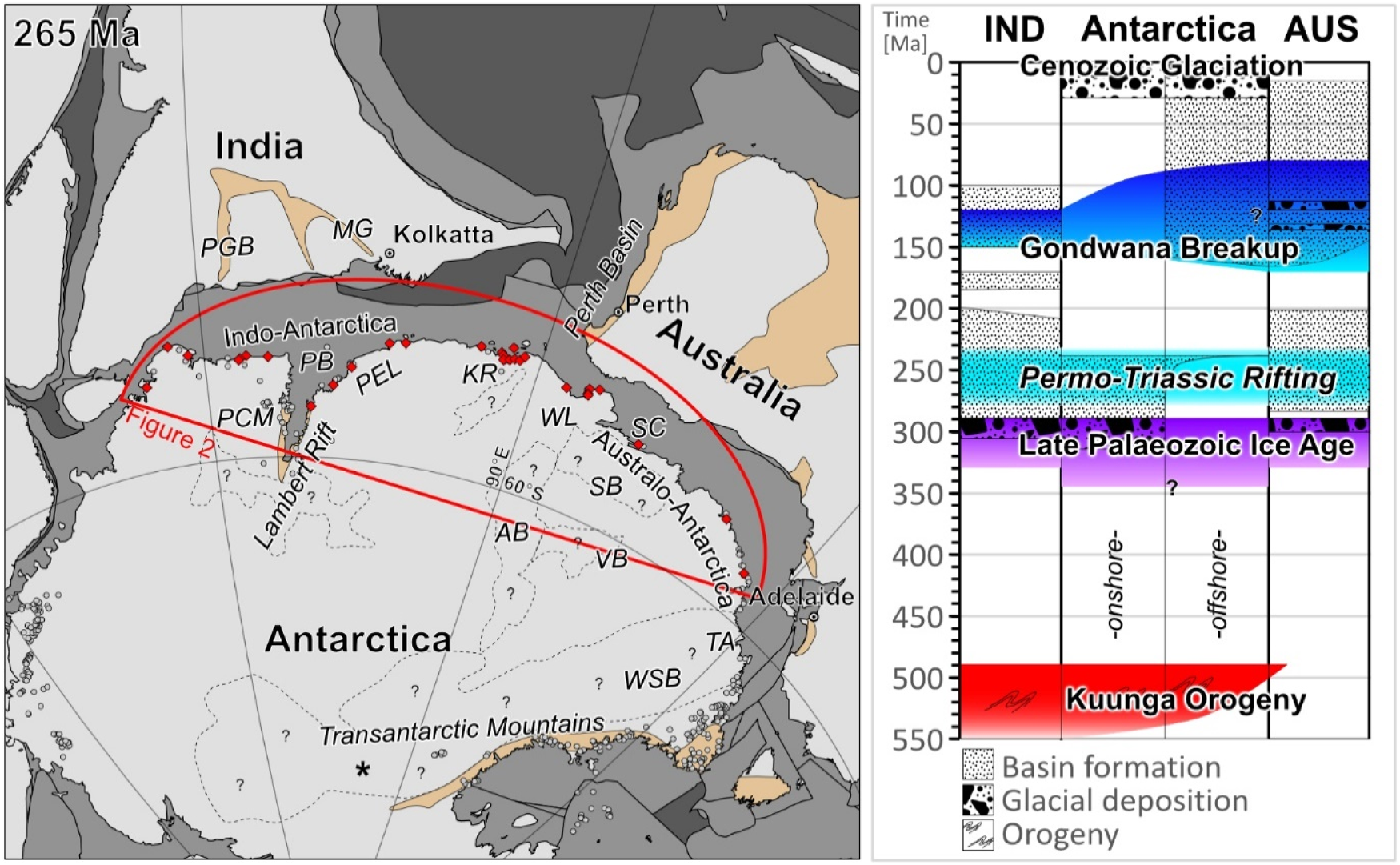
Palaeoreconstruction map of East Gondwana at 265 Ma showing the East Antarctic margin, study area and sample locations.

Researchers collected new apatite fission-track and (U-Th)/He data across more than 5000 km of the East Antarctic margin to reconstruct its rifting history. The results show that an earlier, failed rifting episode in the Permo-Triassic period cooled and shaped the crust more strongly than the later Jurassic-Cretaceous breakup of Gondwana itself. This multi-phase rifting appears … Read more…

Granitic intrusions enhance strain localization and rapid mantle exhumation along an oceanic detachment fault

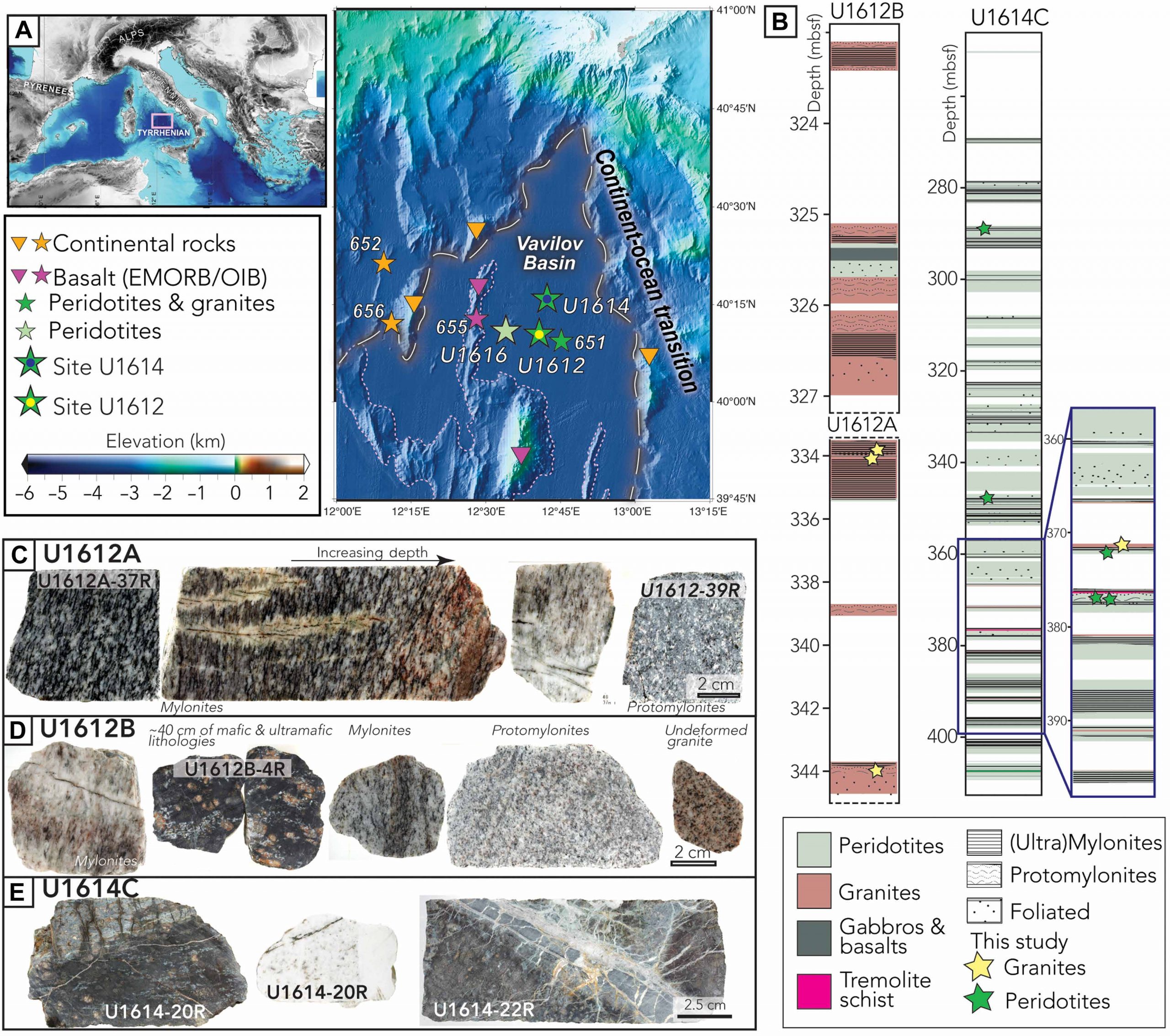
Map of the Tyrrhenian Sea showing IODP Expedition 402 drill sites with core photos and lithology logs.

Scientists drilling into the Tyrrhenian Sea seafloor as part of the International Ocean Discovery Program recovered rock cores showing granite intrusions mixed with peridotite along an ancient detachment fault. Dating and chemical analysis show the granites formed about 4 million years ago some 7 to 9 kilometres down, then were rapidly brought to the seafloor … Read more…

Thermo‐mechanical rift evolution of large igneous province crust

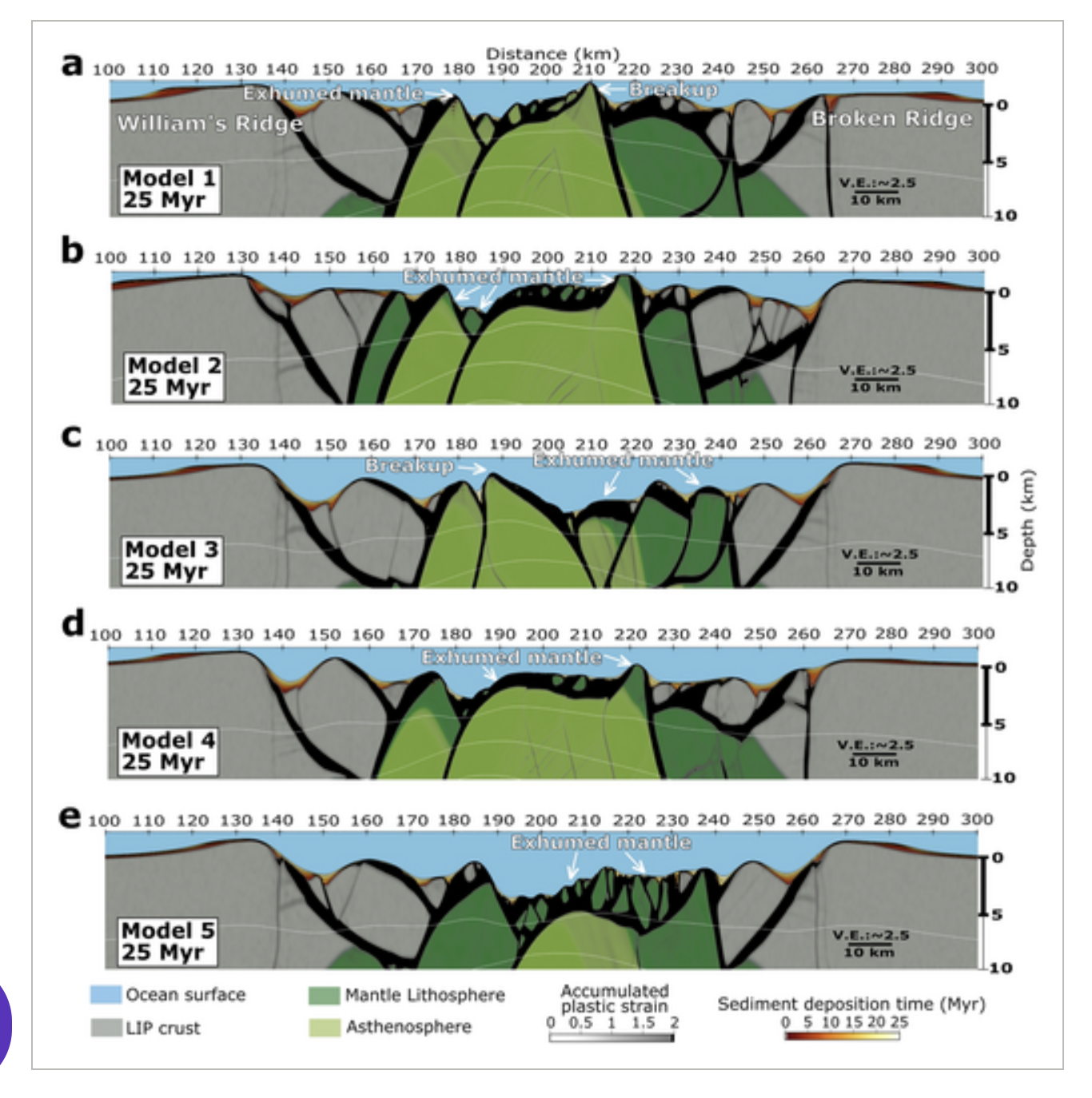
Numerical models, coupled with observational data, have proven crucial for addressing fundamental questions regarding extensional processes from continental rift to mid-ocean ridge (MOR). However, extensional processes at Large Igneous Provinces (LIP), a distinct type of lithosphere, have not been examined, leaving a thorough comprehension of rift mechanics unresolved. Here, we model the thermo-mechanical evolution for … Read more…

Geology: The role of surface processes in basin inversion and breakup unconformity

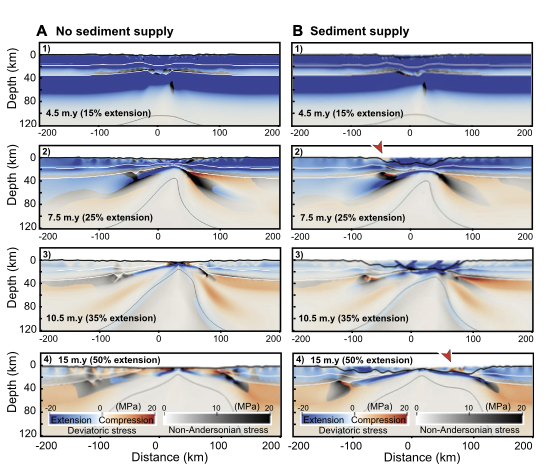
In the context of continental extension, transient compressional episodes (stress inversion) and phases of uplift (depth inversion) are commonly recorded with no corresponding change in plate motion. Changes in gravitational potential energy during the rifting process have been invoked as a possible source of compressional stresses, but their magnitude, timing, and relationship with depth inversions … Read more…

Marine and Petroleum Geology: Single-phase vs two-phase rifting: Numerical perspectives on the accommodation of extension during continental break-up

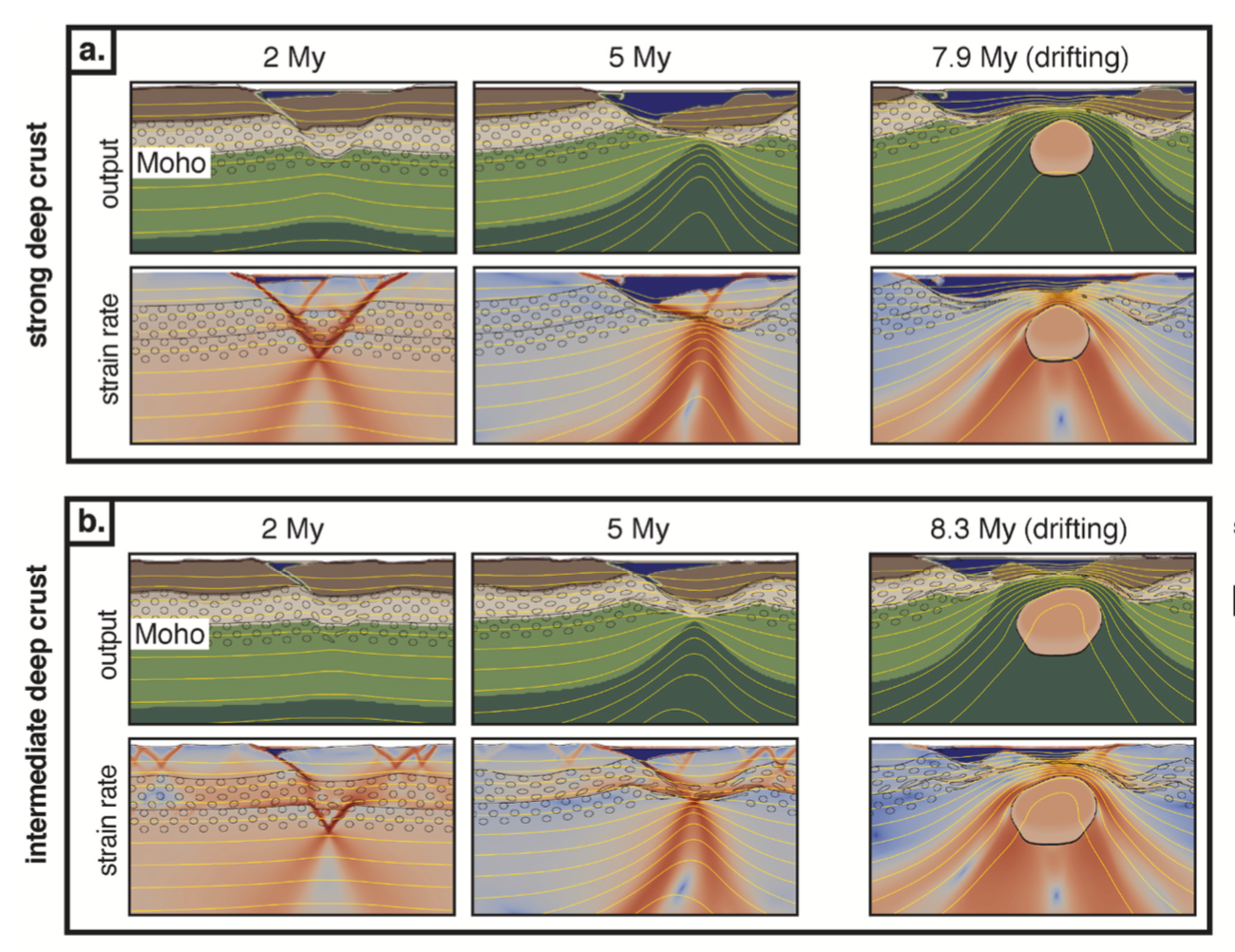
How continental lithosphere responds to extension is a function of the dynamic interaction between layers of differing rheological properties, including the shallow crust, deep crust, lithospheric mantle, and asthenosphere. We investigate the first-order controls on the modes of extension and timing of transition from continental rifting to development of continental margins via a suite of … Read more…