Tectonic and climatic implications of the Aleutian Arc initiation ≥56 million years ago
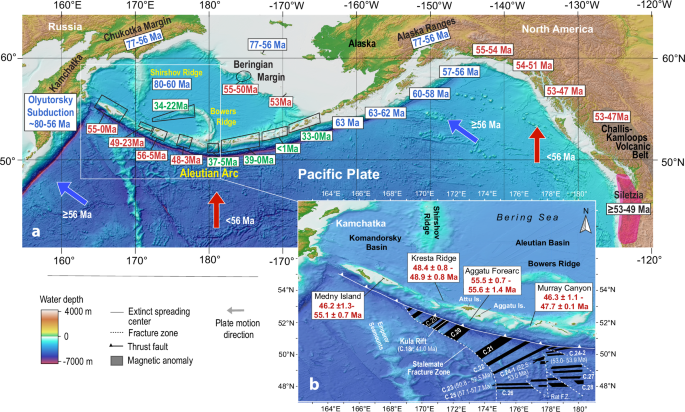
Figure 1 from Hoernle et al. (2026)

Researchers analysed the age and chemistry of lavas from the base of the western Aleutian volcanic arc, sampled across roughly 700 kilometres, to work out when subduction began there. The results show that Aleutian subduction started at least 56 million years ago, with early lavas resembling those formed during the onset of subduction in the … Read more…
How subduction evolution drives sediment-hosted mineralisation along craton edges

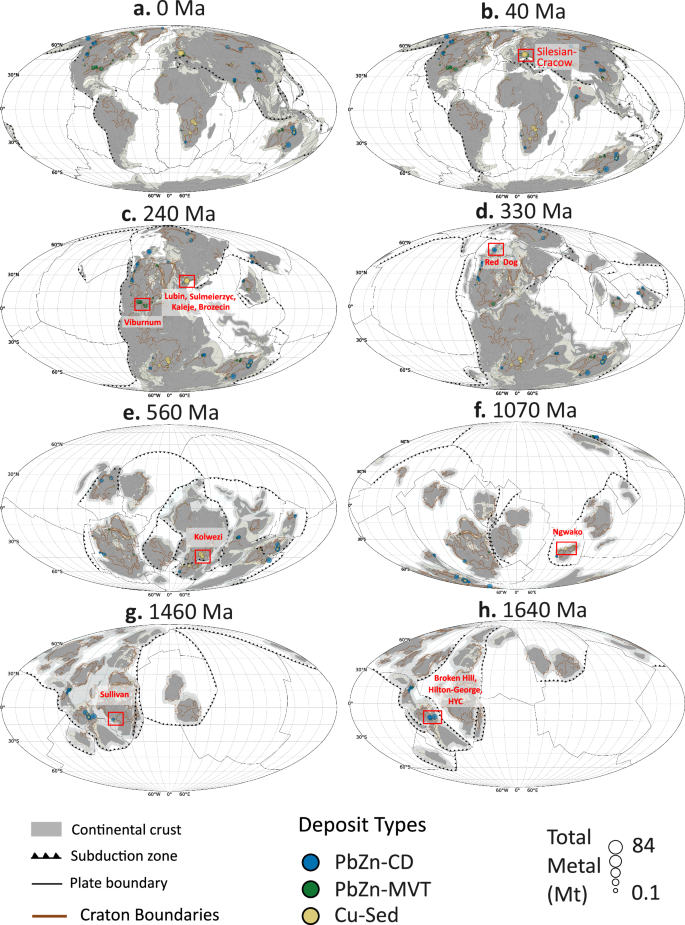
Figure 1 from Shirmard et al. (2026)

This study explores why sediment-hosted mineral deposits tend to form near the edges of ancient continental cores, or cratons. By combining a 1.8-billion-year plate motion model with seismic imaging of craton edges, geodynamic modelling and a global mineral deposit database, the authors show that mineralised craton edges typically formed 800-1800 km from active subduction zones, … Read more…

Parallel volcanic chains generated by plume-slab interaction

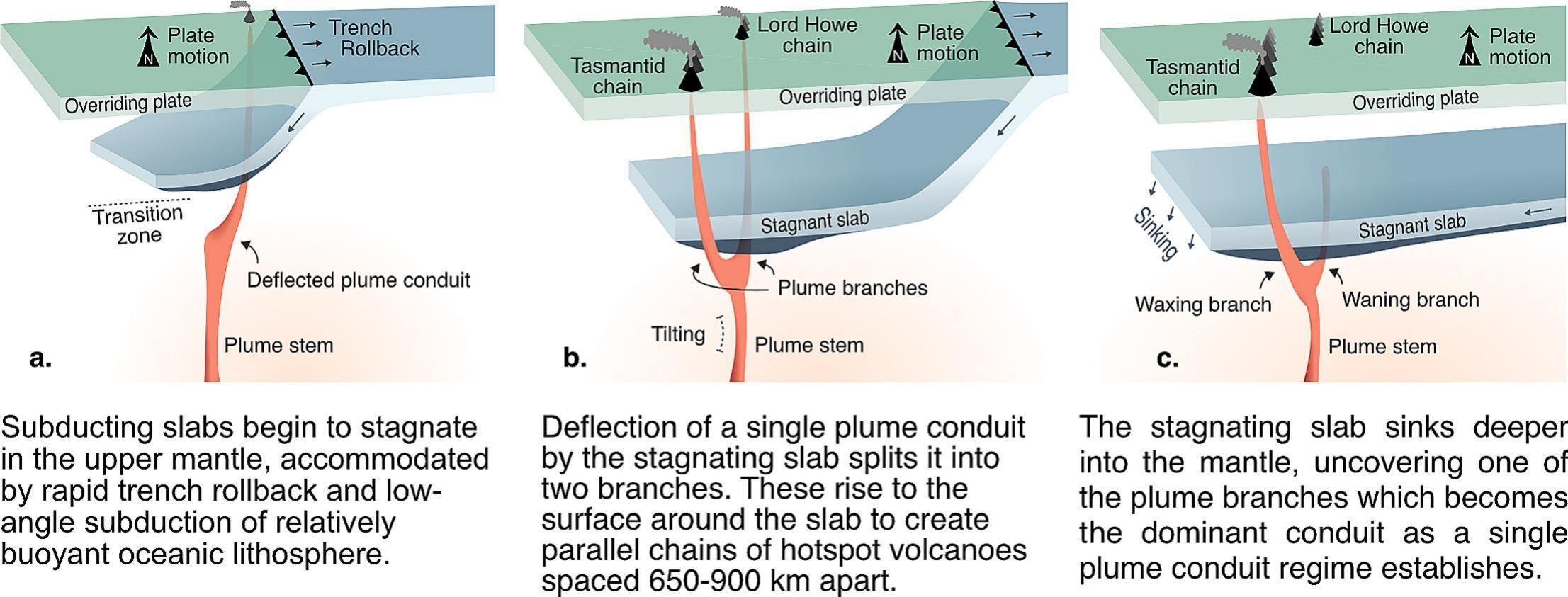
Figure from Mather et al. (2026)

Using a 3D numerical model of mantle convection, the authors show how a single deep mantle plume can be split into two long-lived branches by a stagnating slab in the upper mantle, producing parallel volcanic chains. This explains why the Lord Howe and Tasmantid seamount chains in the SW Pacific have stayed 650–900 km apart … Read more…

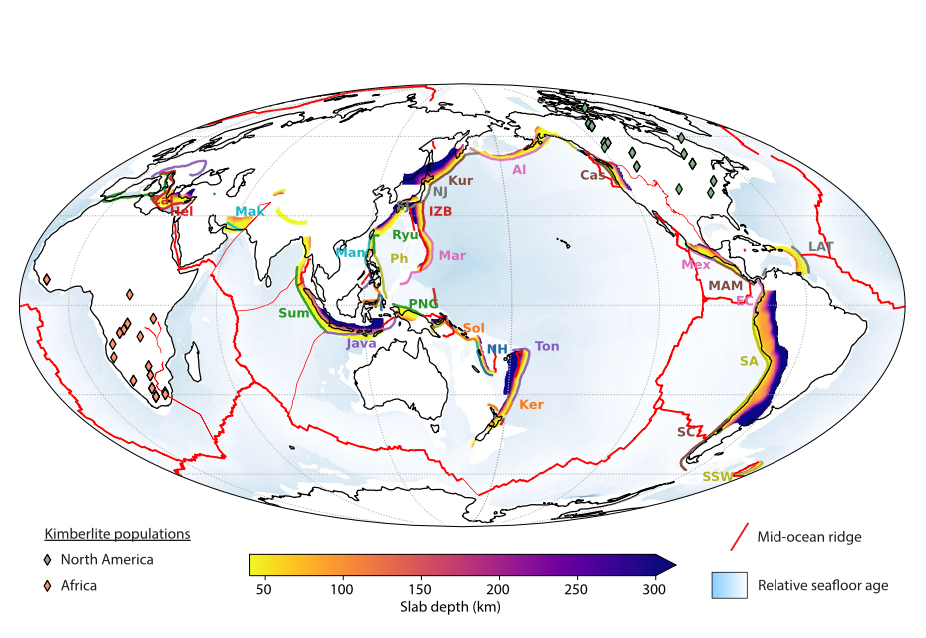
Scientific Reports: Kimberlite eruptions driven by slab flux and subduction angle

Kimberlites are sourced from thermochemical upwellings which can transport diamonds to the surface of the crust. The majority of kimberlites preserved at the Earth’s surface erupted between 250 and 50 million years ago, and have been attributed to changes in plate velocity or mantle plumes. However, these mechanisms fail to explain the presence of strong … Read more…

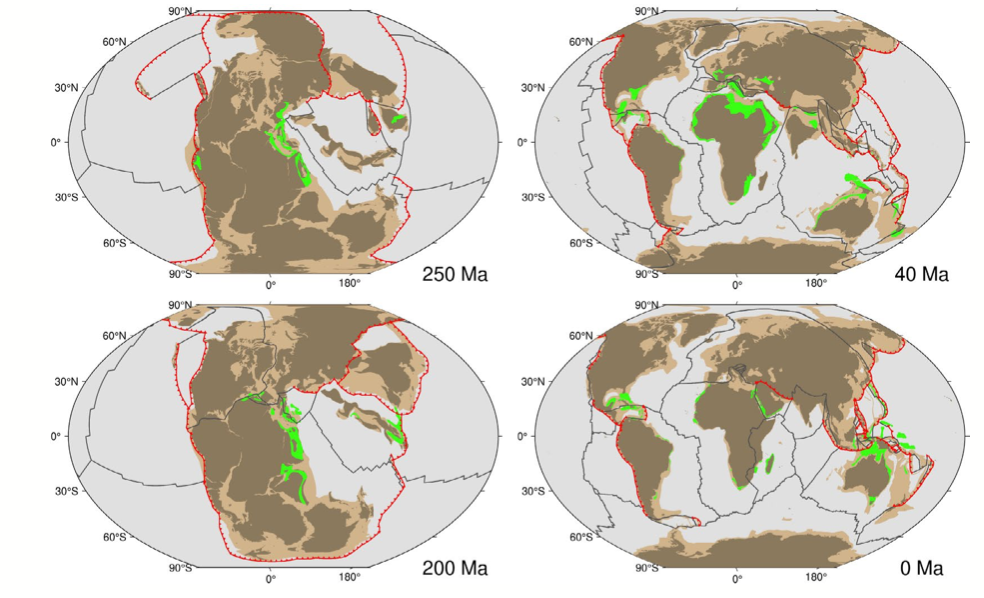
Geoscience Data Journal: Subduction and carbonate platform interactions

Plate tectonics, as the unifying theory in Earth sciences, controls the functioning of important planetary processes on geological timescales. Here, we present an open-source workflow that interrogates community digital plate tectonic reconstructions, primarily in the context of the planetary deep carbon cycle. We present an updated plate tectonic reconstruction covering the last 400 million years … Read more…

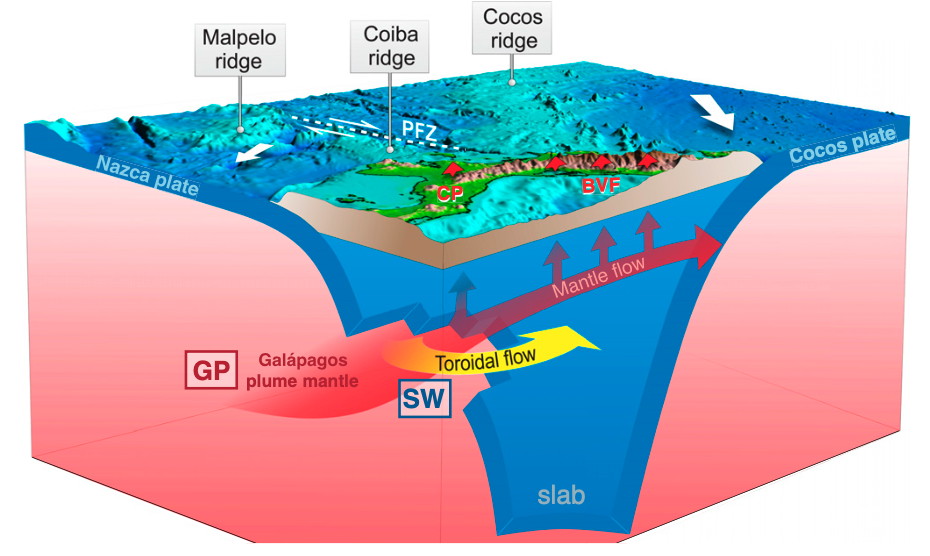
PNAS: High 3He/4He in central Panama reveals a distal connection to the Galapagos plume

Significance We report the discovery of anomalously high 3He/4He in “cold” geothermal fluids of central Panama, far from any active volcanoes. Combined with independent constraints from lava geochemistry, mantle source geochemical anomalies in Central America require a Galapagos plume contribution that is not derived from hotspot track recycling. Instead, these signals likely originate from large-scale … Read more…