Celebrating Earth Science Week 2026

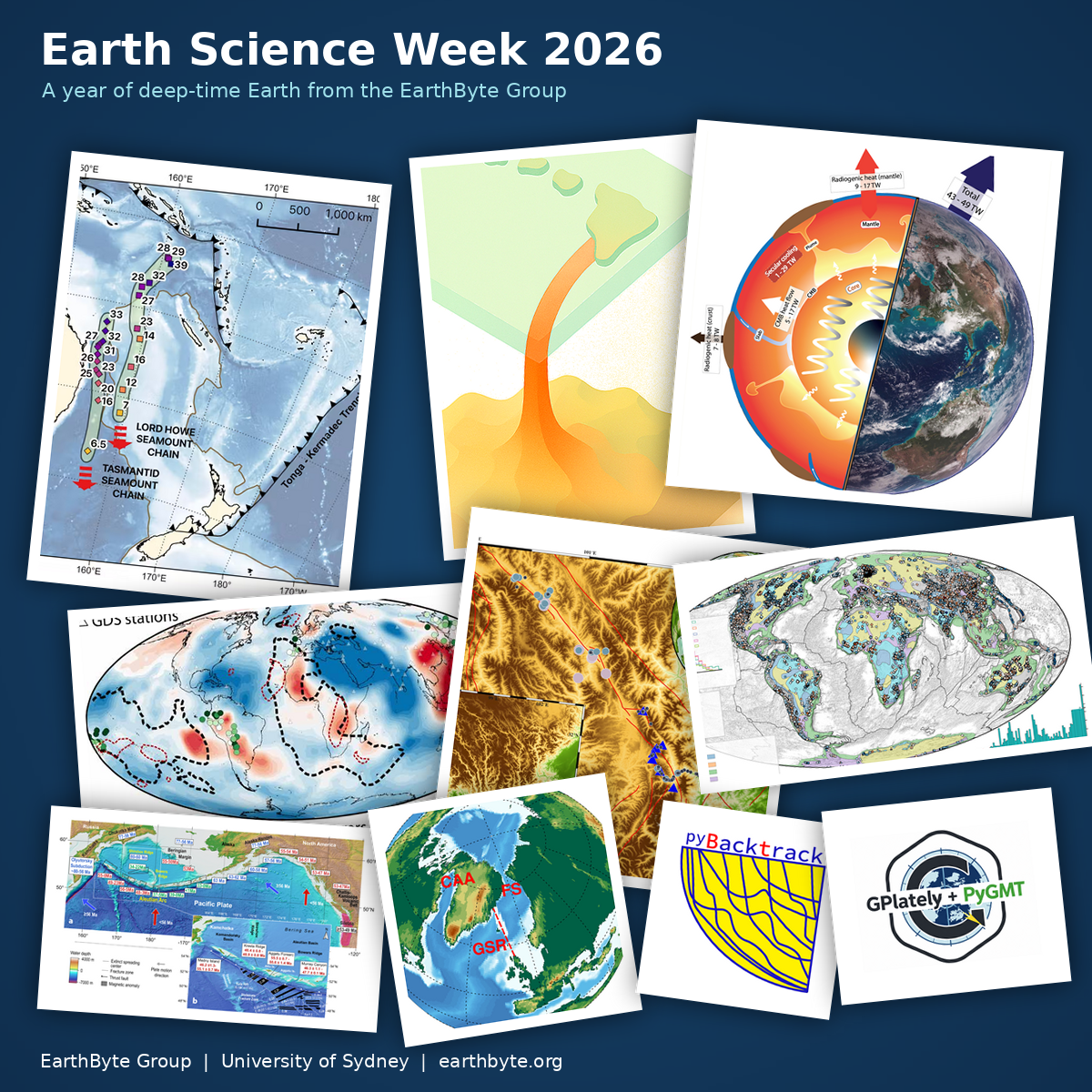
A collage of EarthByte research images for Earth Science Week 2026, including plate reconstructions, seismic tomography models, core-mantle heat budgets, and the GPlately and PyGMT software logos.

Happy Earth Science Week from the EarthByters! This is our annual chance to celebrate the science of the planet we all live on, and to share how much there is still to discover about it. The ground under your feet is moving. Right now, at about the speed your fingernails grow, and it has been … Read more…
Sydney geoscientist explains the hidden force behind the Tasman Sea’s twin volcano chains in The Conversation

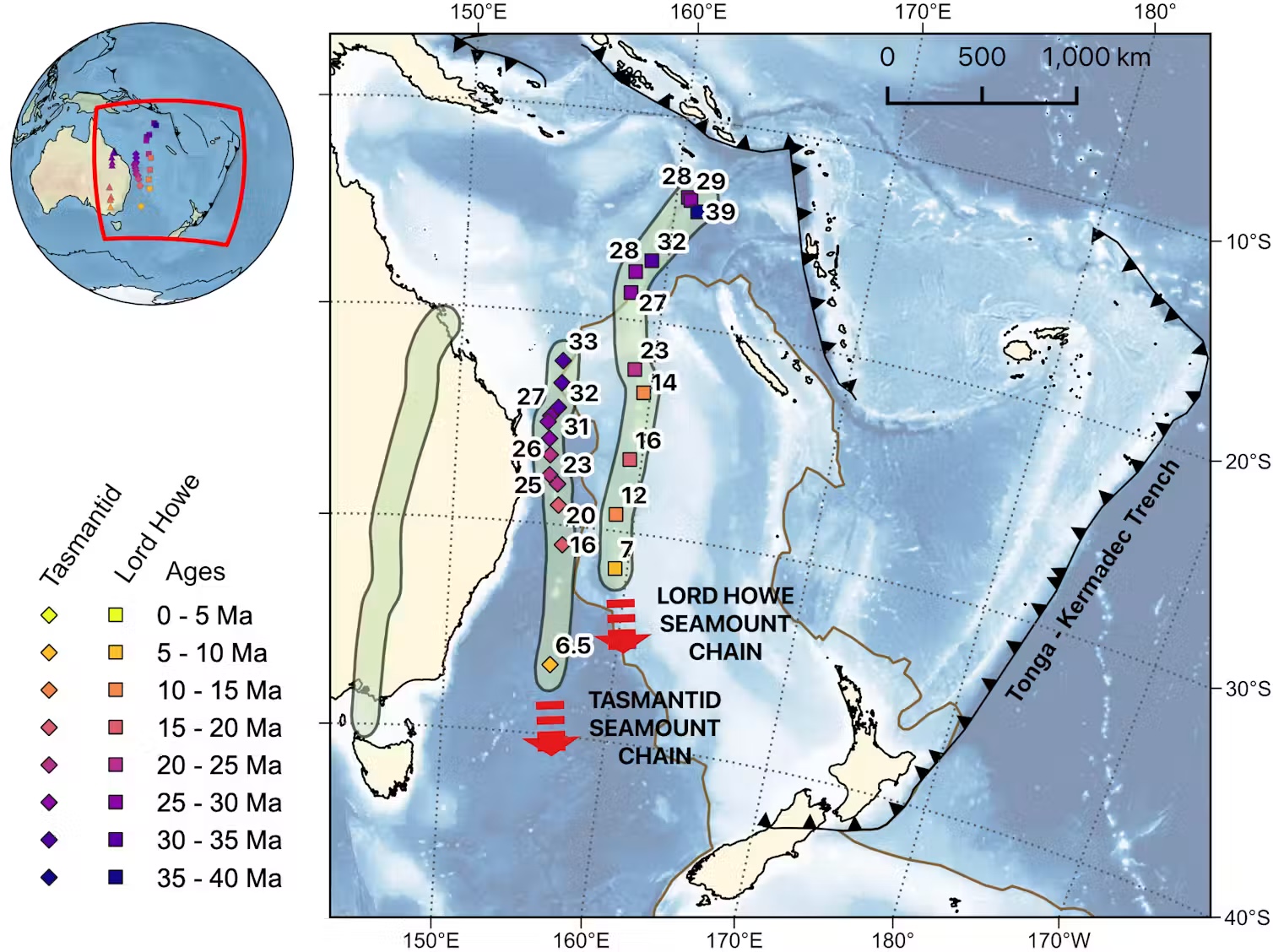
Congratulations to Associate Professor Maria Seton from the School of Geosciences. Her research on the origins of two underwater volcano chains in the Tasman Sea is featured in The Conversation. In the article, published on 18 September 2026, Associate Professor Seton and co-author Dr Ben Mather (ARC Early Career Industry Fellow, University of Melbourne) explain … Read more…

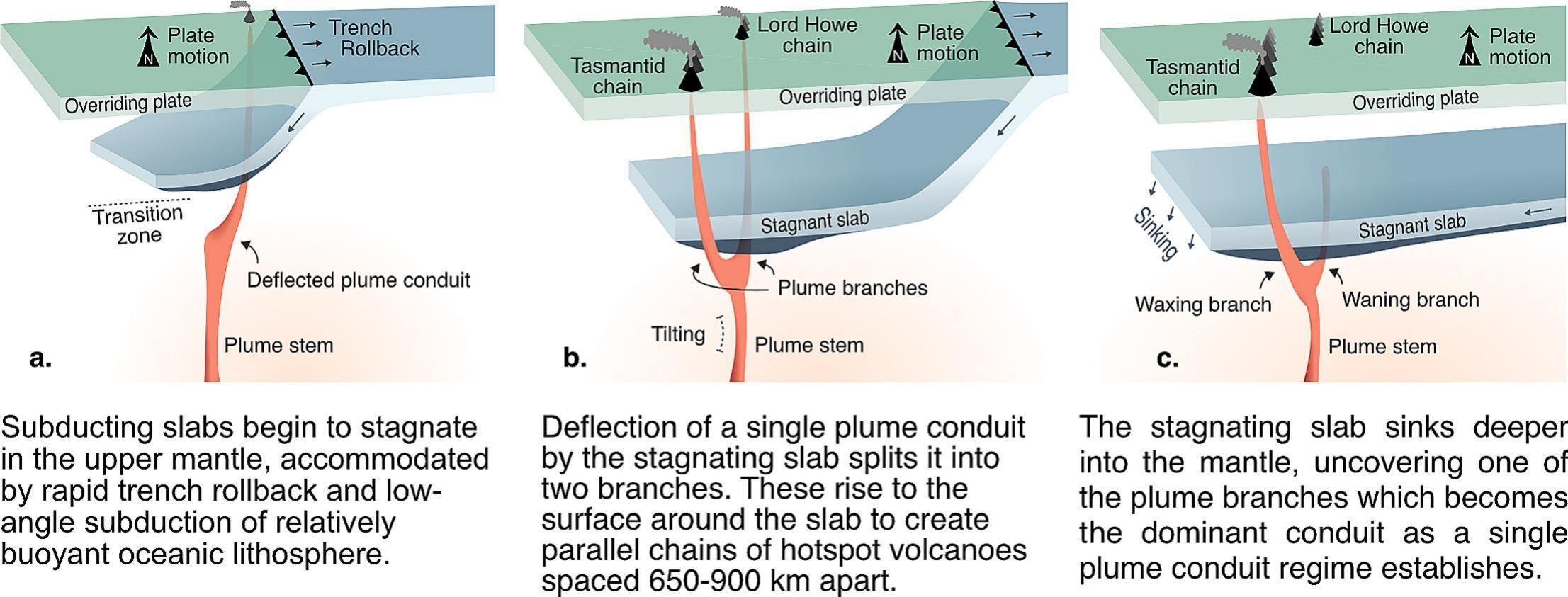
Parallel volcanic chains generated by plume-slab interaction

Figure from Mather et al. (2026)

Using a 3D numerical model of mantle convection, the authors show how a single deep mantle plume can be split into two long-lived branches by a stagnating slab in the upper mantle, producing parallel volcanic chains. This explains why the Lord Howe and Tasmantid seamount chains in the SW Pacific have stayed 650–900 km apart … Read more…

Terra Nova: The Louisiade ophiolite: A missing link in the western Pacific

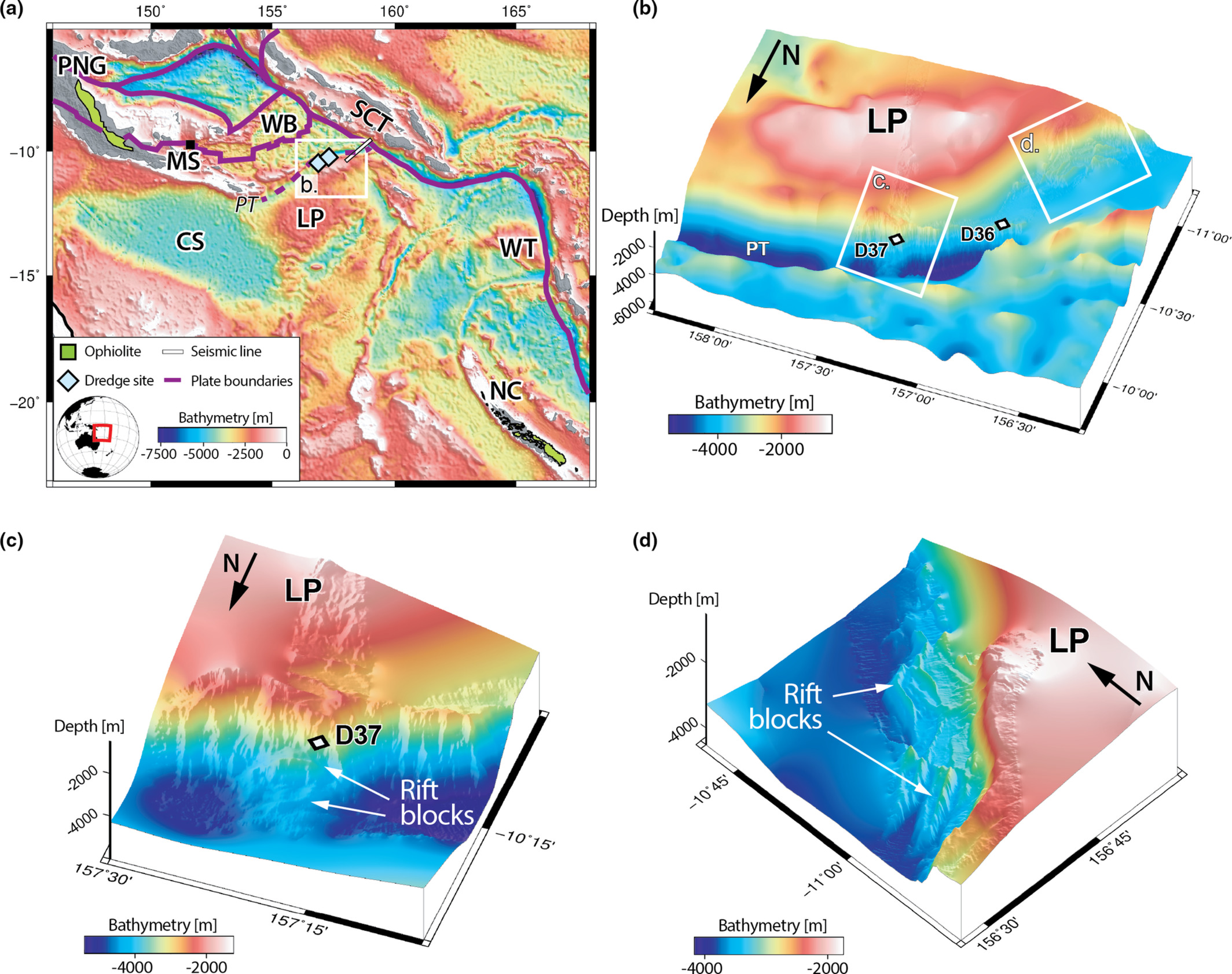
Recent dredging of a 100 km long ridge along the northernmost part of the Louisiade Plateau (LP) recovered serpentinized peridotites, MORB (mid-ocean-ridge basalt) and volcaniclastic breccia–conglomerates. Clinopyroxene, Cr-spinel and bulk rocks show that the serpentinites are harzburgites to dunites, whereas hornblende phenocrysts from volcaniclastic rocks reflect hydrous, andesitic volcanism. The association of MORB, depleted mantle rocks … Read more…