
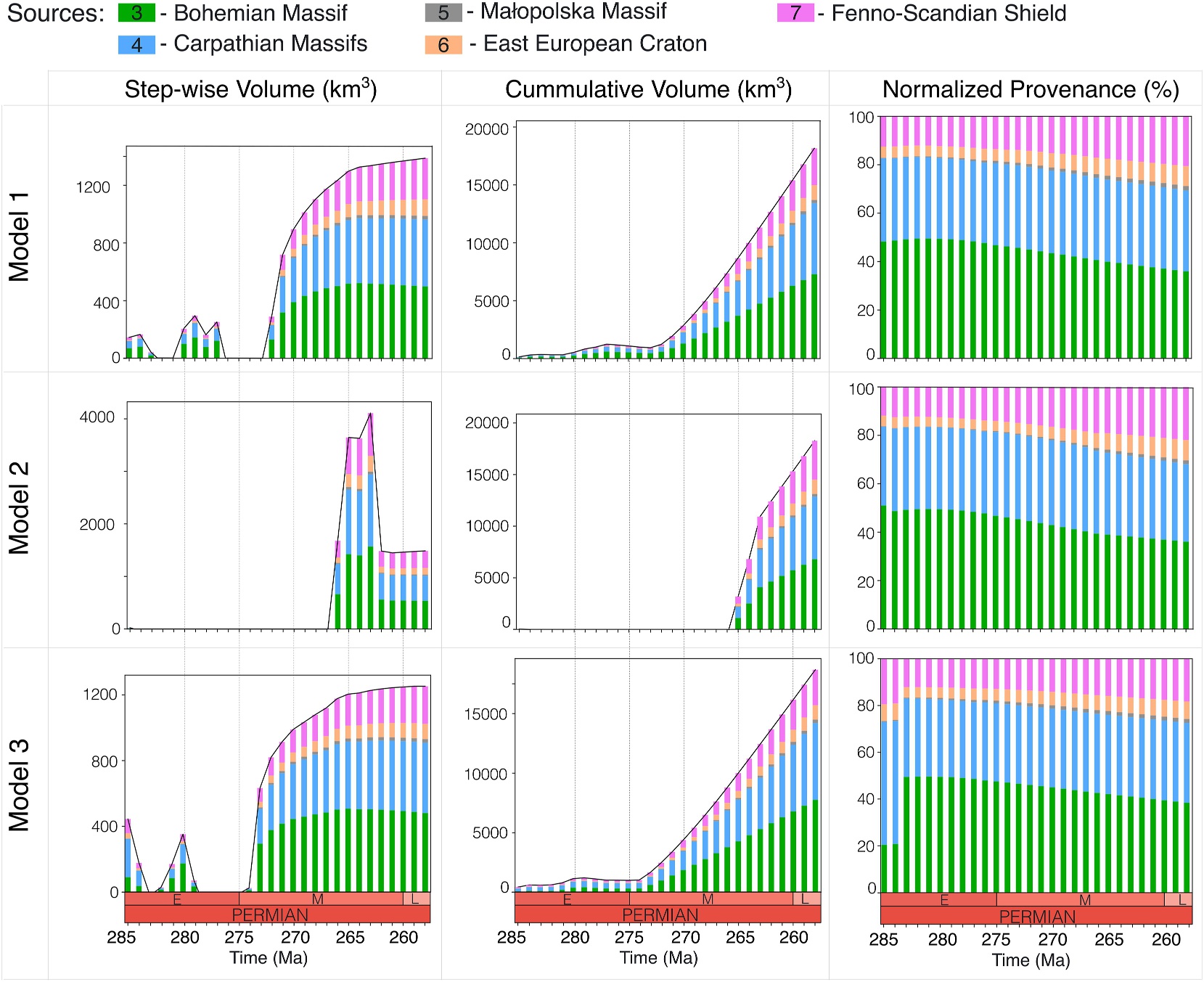
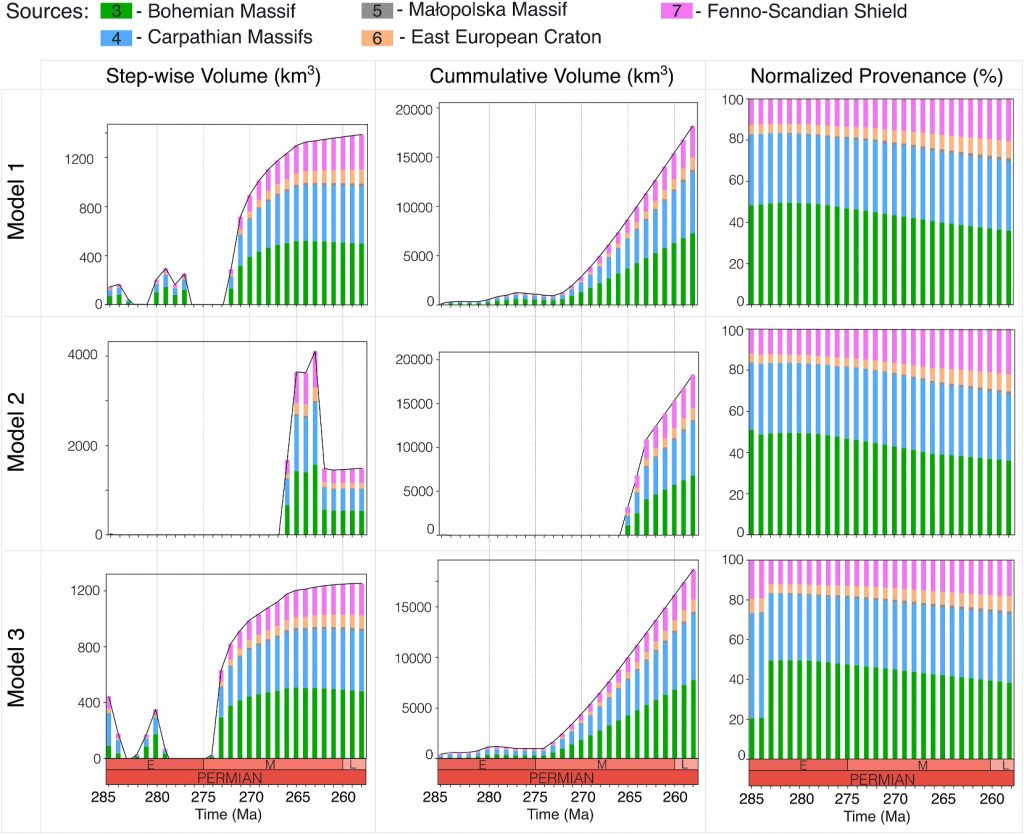
Researchers used an open-source landscape and stratigraphic evolution model (goSPL) to simulate how sediment filled the Polish Trough, part of the Southern Permian Basin, between 285 and 256 million years ago. By testing six different tectonic and climate scenarios, they identified two models that best match known sediment volumes, hiatus timing and depositional depth, and traced sediment sources to surrounding massifs and shields. The work suggests the Upper Rotliegend red beds carried substantial copper (50-155 million tonnes), supporting their role as a key source for the overlying Kupferschiefer copper deposit.
Abstract. The Southern Permian Basin (SPB) has been extensively explored for ore deposits. However, a comprehensive evaluation of the remaining copper potential, specifically for sediment‐hosted stratiform copper system, remains lacking. This study applies goSPL, an open‐source landscape and stratigraphic evolution model, to reconstruct the Permian rift‐phase sedimentary evolution of the Polish Trough, in the southeastern SPB. We integrate open‐source data sets with key tectonic events that shaped the paleogeography, sediment provenance and accumulation of the region. We reconstruct the basin sediment deposits from 285 to 256 Ma, and evaluate (a) six tectonic regimes under different tectonic and climate forcing, (b) their impact on the Upper Rotliegend red beds provenance and (c) the copper potential of these red beds. Two models best align with the literature, showing distinct subsidence regimes that produced similar sediment volumes (19,000 ). One model, featuring variable subsidence, better captures the 15 million year hiatus, sedimentation rates (200 m/Myr), and depositional depth, particularly when the basin subsided below sea level. The primary sources infilling the Polish Basin (Bohemian and Carpathian Massifs) remain stable across models. Alongside known sources (East European Craton, Małopolska Massif, and Bohemian Massif), our findings suggest that the Fenno‐Scandian Shield and Carpathian Massifs contributed 50% of the Permian sediments entering the Polish Basin. We estimate that around 1,000 of red‐bed sediments contained significant copper mass, between 50 and 155 MT, suggesting the Upper Rotliegend red beds are a significant, if not the primary copper source to the overlaying Kupferschiefer shale, although further investigation into the contribution from interlayered volcanic rocks is needed.
Code and data: GitHub: Geodels/gospl | Zenodo: 10.5281/zenodo.17118081 | Zenodo: 10.5281/zenodo.16777500

