
Recurrent super highlands since 2.1 Ga reveal rhythmic coupling between deep Earth and surface evolution
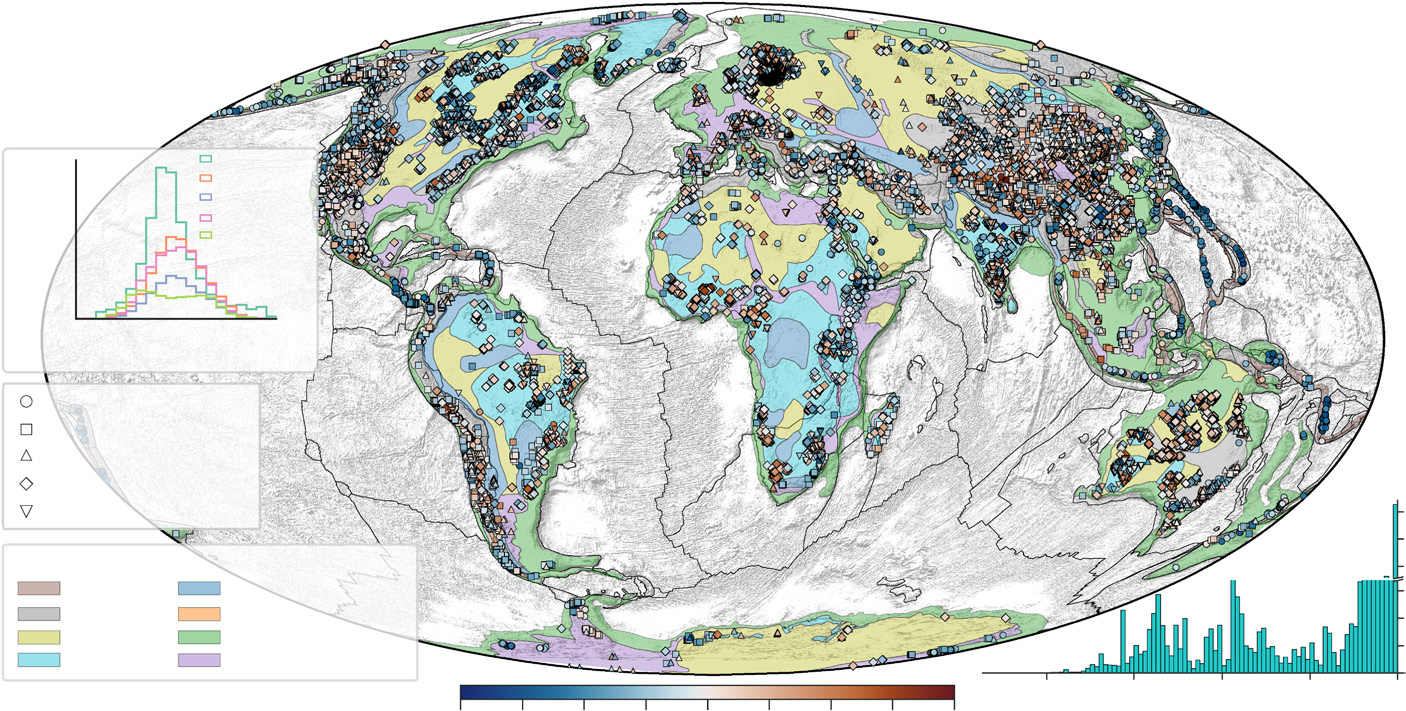
Figure from Zhou et al. (2026)

Researchers reconstructed global continental elevation over the past 4 billion years by combining a huge dataset of igneous rock chemistry with machine-learning estimates of crustal thickness and isostatic modelling. They found that continents stayed mostly submerged through much of the Archean, then began repeatedly building Tibetan-scale “super highlands” from about 2.1 billion years ago onward, … Read more…
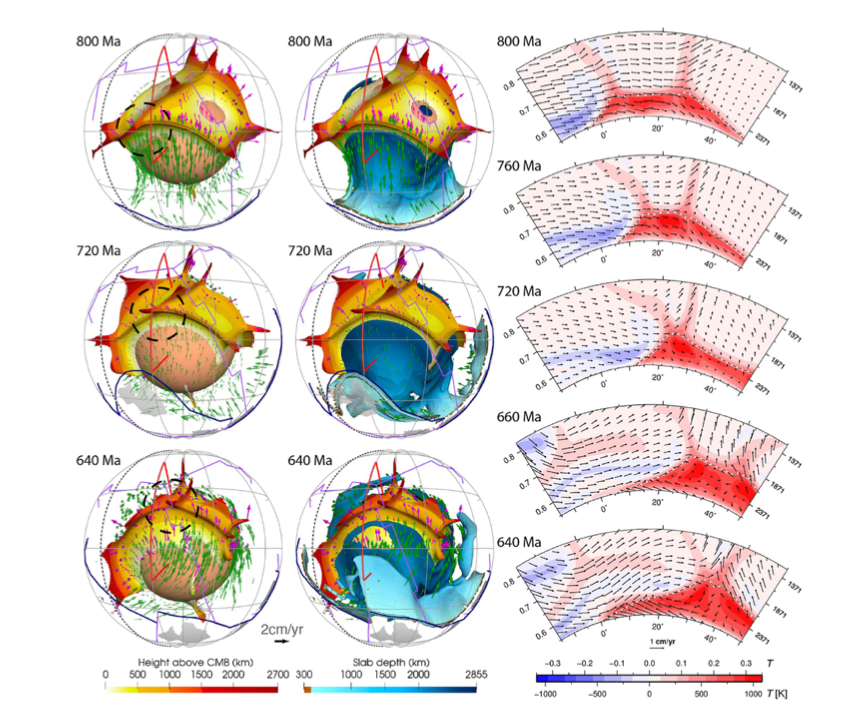
Scientific Reports: The evolution of basal mantle structure in response to supercontinent aggregation and dispersal

Seismic studies have revealed two Large Low-Shear Velocity Provinces (LLSVPs) in the lowermost mantle. Whether these structures remain stable over time or evolve through supercontinent cycles is debated. Here we analyze a recently published mantle flow model constrained by a synthetic plate motion model extending back to one billion years ago, to investigate how the … Read more…