
Recurrent super highlands since 2.1 Ga reveal rhythmic coupling between deep Earth and surface evolution
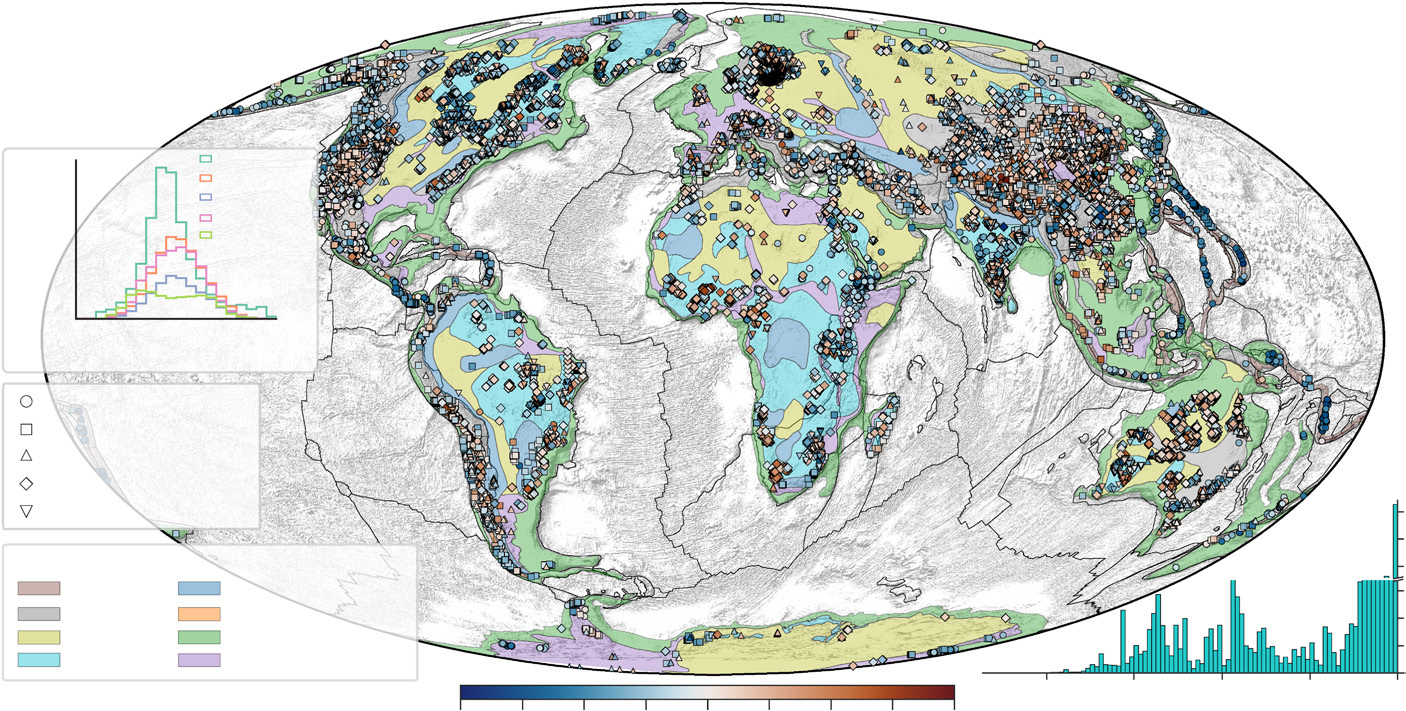
Figure from Zhou et al. (2026)

Researchers reconstructed global continental elevation over the past 4 billion years by combining a huge dataset of igneous rock chemistry with machine-learning estimates of crustal thickness and isostatic modelling. They found that continents stayed mostly submerged through much of the Archean, then began repeatedly building Tibetan-scale “super highlands” from about 2.1 billion years ago onward, … Read more…

Gondwana Research: Mapping paleoelevations along active continental margins with igneous geochemistry: A case study from South America

Mountains and mountain ranges, often situated at convergent plate margins, play a pivotal role in many fields of the Earth, climate, and biological sciences. Reconstructing past episodes of mountain building from the geological rock record is one of the main challenges for unravelling the ancient physical geography of Earth’s surface. Established methods for quantifying past … Read more…