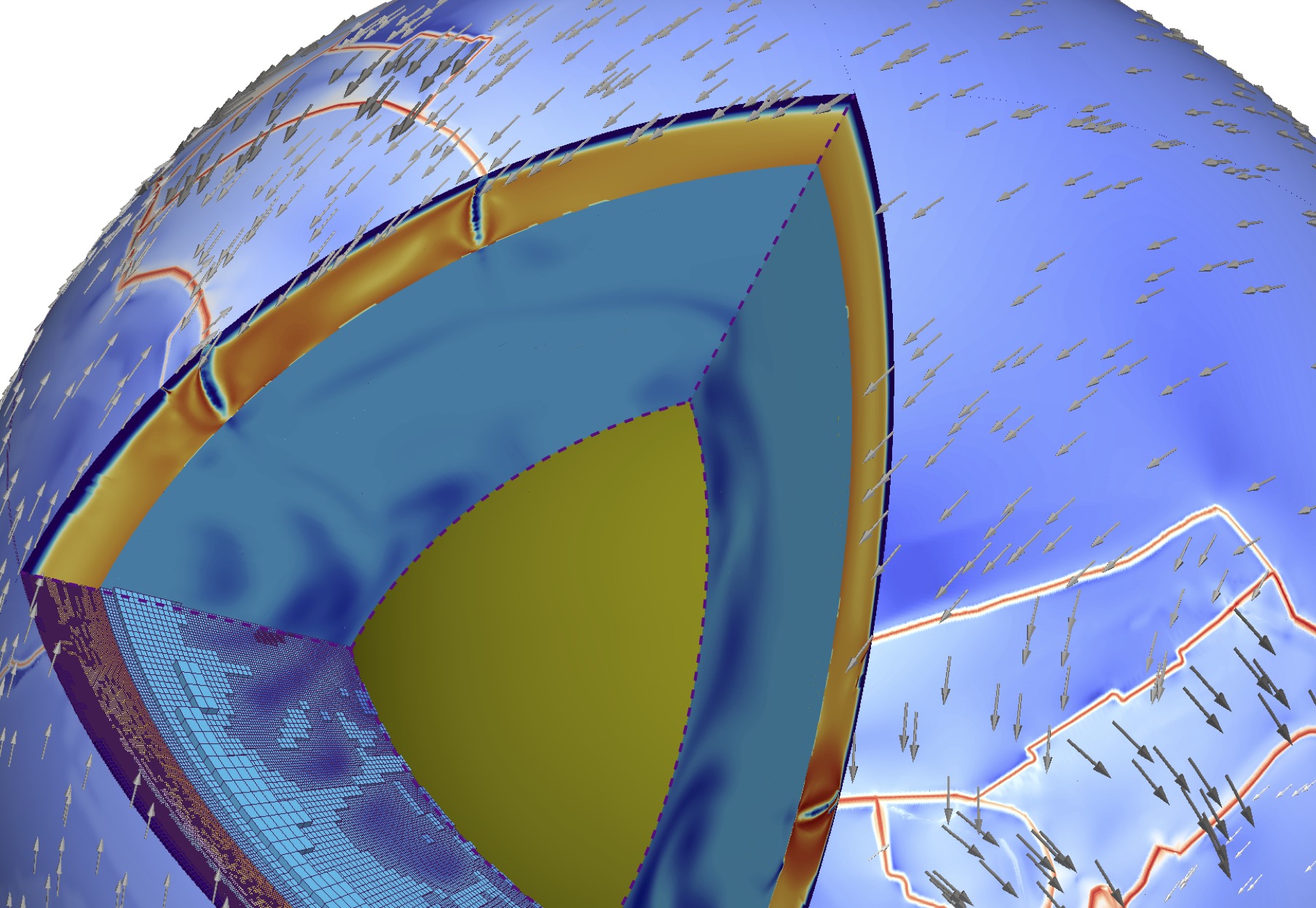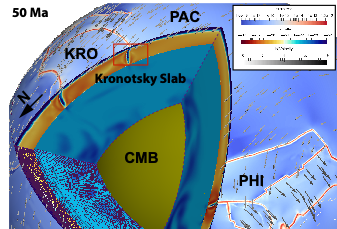
This week’s EarthByte seminar will be held via Zoom at 8:30–9:30am Thursday, Sydney time. Our speaker this time will be Camilo Montes Rodriguez from the Universidad del Norte in Barranquilla, Colombia. To access the Zoom meeting, follow this link: https://uni-sydney.zoom.us/j/89526697076. Further details regarding the talk are below:
News
Here are all the latest EarthByte news posts. See News Archive for recent years.
EarthByte also publishes the ‘GPlates News‘ newsletter every quarter. The GPlates newsletter contains features such as the latest GPlates updates, tutorials and datasets, EarthByte news highlights and much more! Click here to view the latest and past editions of ‘GPlates News‘, or subscribe to receive the newsletters.
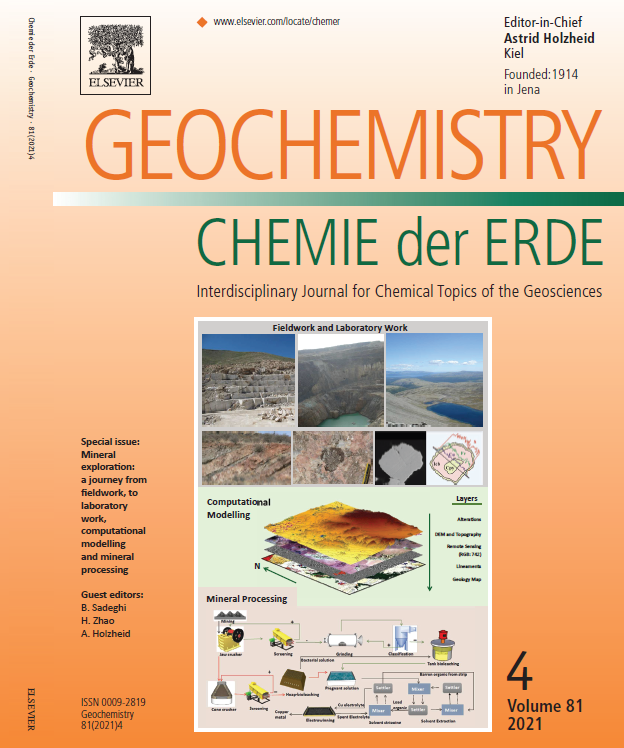
Special Issue: Mineral exploration: a journey from fieldwork, to laboratory work, computational modelling and mineral processing
Dr. Behnam Sadeghi from EarthByte Group, and Profs. Astrid Holzheid (Christian-Albrechts-Universität Kiel, Germany) and Hongbo Zhao (Central South University, China) organised a new Special Issue for the journal “Geochemistry” (former “Chemie der Erde”) in 2021, which has been published recently. This SI has covered some topics in mineral exploration, including fieldwork, laboratory work, computational modelling, … Read more…
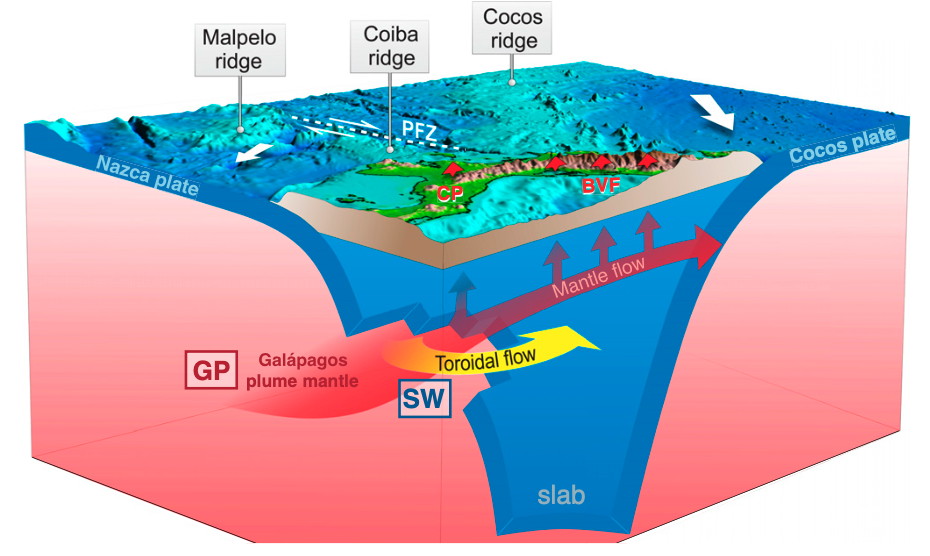
PNAS: High 3He/4He in central Panama reveals a distal connection to the Galapagos plume
Significance We report the discovery of anomalously high 3He/4He in “cold” geothermal fluids of central Panama, far from any active volcanoes. Combined with independent constraints from lava geochemistry, mantle source geochemical anomalies in Central America require a Galapagos plume contribution that is not derived from hotspot track recycling. Instead, these signals likely originate from large-scale … Read more…
Communications Earth & Environment: Quaternary landscape dynamics boosted species dispersal across Southeast Asia
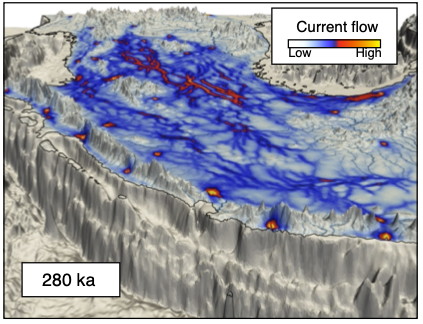
Sundaland, the inundated shelf separating Java, Sumatra and Borneo from the Malay Peninsula, is of exceptional interest to biogeographers for its species richness and its position at the junction between the Australasian and Indomalay biogeographic provinces. Owing to its low elevation and relief, its physiography is contingent on relative sea-level change, which drove Quaternary species … Read more…
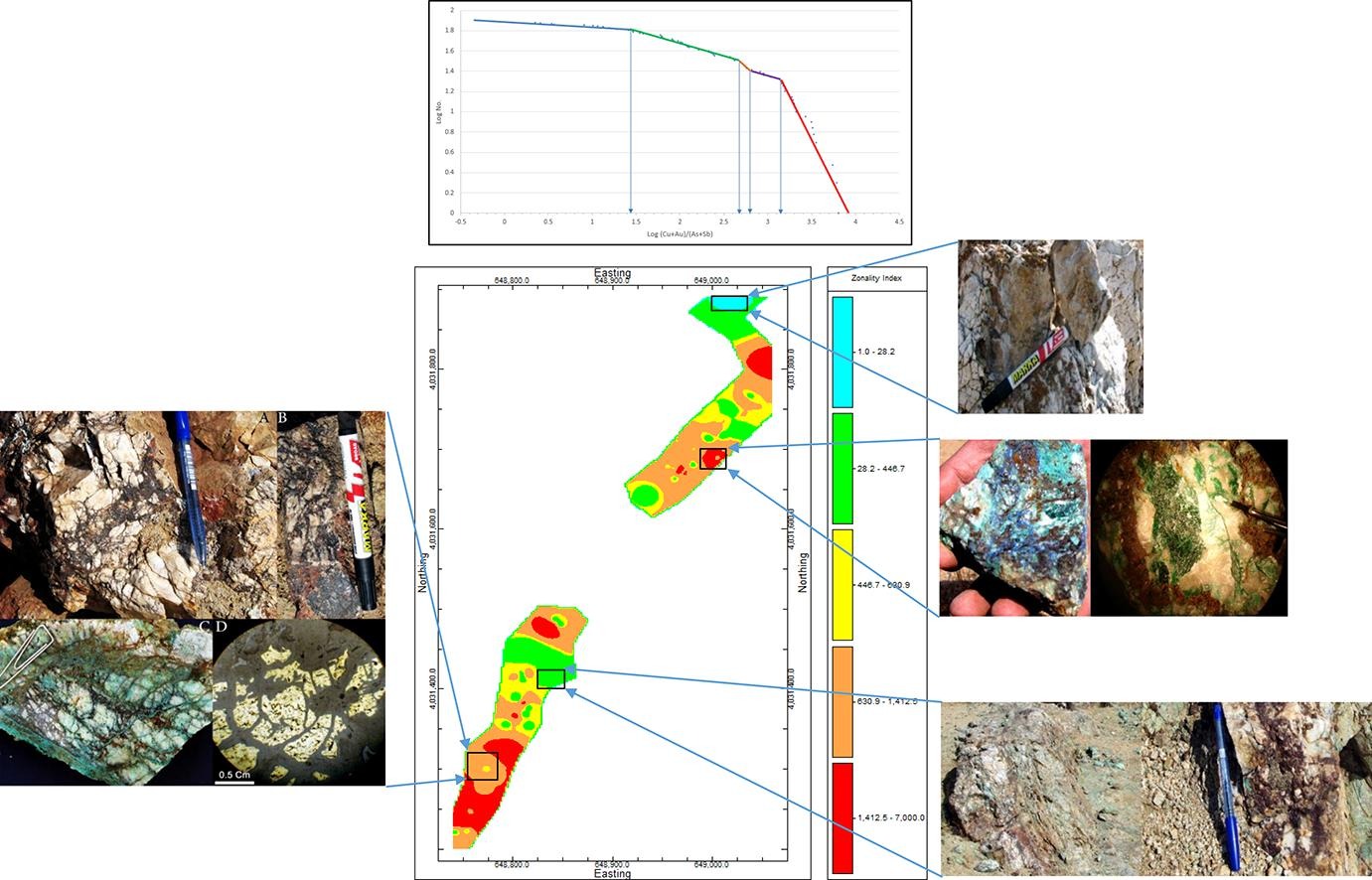
Detection of mineralization stages using zonality and multifractal modeling based on geological and geochemical data in the Au-(Cu) intrusion-related Gouzal-Bolagh deposit, NW Iran
As the co- and corresponding author, Dr. Behnam Sadeghi, from EarthByte Group, has recently published this paper in “Ore Geology Reviews”. This research is based on a collaborative project with the Geological Survey of Iran. Abstract: The objective of this paper is to detect various gold and copper mineralization stages according to surface lithogeochemical data … Read more…
EarthByte seminar series: Lutz Gross
Join us 11am–12pm Thursday 11th November for this week’s EarthByte seminar, featuring Lutz Gross from the University of Queensland. The seminar will be held online via Zoom, at https://uni-sydney.zoom.us/j/84686822190. Further details are below:
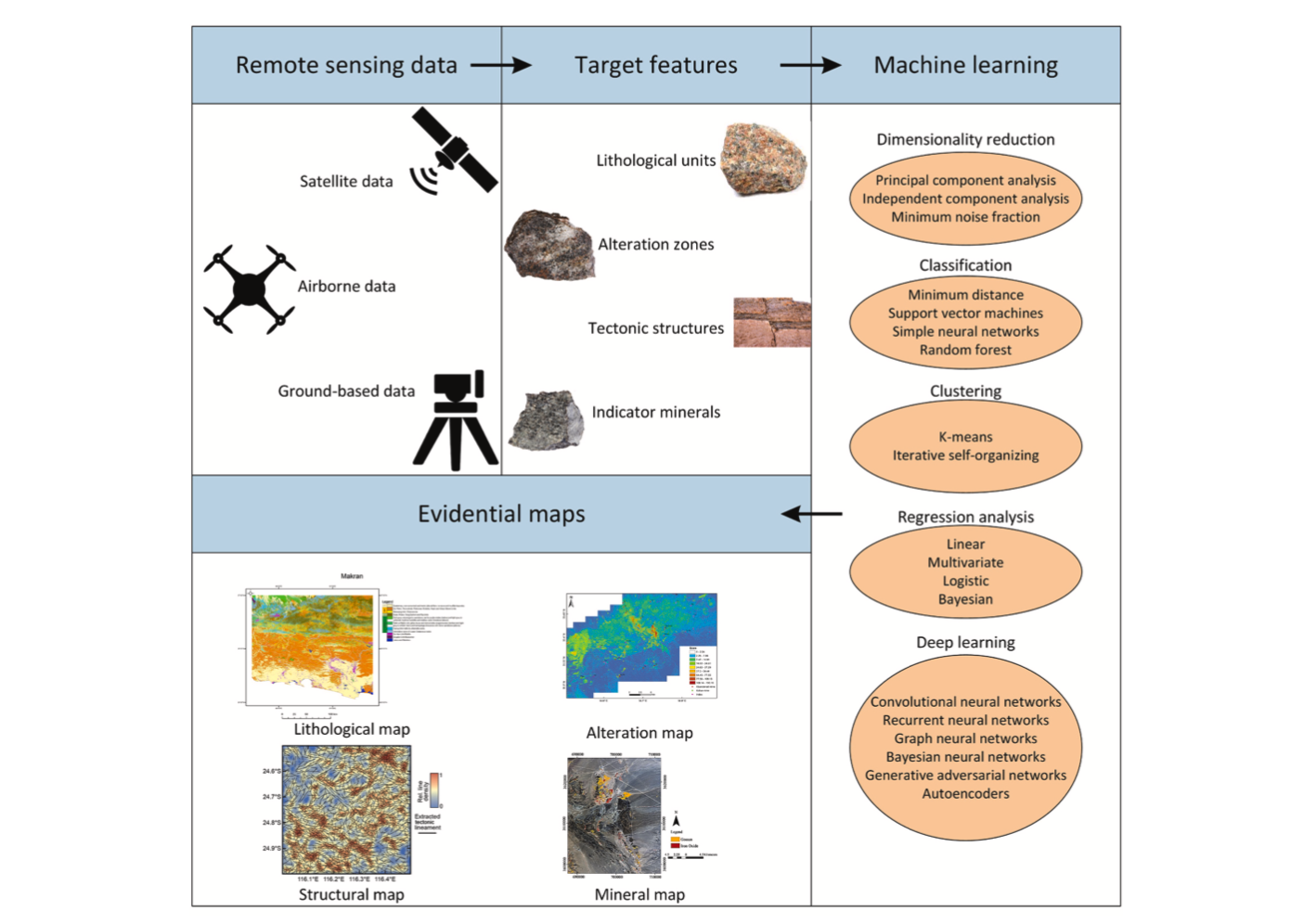
Remote Sensing of the Enivronment: A review of machine learning in processing remote sensing data for mineral exploration
The decline of the number of newly discovered mineral deposits and increase in demand for different minerals in recent years has led exploration geologists to look for more efficient and innovative methods for processing different data types at each stage of mineral exploration. As a primary step, various features, such as lithological units, alteration types, … Read more…
EarthByte seminar series: Jiashun Hu
The next instalment of the EarthByte seminar series will be held at 11am–12pm Wednesday 27th October, featuring Jiashun Hu from the Southern University of Science and Technology in China. Once again, the seminar will be held online via Zoom, at https://uni-sydney.zoom.us/j/82617614557. For more details, see below:
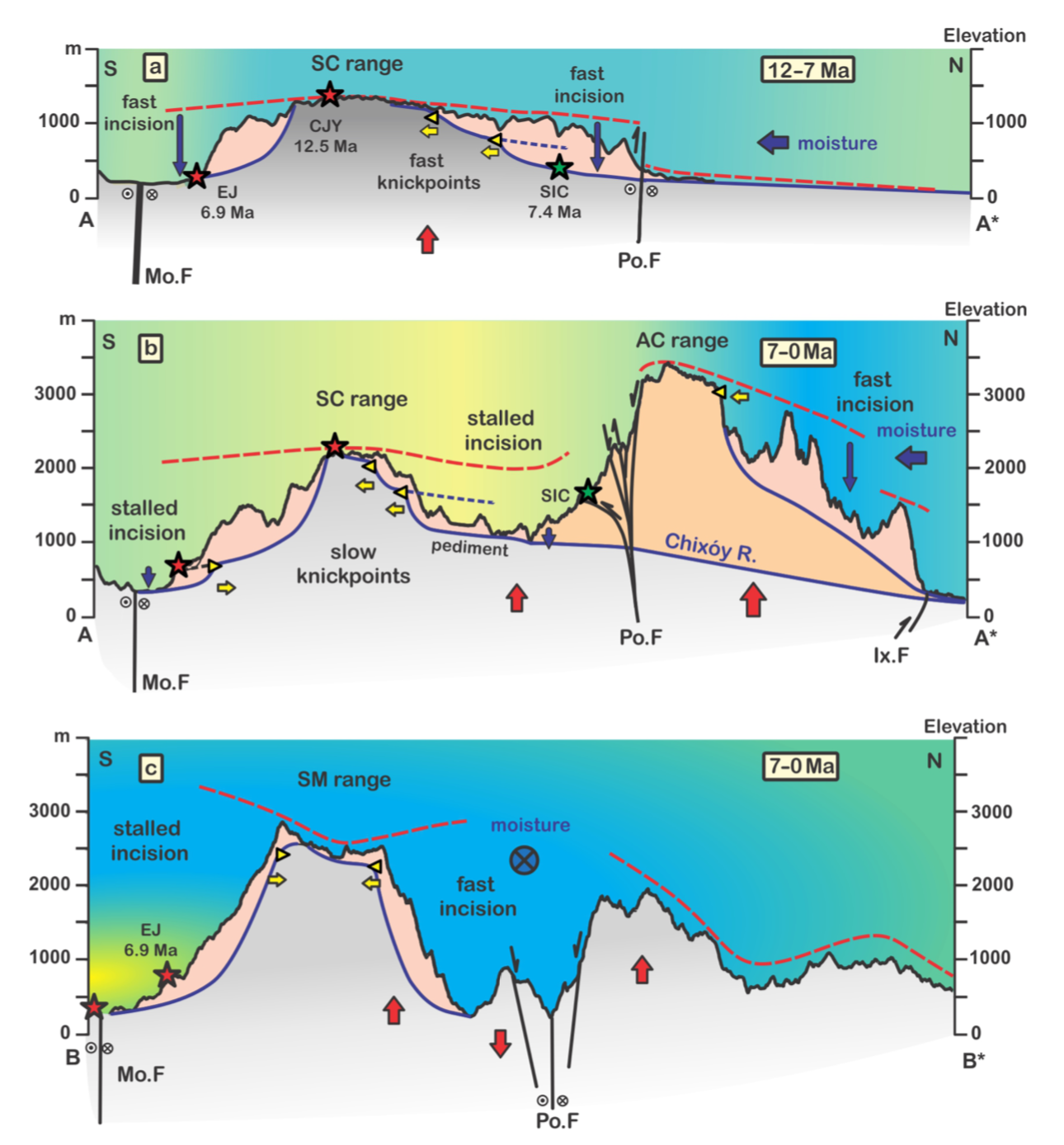
Earth Surface Dynamics: Tectonically and climatically driven mountain-hopping erosion in central Guatemala from detrital 10Be and river profile analysis
The rise of a mountain range affects moisture circulation in the atmosphere and water runoff across the land surface, modifying the distribution of precipitation and drainage patterns in its vicinity. Water routing in turn affects erosion on hillslopes and incision in river channels on surrounding mountain ranges. In central Guatemala, two parallel, closely spaced mountain … Read more…
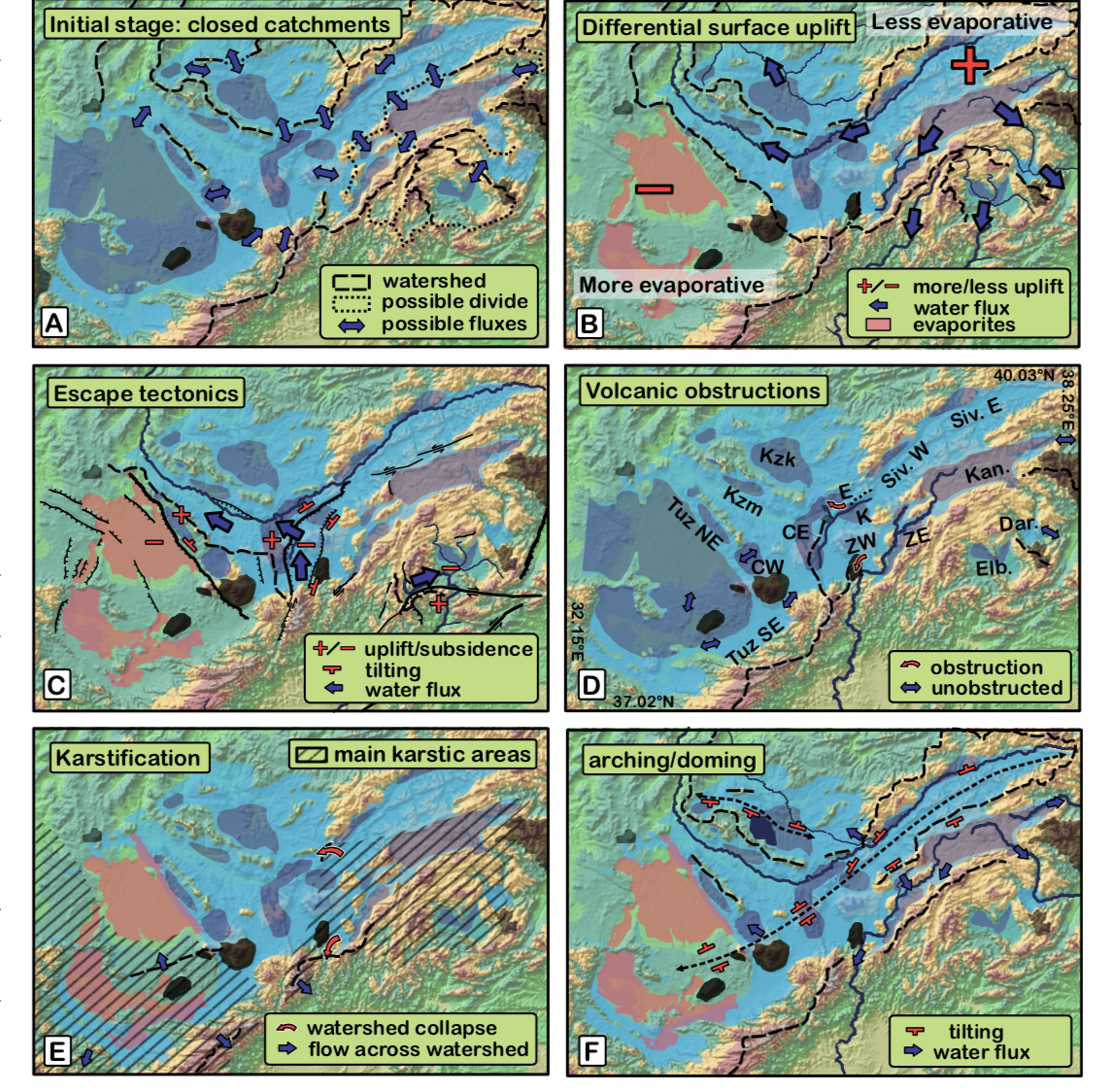
Geosphere: Fast Pliocene integration of the Central Anatolian Plateau drainage: Evidence, processes, and driving forces
Continental sedimentation was widespread across the Central Anatolian Plateau in Miocene– Pliocene time, during the early stages of plateau uplift. Today, however, most sediment produced on the plateau is dispersed by a well-integrated drainage and released into surrounding marine depocenters. Residual long-term (106–107 yr) sediment storage on the plateau is now restricted to a few … Read more…
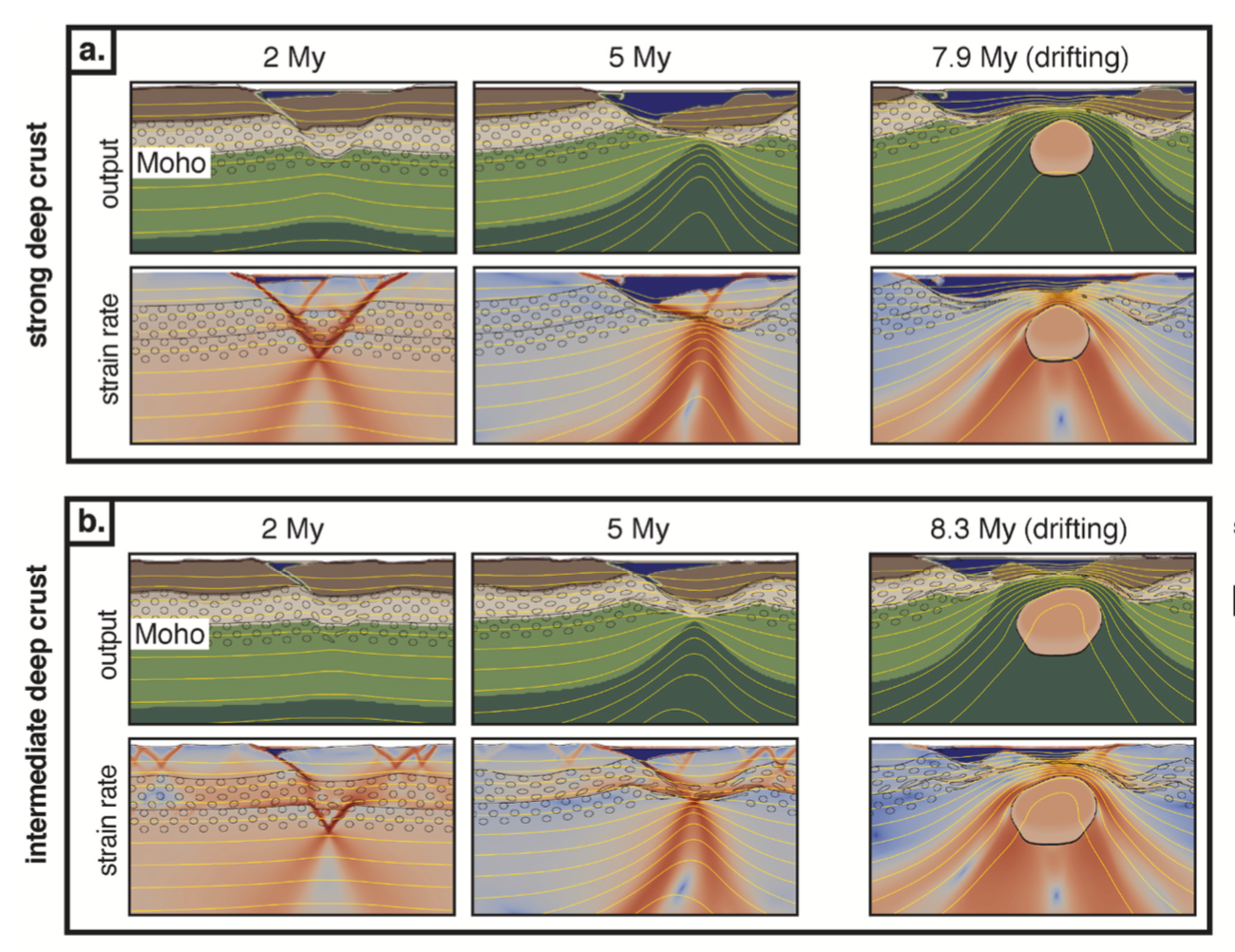
Marine and Petroleum Geology: Single-phase vs two-phase rifting: Numerical perspectives on the accommodation of extension during continental break-up
How continental lithosphere responds to extension is a function of the dynamic interaction between layers of differing rheological properties, including the shallow crust, deep crust, lithospheric mantle, and asthenosphere. We investigate the first-order controls on the modes of extension and timing of transition from continental rifting to development of continental margins via a suite of … Read more…
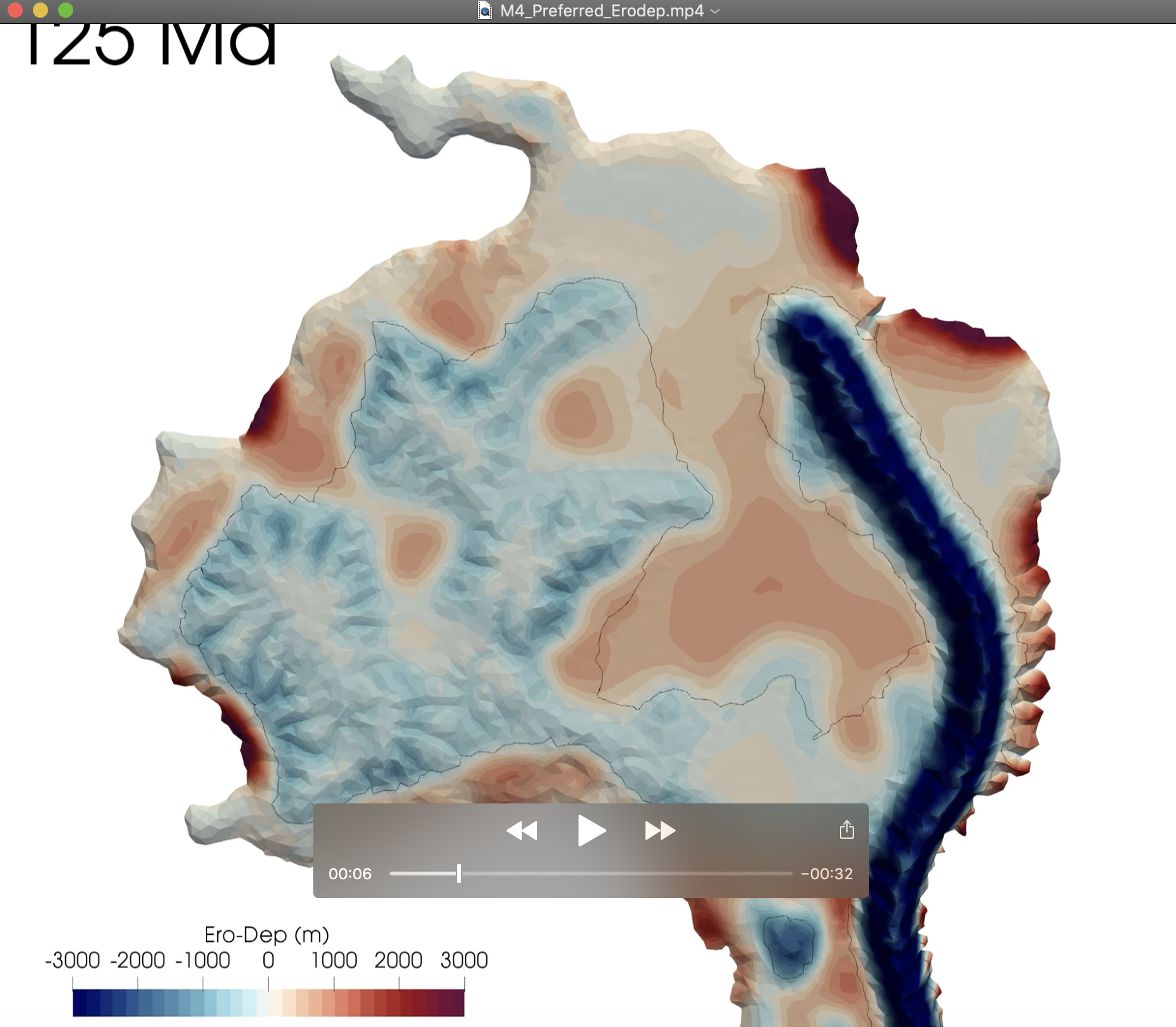
Basin Research: Modelling the role of dynamic topography and eustasy in the evolution of the Great Artesian Basin
Widespread flooding of the Australian continent during the Early Cretaceous, referred to as the Eromanga Sea, deposited extensive shallow marine sediments throughout the Great Artesian Basin (GAB). This event had been considered ‘out of sync’ with eustatic sea level and was instead solely attributed to dynamic subsidence associated with Australia’s passage over eastern Gondwanan subducted … Read more…
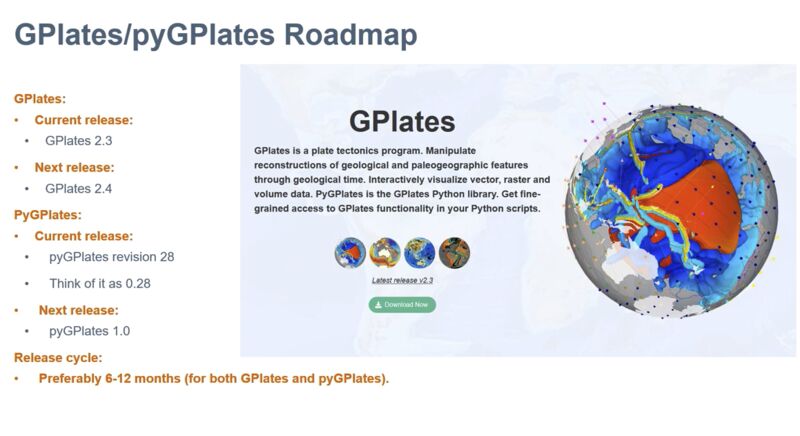
Roadmap for GPlates and pyGPlates development
John Cannon outlines the roadmap for implementing new functionality and features of our plate tectonic software in a talk at #AuScope2021 https://lnkd.in/gxa-hNwX
Modelling global precipitation since 250 million years ago
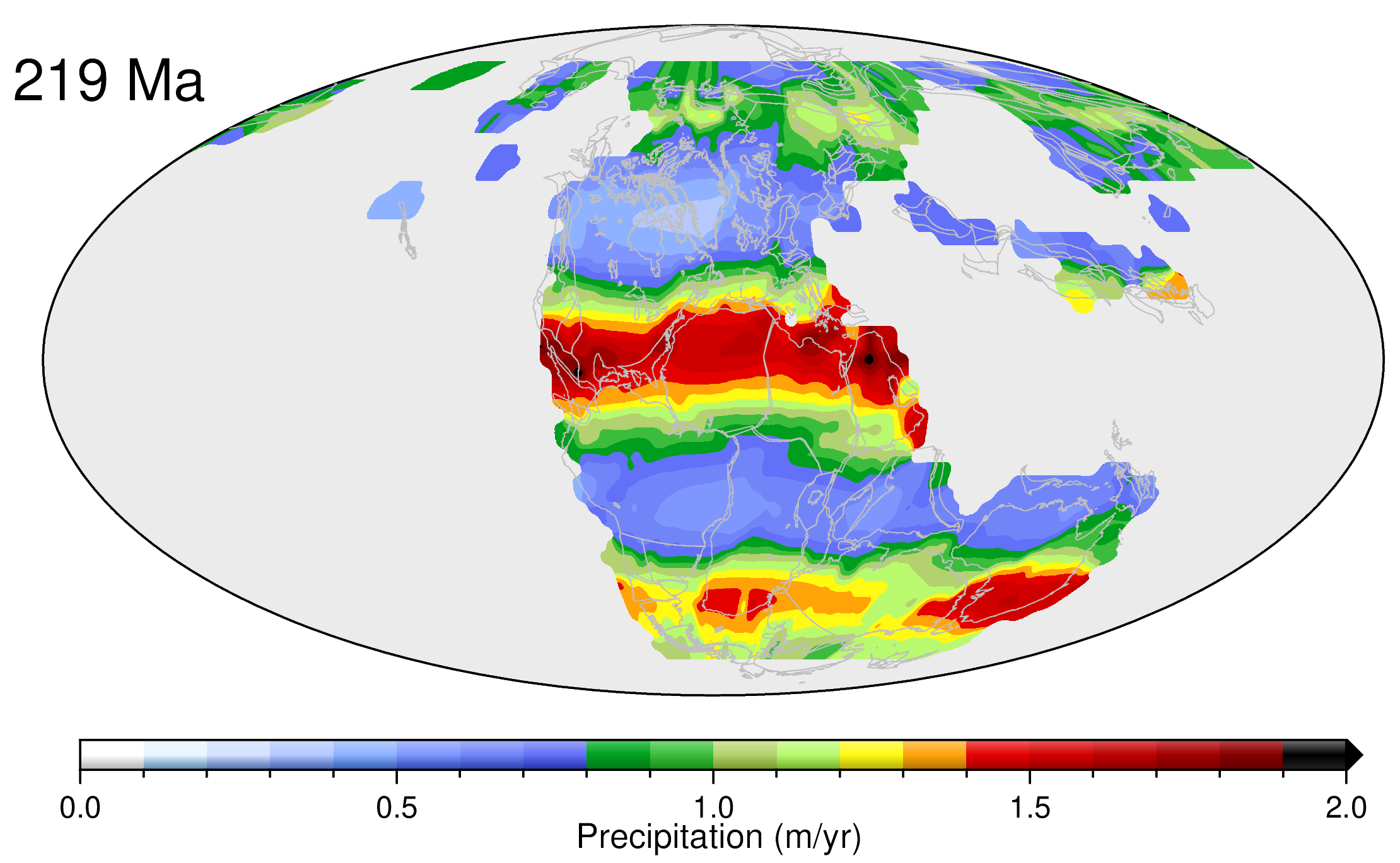
We have developed a novel data-driven approach to reconstruct precipitation patterns through geological time, since the supercontinent Pangea was in existence. Our approach involves linking climate-sensitive sedimentary deposits such as coal, evaporites and glacial deposits to a global plate model, reconstructed paleo-elevation maps and high-resolution General Circulation Models via Bayesian machine learning. We model the … Read more…
Ben Mather wins People’s Choice Award at #AuScope2021 Conference for volcano video
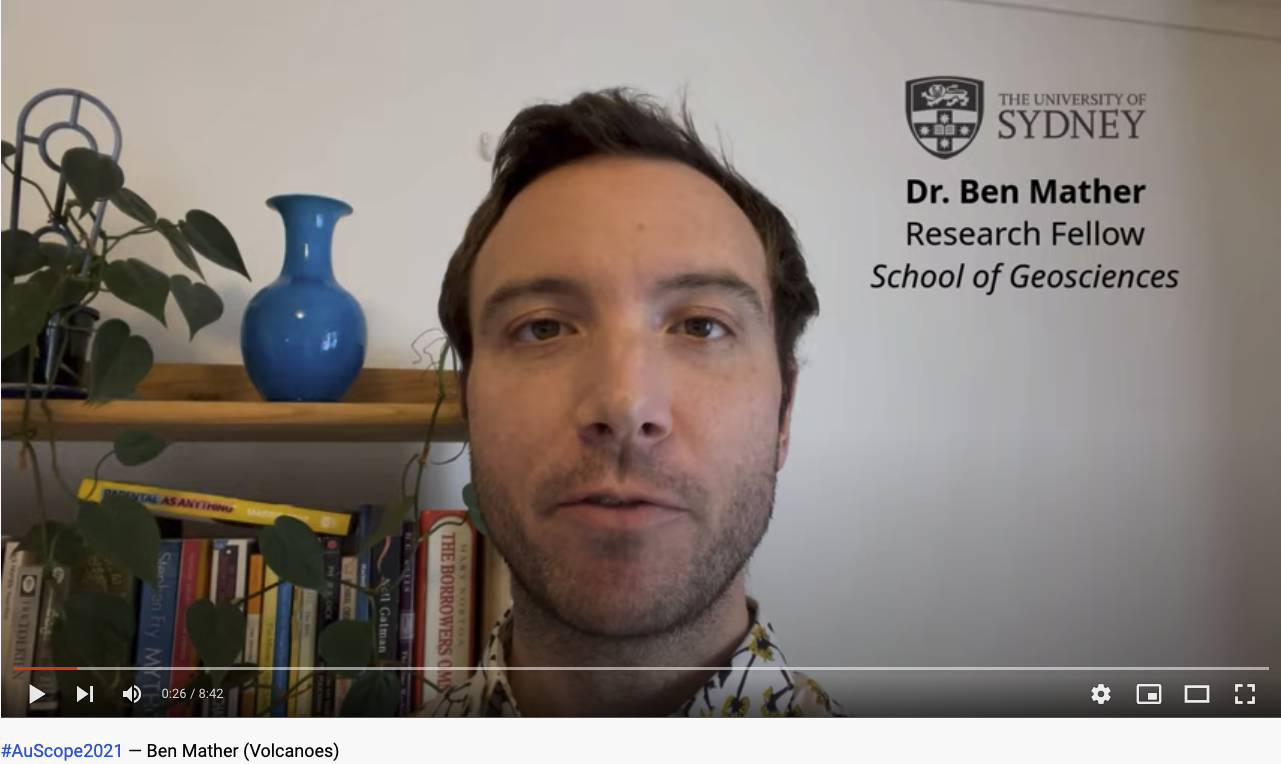
Ben Mather won the People’s Choice Award at the recent #AuScope2021 Conference for his fantastic presentation explaining the evolution of seafloor volcanoes off the eastern Australian coast. Watch it here.
Simulated-multifractal models: A futuristic review of multifractal modeling in geochemical anomaly classification
Dr. Behnam Sadeghi, from EarthByte Group (USYD), has published a new review paper in “Ore Geology Reviews”. Sadeghi et al. (2015) proposed simulated-fractal models for the first time, which is based on the combination of geostatistical simulation models and mathematical fractal/multifractal modeling to classify geochemical anomalies. Based on that research, several other models have been … Read more…
5.8 magnitude Mansfield earthquake reflects compressive intraplate stress reactivating deep faults
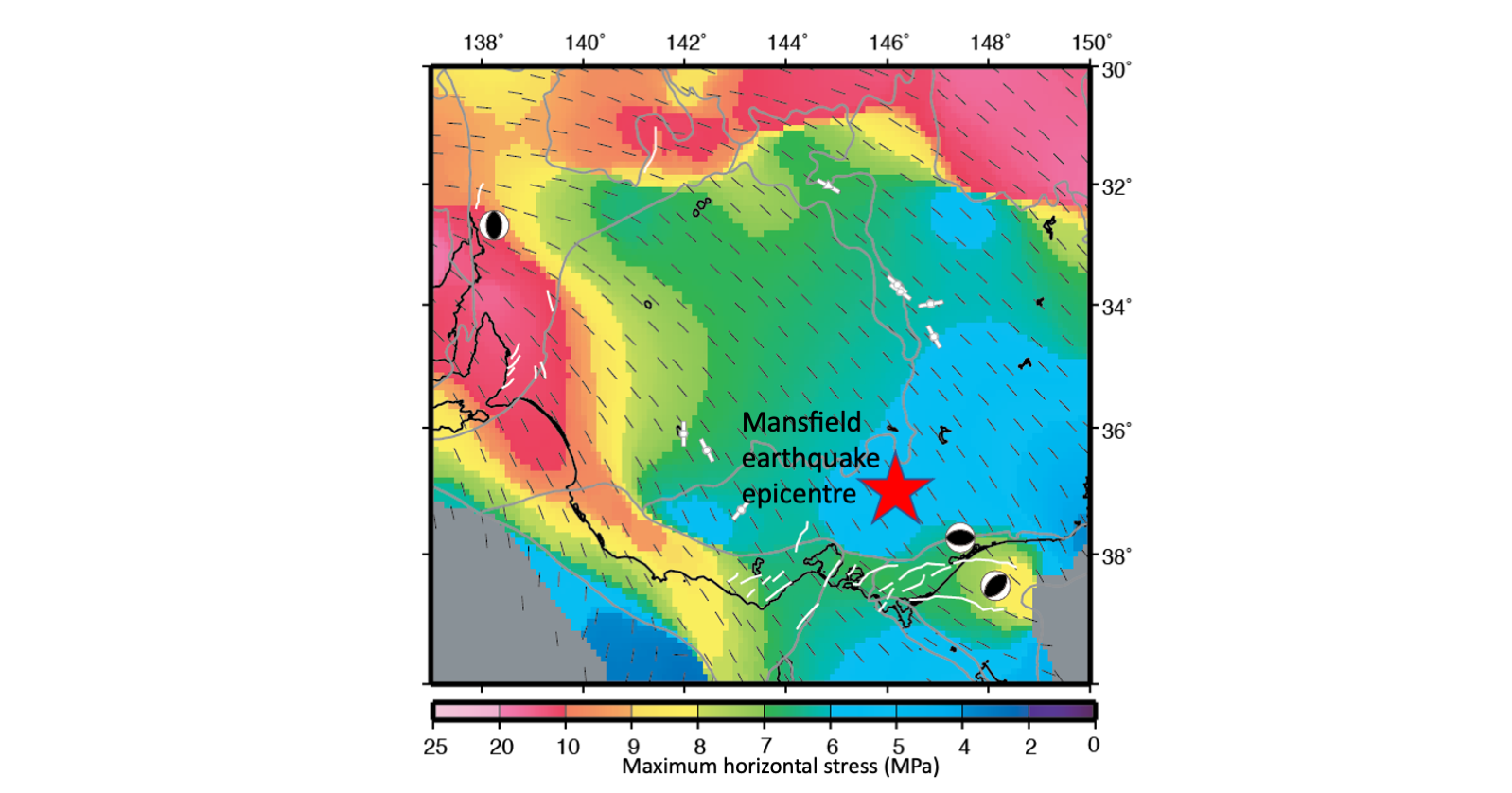
Forces acting along the edges of tectonic plates, particularly compressive forces caused by plate convergence and orogeny, propagate into the interior of plates and cause deformation within continents. Forces acting on the edges of plates include compressive forces due to plate collisions and mountain building, so-called “ridge push” forces caused by the excess gravitational potential … Read more…
EarthByte seminar series: Siavash Ghelichkhan
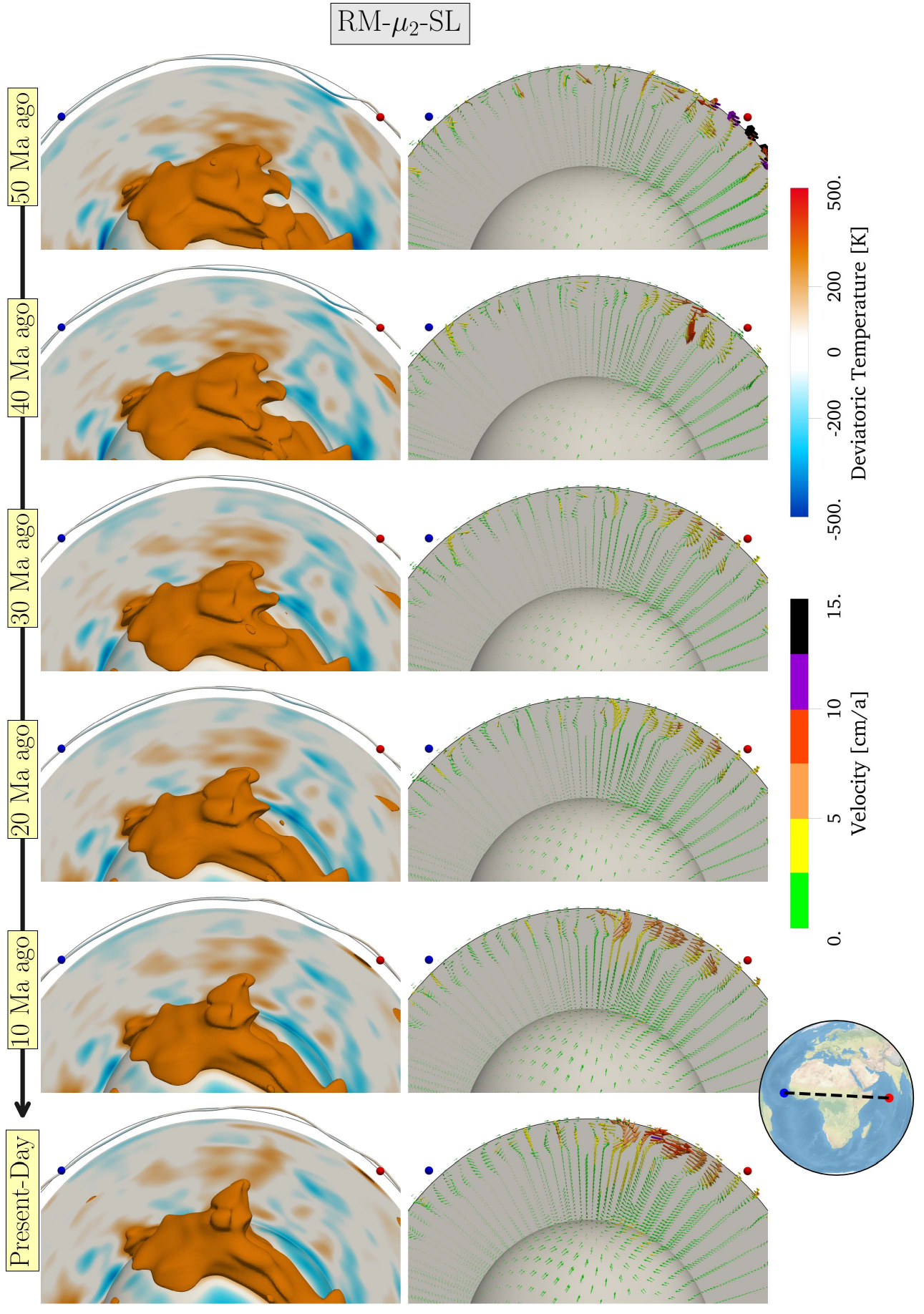
Join us 11am–12pm on Wednesday 29th September for the latest instalment of the EarthByte seminar series! This week our speaker is Siavash Ghelichkhan of the Australian National University. This seminar will be held online via Zoom at https://uni-sydney.zoom.us/j/88485423493; further details are below:
G-Cubed: Papanin Ridge and Ojin Rise Seamounts (Northwest Pacific): Dual Hotspot Tracks Formed by the Shatsky Plume
The origin of Shatsky Rise, a large igneous plateau in the NW Pacific, has long been debated. It could have either formed by shallow mantle melting due to its confirmed creation along a mid-ocean ridge or with additional contribution of deeper mantle material that upwelled as so-called mantle plume beneath the spreading ridge (“plume-ridge interaction”). … Read more…
GPlates 2.3 released
GPlates 2.3 is released! It enables computation of tectonic syn- and post-rift subsidence for basins/margins, supports Retina displays, can export GeoJSON files and comes with many bugfixes. Download GPlates2.3
STELLAR – Spatio TEmporaL expLorAtion for Resources
Project STELLAR (Spatio TEmporaL expLorAtion for Resources) is a collaboration between BHP and the EarthByte Group aimed at implementing big and complex spatio-temporal data analysis and modelling to support the needs of BHP in global resource exploration. Split into multiple phases over the next 3.5 years, the project will connect BHP’s warehouse of global resource knowledge with … Read more…
EarthByte seminar series: Sebastian Haan & Henry Lydecker
Join us 11am–12pm this Wednesday (2021-09-01) for this week’s installment of the EarthByte seminar series! This week’s speakers are Sebastian Haan and Henry Lydecker of the Sydney Informatics Hub at the University of Sydney.
International Association for Mathematical Geosciences (IAMG)’s Award Winners’ Talks
Dr. Behnam Sadeghi, in 2020, was introduced as the first recipient of the “Founders Scholarship” award of the International Association for Mathematical Geosciences (IAMG), now being presented annually to the most outstanding student or post-graduate scientist in the field of Mathematical Geosciences. This award is given in honor and memory of the individuals who participated … Read more…
Volcanoes acted as a safety valve for Earth’s long-term climate
Volcanoes acted as a safety valve for Earth’s long-term climate The natural weathering of rocks on Earth’s surface over time is a crucial process for removing CO2 from the atmosphere Researchers have now used artificial intelligence to study interactions between land, sea and the atmosphere to determine the biggest drivers of this process over the … Read more…
Continental arcs dominate global chemical weathering
Earth’s plate-tectonic activity regulates the carbon cycle and, hence, climate, via volcanic outgassing and silicate-rock weather- ing. Mountain building, arc–continent collisions and clustering of continents in the tropics have all been invoked as controlling the weathering flux, with arcs also acting as a major contributor of carbon dioxide to the atmosphere. However, these processes have … Read more…
Completion of EarthByte internship
Luana Schena from the University of Zurich has just completed her summer internship in the EarthByte group, albeit remotely. Luana was working on a database of seafloor ages from DSDP/ODP/IODP drill holes from published data and focused on the world’s back-arc basins. This database will become a great complement to our present day seafloor age … Read more…
World Economic Forum: Watch how today’s continents were formed over one billion years – in just 40 seconds
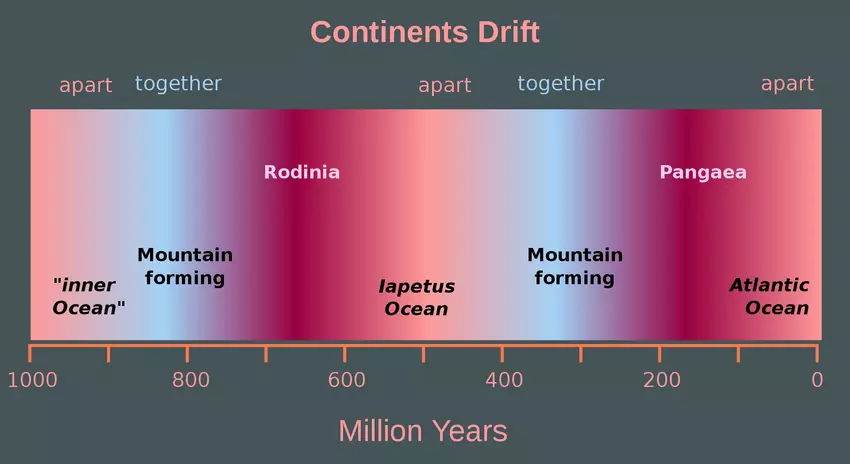
The plate tectonic theory says that Earth’s surface is made up of slabs of rock that are slowly shifting right under our feet. Because of this constant movement, today’s Earth looks a lot different from what it did millions of years ago. In 1912, German scientist Alfred Wegener proposed that Earth’s continents once formed a … Read more…
Download GPlates 2.3
Welcome to the download page for GPlates 2.3. Information about this release may be found on the News page of the GPlates website. This page contains the following sections: Download file descriptions There are 12 download files consisting of: GPlates binary installers The binary installers include GPlates and the GPlates-compatible geodata. For Windows: For macOS: … Read more…
The Conversation: Travelling through deep time to find copper for a clean energy future
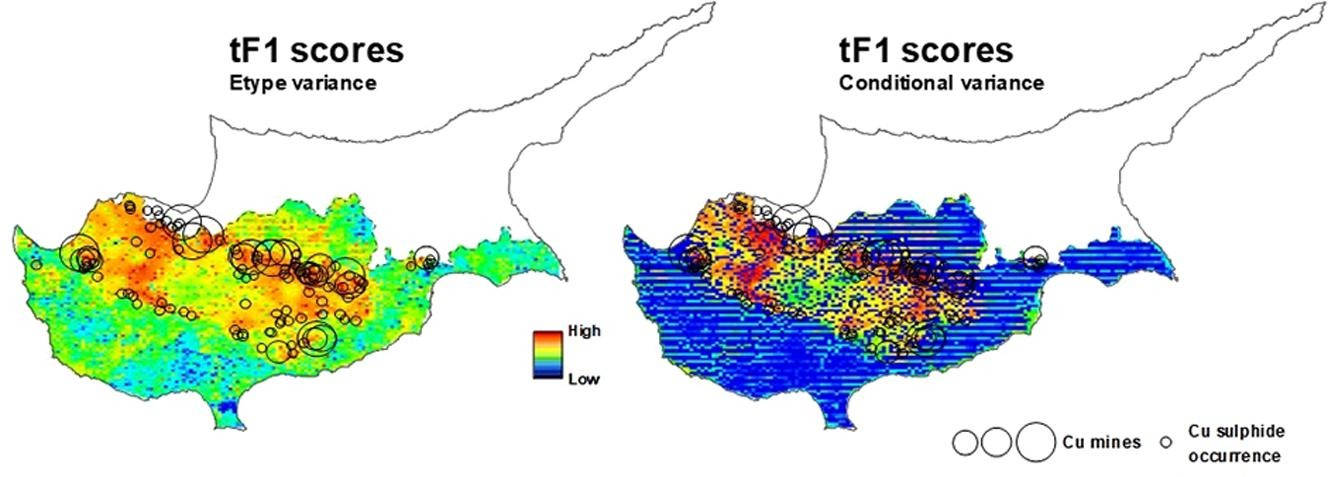
More than 100 countries, including the United States and members of the European Union, have committed to net-zero carbon emissions by 2050. The world is going to need a lot of metal, particularly copper. Recently, the International Energy Agency sounded the warning bell on the global supply of copper as the most widely used metal in renewable … Read more…
GPlates 2.3 software and data sets

GPlates is a free desktop software for the interactive visualisation of plate-tectonics. The compilation and documentation of GPlates 2.3 data was primarily funded by AuScope National Collaborative Research Infrastructure (NCRIS).
GPlates is developed by the EarthByte Group (part of AuScope NCRIS) at the University of Sydney and the Division of Geological and Planetary Sciences (GPS) at California Institute of Technology (CalTech). … Read more…